
Best Eau De Parfum for Men: A Niche Buyer's Guide to Long-Lasting Scent
Best Eau De Parfum for Men: A Niche Buyer's Guide to Long-Lasting Scent
Eau de parfum is a fragrance concentration tier, typically containing 15 to 20 percent aromatic compounds, that produces stronger projection and longer wear than lighter formats like eau de toilette. If you're searching for eau de parfum for men, the first thing worth knowing is this: concentration has nothing to do with gender. EDP describes how much fragrance oil is in the formula, not who is supposed to wear it.
Men commonly seek fragrance options that remain noticeable throughout the entire day, and EDP concentration is the most practical path to that. A well-chosen EDP will typically carry through six to ten hours on skin, depending on composition and skin type, without needing a reapplication.
The hesitation some people feel toward EDP often comes from a simple confusion: the idea that cologne, aftershave, and eau de toilette are "for men" while eau de parfum belongs to a different category entirely. That is a marketing convention, not a chemical reality. Taking a deliberate approach to fragrance discovery means understanding how the format works before choosing a scent, and knowing how concentration changes the way a fragrance wears is the most useful place to start.
What Does Eau de Parfum Mean?
Eau de parfum is a defined concentration tier within perfumery. The formula contains a higher percentage of aromatic compounds than lighter formats, which translates directly into stronger projection and longer wear time on skin.
The industry convention places EDP at roughly 15 to 20 percent aromatic compounds, though this is a guideline rather than a regulated standard. The remaining volume is a mixture of alcohol and, in some formulas, a small amount of water. That higher concentration of fragrance materials means the scent takes longer to fully evaporate from the skin, which is why EDPs project more noticeably in the first hour and then settle into a closer, richer dry-down rather than disappearing after a few hours.
Here is something worth addressing directly: eau de parfum is not a fragrance style or a product category. It is only a concentration label. A fresh, citrus-forward composition can exist at EDP concentration. So can a smoky, resinous one. So can a green, aromatic one. The concentration tier tells you how strong and how long-lasting the formula will be; it says nothing about whether the scent smells heavy, sweet, sharp, or subtle.
This matters practically because many buyers assume EDP means a heavier-smelling fragrance. A fresh or ozonic EDP may smell lighter on first spray than a dense, resinous EDT, simply because the composition is oriented toward fresh top notes. What the EDP delivers is longevity and diffusion, not a particular smell profile.
For anyone wanting the full breakdown of EDP versus EDT, understanding this distinction is the foundation.
How Eau de Parfum and Eau de Toilette Differ in Practice
The practical difference between EDP and EDT comes down to three things: how long the scent lasts, how far it projects from skin, and what it costs you per day of wear. These are not the same thing as smelling lighter or heavier.
| Format | Typical Concentration | Typical Wear Time | Projection | Best For |
|---|---|---|---|---|
| Eau de Cologne | 2-4% | 1-2 hours | Light | Refreshing, casual use |
| Eau de Toilette | 5-15% | 3-5 hours | Moderate | Everyday wear, warm weather |
| Eau de Parfum | 15-20% | 6-10 hours | Strong | All-day wear, evening, cooler months |
| Extrait de Parfum | 20-40% | 8-12+ hours | Intimate | Maximum intensity, special occasions |
The cost objection is reasonable. EDP bottles are typically priced higher than the EDT version of the same fragrance. The cost-per-wear logic, however, often favours the EDP. If you apply two sprays of an EDP and wear it for eight hours rather than applying four sprays of the EDT and refreshing midday, the cost difference narrows considerably. You use less product per occasion. Over a bottle's lifespan, the economics can balance out.
One persistent misconception: EDT smells lighter in character than EDP. This is not guaranteed by the format. An EDT built around heavy base notes like oud, amber, or sandalwood may smell considerably denser than an EDP built around bergamot, green notes, or ozonic accords. What changes with concentration is intensity and longevity, not the inherent character of the fragrance family.
For help read the full concentration guide if you want to see how this plays out across specific fragrance families. Seasonal suitability also shifts with format: EDTs can work well in warm weather when you want presence without density, while EDPs often reward cooler months where you want a scent to stay with you through the day. See the broader framework for choosing fragrance by occasion and season.
Are Unisex Fragrances Actually Different from Men's Cologne?
Unisex fragrances are genuine compositional choices, not primarily a marketing strategy. The actual difference between a "men's cologne" and a "unisex EDP" often comes down to the brief given to the perfumer, not the biology of whoever wears it.
Traditional men's cologne conventions favoured specific note families: aromatic herbs, woody bases, citrus top notes, and clean musks. These were not chosen because those notes suit male skin chemistry. They were chosen because they were culturally associated with masculinity at a given moment, and that association was reinforced through advertising. Feminine-coded fragrances leaned toward florals and soft musks for the same cultural reasons.
A unisex composition is built without that gendered brief. The perfumer selects notes based on the intended mood, season, or emotional territory of the fragrance rather than an assumed wearer profile. In practice, this often produces more interesting work: the tension between unexpected note combinations is more likely when you are not adhering to a formula.
Maison Noir's line is built entirely without a gendered brief. Icarus 347 combines tonka beans and ambroxan with forbidden fruit and patchouli. Alter Ego 786 opens on smoke and raspberry before settling into solid oud wood. Neither of these is aimed at a gendered wearer. The composition determines who will find it interesting, and that is a broader group than any gender-coded brief would reach.
Some buyers remain sceptical, reasonably so, since "unisex" on a bottle can sometimes mean a house hedging its marketing bets rather than making a genuine creative statement. The answer is to smell the fragrance rather than read the label. Composition is what matters. Why niche houses are moving away from gendered fragrance explains this cultural shift in more depth, and how niche fragrance houses approach composition differently covers the creative brief differences directly.
What Distinguishes Niche Perfume Houses from Designer Brands?
Niche perfume houses differ from designer fragrance brands in three concrete ways: ingredient quality and sourcing, the creative brief, and how and where they sell. These are practical distinctions that affect what ends up in the bottle and how you find it.
On ingredient quality, niche houses typically have smaller production volumes, which allows them to use raw materials that would be cost-prohibitive at scale. Rare resins, unusual botanicals, and materials sourced from specific regions appear more often in niche compositions than in mass-market formulas, where cost control across millions of units pushes formulators toward synthetic substitutes for even common notes.
On the creative brief, designer fragrance development is shaped by commercial targets: a fragrance needs to appeal broadly, move quickly at retail, and not alienate. Niche houses operate with a smaller, more deliberate audience in mind, which gives perfumers more freedom to work with unusual note combinations, longer dry-downs, and structural complexity that would not survive a mass-market focus group.
On distribution, designer fragrances are available at department stores, airports, and pharmacies because those channels support the volume required. Niche houses are mostly accessed through their own sites or specialist fragrance retailers. Department store counters rarely stock them. This matters when you are asking where to buy: for niche fragrance, the brand's own site is almost always the most reliable source of current stock and accurate information.
For new buyers, sampling before committing to a full bottle is the smart approach. Most niche houses, including Maison Noir, offer discovery sets that let you try the range before spending on a full bottle. This matters because skin chemistry affects how a fragrance develops, and no description, however precise, replaces wearing a scent for a few hours. What makes a fragrance house truly niche covers this territory in detail, and how to use samples to find a niche fragrance you will commit to is the practical guide.
Which Fragrance Families Work Best as Eau de Parfum for Men?
Any fragrance family can be compelling at EDP concentration. The concentration amplifies what is already in the formula: woodier bases become richer, fresher top notes project further before they fade, and heavier resinous notes develop more slowly and completely. Choosing a family is about matching mood, season, and skin, not about what is generically popular.
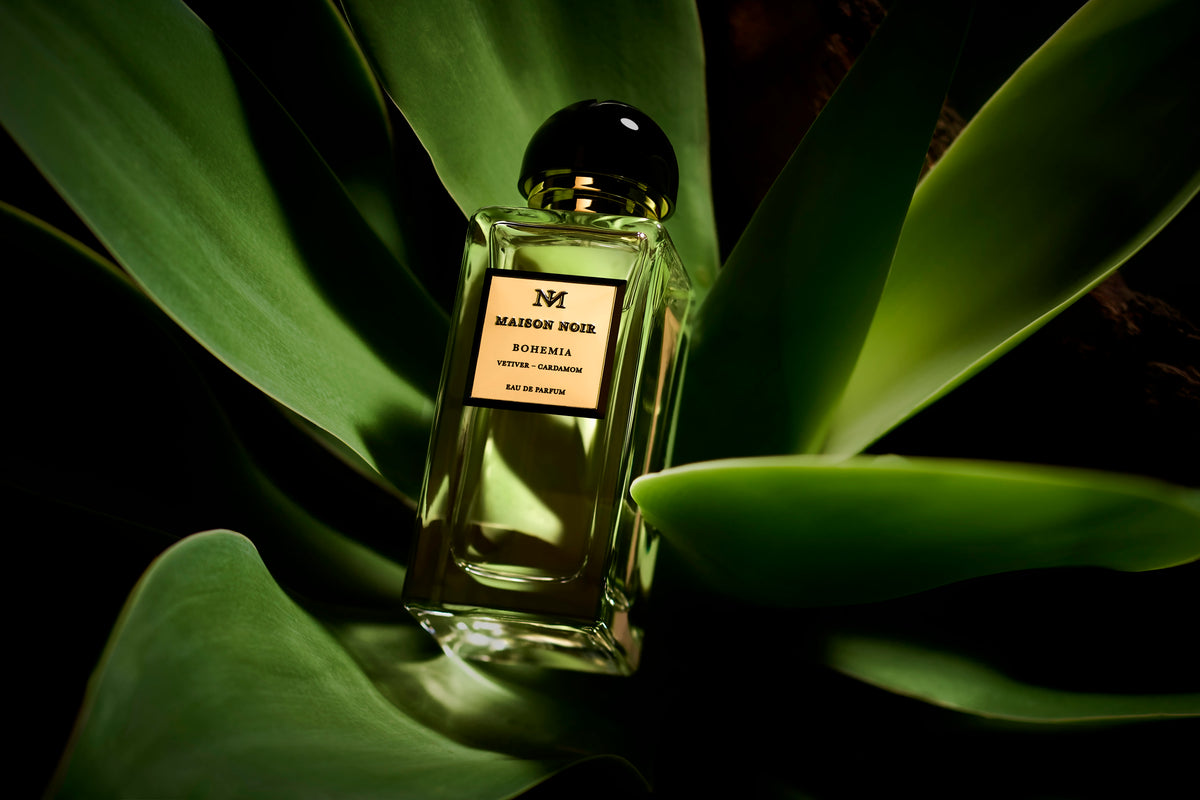
Woody and Resinous. Sandalwood, cedarwood, vetiver, and oud-based compositions develop well at EDP strength. The added concentration gives the dry-down more time to build. Alter Ego 786 works in this territory: a smoky top with hints of raspberry settles into a solid oud wood base. The depth of those base materials rewards EDP concentration. Aromatic and Herbal. Cardamom, herbs, and aromatic green notes are energising and well-suited to everyday wear. Bohemia 265 brings fresh bergamot and aromatic cardamom balanced with woody notes on a foundation of subtle amber vetiver. At EDP concentration, the aromatic character carries through the working day rather than fading by midmorning. Fresh and Ozonic. Counterintuitively, fresh fragrances benefit from EDP strength because their top notes are volatile and dissipate quickly at lower concentrations. Vertigo 236 is bold, fresh, and ozonic at heart, topped with aromatic citrus. EDP concentration extends that freshness beyond the initial hour. Gourmand and Vanilla. Vanilla and warm gourmand notes bloom at EDP strength. Somnia 517 places edgy vanilla under plumeria and cistus with juicy Italian bergamot, a composition that opens bright and settles into warmth. On cooler days, this kind of wear has particular appeal. Fruity and Green. Icarus 347 combines tonka beans and ambroxan with forbidden fruit and patchouli. The interplay between fruit and woody musks is more nuanced at EDP concentration than it would be at a lighter format.One confusion worth correcting: oud is not a type of EDP, and EDP is not a type of oud. Oud is a note, derived from agarwood, that can appear in any concentration tier. A fragrance can contain oud and be an EDT. A fragrance can be EDP and contain no oud at all. They are not the same kind of thing. The real difference between oud and cologne explains the distinction clearly, and decoding the gourmand and fruity fragrance family covers those warmer, sweeter profiles in depth. For colder months, choosing fragrances for autumn and cooler months maps the seasonal logic.

Vertigo 236
Vertigo 236 combines citrus and woody notes perfect for eau de parfum.
$125.00 - $195.00
Shop Now →How Long Does Eau de Parfum Last on the Skin?
Eau de parfum typically lasts between six and ten hours on skin. The actual duration varies depending on three factors: skin type, application technique, and the weight of the composition's base notes.
Dry skin has less natural oil for fragrance molecules to bond with, which means scent evaporates faster. Moisturised skin, or skin treated with an unscented lotion before application, gives the aromatic compounds more to cling to and extends the wear noticeably. This is why the same EDP may last eight hours on one person and five hours on another.
Application technique matters more than most people realise. Spray on pulse points: the wrists, neck, and inner elbows. The warmth of those areas diffuses the scent continuously throughout the day. Rubbing wrists together after application is counterproductive; it breaks down the molecular structure of the top notes and shortens the scent's arc.
Base note composition is the third variable. A fragrance built on light, volatile materials throughout its structure will not last as long as one built on heavy resins, musks, or woods, regardless of the concentration tier. An EDP with a resinous or woody base is likely to carry longer than an EDP dominated by green or citrus notes at every layer.
For all-day wear, focus on the base note profile as much as the concentration. An EDP with amber, oud, sandalwood, or vetiver in the base will outlast an EDP with a predominantly fresh structure by several hours.
For the practical detail, how to apply perfume so it lasts through the day covers technique and placement thoroughly. If you want to extend longevity further, fragrance layering to extend longevity is the logical next step.
How to Choose an Eau de Parfum: A Framework for New Buyers
Choosing an EDP is straightforward when you have a method. The process is about narrowing from families to specific compositions, then sampling before committing, rather than trusting a best-of list that knows nothing about your skin or preferences.
1. Identify your preferred fragrance family. Start broad: do you lean toward fresh and aromatic, warm and woody, sweet and gourmand, or something smoky and resinous? You already know this from the rooms, fabrics, and natural environments you find appealing. Translating that into a fragrance family gives you a filter. 2. Think about when you will wear it. Lighter, fresher compositions suit daytime and warmer months. Richer, denser ones suit evenings, cooler seasons, and occasions where you want the scent to carry in a room. Buying an EDP without a season or occasion in mind often leads to a bottle you enjoy but rarely reach for. 3. Sample before you commit. This is not optional if you are spending meaningfully. Skin chemistry changes how a fragrance develops over its arc, and no description predicts how a scent will smell on your skin two hours after application. Discovery sets from niche houses exist precisely for this reason. How to use fragrance samples to find your perfect scent explains the process. 4. Consider the cost-per-wear, not just the sticker price. A well-chosen EDP used twice a week over a year is not an expensive purchase when you divide it out. An inexpensive bottle that sits unworn is. 5. For gift buying, choose a format that removes commitment. Fragrance gift sets that include samples or smaller formats are more useful than a full bottle of something the recipient has not tried. The best fragrance gift sets for men covers what to look for. For the broader question of building a fragrance wardrobe, the broader guide to finding your scent is the reference.
Discovery Set & Gift Card Bundle (CHF)
Explore multiple scents with our Discovery Set before committing to full bottles.
$150.00 - $230.00
Shop Now →Popular Fragrance Options for Men: What to Look For
Popularity in fragrance is a poor guide to personal suitability, but it can point you toward profile categories that have broad appeal. The more useful frame is understanding what profile you are drawn to and finding compositions that realise it with care.
Fragrance enthusiasts frequently search for niche houses when they have moved beyond the most common designer options. Among the compositions that attract consistent attention, profiles built on woody-aromatic or fresh-ozonic structures tend to perform well across seasons and occasions. Bohemia 265, with its fresh bergamot, aromatic cardamom, woody notes, and amber vetiver foundation, sits in a profile that many find immediately wearable and interesting over time. Alter Ego 786, with its smoky entry and oud wood base, appeals to those seeking more depth and edge. Vertigo 236 occupies the fresh and ozonic end, suited to those who want presence without heaviness.
The tendency to equate popular with best is understandable but limiting. A fragrance that sells widely has been designed to appeal to a large number of people, which often means softening the interesting edges. Compositions built for a specific emotional territory rather than maximum market appeal tend to reward longer acquaintance. How niche houses compose differently from mainstream brands explains why this produces different results, and matching fragrance profile to occasion helps you think about suitability rather than just reputation.

Alter Ego 786
Alter Ego 786 delivers spicy-fruity complexity ideal for niche fragrance enthusiasts.
$125.00 - $195.00
Shop Now →Frequently Asked Questions
How long do eau de parfum fragrances typically last on the skin?Eau de parfum typically lasts between six and ten hours on skin. Duration depends on skin type, whether the skin is moisturised, how the fragrance is applied, and the weight of the base notes in the composition.
What are the most popular men's fragrances currently available?Popularity varies by market, retailer, and season. Rather than tracking sales rankings, which shift constantly, it is more useful to identify the fragrance profile you find appealing and seek well-crafted compositions in that family. Woody-aromatic and fresh-ozonic profiles consistently attract a wide audience.
Is eau de parfum suitable for men to wear?Yes, without qualification. Eau de parfum is a concentration tier, not a gendered product category. It describes the percentage of aromatic compounds in the formula, not the intended wearer. Men wear EDP routinely, and many of the most interesting contemporary compositions are unisex by design.
What does eau de parfum mean?Eau de parfum is a fragrance concentration category, typically 15 to 20 percent aromatic compounds in an alcohol base. It sits above eau de toilette and below extrait de parfum in strength, and produces stronger projection and longer wear than lighter formats. For the full picture, the full EDP versus EDT concentration guide covers every tier.
How do eau de parfum and eau de toilette differ?EDP contains a higher percentage of aromatic compounds (roughly 15 to 20 percent versus 5 to 15 percent for EDT), which produces stronger diffusion and longer wear. This does not mean EDP smells heavier in character: the fragrance family determines the character, while the concentration determines the intensity and longevity.
What is the difference between oud and eau de parfum?These are not the same kind of thing. Eau de parfum is a concentration tier that describes how much fragrance oil is in the formula. Oud is a note, derived from agarwood, that can appear in any concentration format. A fragrance can be an EDP with no oud at all, or an EDT that contains oud as a central note. The tradition behind oud and Arabic perfume covers the note itself in depth.
Are unisex fragrances actually different from gendered fragrances, or is it marketing?The composition is genuinely different when a perfumer works without a gendered brief. Unisex compositions tend to avoid the conventional note associations tied to men's or women's categories, often producing more structurally interesting work. Whether a fragrance suits you is a question of composition and skin chemistry, not of what the bottle says.
How should eau de toilette be applied?The same principles apply as for EDP: spray on pulse points (wrists, neck, inner elbows) where warmth diffuses the scent, and avoid rubbing the application points together. Because EDT is lower in concentration, you may find you apply slightly more, but the technique is the same.
What distinguishes niche perfume houses from designer fragrance brands?Three practical differences: niche houses typically use higher-quality or rarer raw materials (possible because production volumes are smaller), work with a more specific creative brief rather than optimising for broad mass-market appeal, and distribute through their own channels or specialist retailers rather than department stores and airports.
Where should one purchase fragrance: department stores or brand boutiques?For designer fragrance, department stores are reliable and convenient. For niche fragrance, the brand's own site or specialist retailers are almost always better. Department stores rarely stock niche houses. Buying direct also gives you access to discovery sets and accurate product information.
What fragrance gift sets are most popular for men?Sampling formats are the most useful gift for fragrance, because they let the recipient try before committing to a full bottle. Gift sets that include a selection of the house's compositions allow the recipient to find their preference. Discovery sets from niche houses serve this purpose well.
Which brands are recommended for men new to wearing cologne?Start with sampling rather than a brand name. The most useful first step is to identify one or two fragrance families you find appealing, then sample compositions in those families before committing to a full bottle. Maison Noir is one example of a niche house that offers a discovery set for exactly this purpose, allowing you to try the range across different families before deciding. It is not the only option, but the sampling-first approach applies regardless of which house you explore.
Choosing Your Eau de Parfum: Where to Begin
Starting with eau de parfum does not require committing to a full bottle. The smartest entry point is sampling, which lets you understand how a composition develops on your skin over several hours before you invest in anything larger.
Three things from this guide are worth carrying forward. First, concentration is gender-neutral: EDP describes formula strength, not who the fragrance is for. Second, the fragrance family determines the character, while the concentration determines how long and how strongly it carries. Third, niche houses and designer brands are different in meaningful ways, and accessing niche fragrance usually means going directly to the house rather than a department store counter.
If you are new to deliberate fragrance selection, how fragrance samples make the selection process clearer is the practical guide to approaching sampling with a method. For the broader question of understanding your own preferences before you choose, the full guide to finding your scent is the right starting point.
Maison Noir composes each fragrance in France with master perfumers and offers a discovery set that lets you sample the collection before committing to a full bottle. Each composition in the line is a numbered door: a specific olfactive world with its own notes, mood, and character. Explore the Discovery Set to find the one that opens onto a world worth returning to.
Read more

Floral Perfumes for Women: How to Choose Between Fresh, Romantic and Rich Floral Families Floral perfumes are built around one or more flower-derived notes-rose, jasmine, peony, ylang-ylang-as t...
What Is the 'Scent of Man'? How Biology, Culture & Fragrance Interact The scent of a man emerges from the convergence of biology, skin chemistry, cultural conditioning, and fragrance. None of...