
Arabic Perfume: The Ancient Tradition Behind the World's Most Intense Scents
Arabic Perfume: The Ancient Tradition Behind the World's Most Intense Scents
Arabic perfume is a fragrance tradition rooted in the Middle East, defined by dense, resinous ingredients like oud, musk, amber, and rose, typically worn at high concentration and applied as oil or spray directly to skin. If you've encountered a scent that carries weight, warmth, and genuine staying power, you've likely met this tradition.
What sets Arabic perfume apart isn't one ingredient or technique alone. It's a philosophy: scent as presence, as ritual, as something applied with intention rather than spritzed casually. The core materials, particularly oud wood and animalic musks, produce a depth and projection that Western fine fragrance historically approached more cautiously. Concentration tends to be high. Longevity is substantial. The sillage-the trail a fragrance leaves-is deliberate and unashamed.
You'll encounter these fragrances in two primary formats: perfume oils (attars), applied directly to skin without alcohol, and alcohol-based sprays in Eau de Parfum or extrait concentrations. Understanding this distinction matters before you commit to a bottle, and it's covered in detail later.
This article explores the history, core ingredients, how Arabic perfume compares with Western fine fragrance, how to wear and layer these scents, and where the tradition intersects with contemporary niche perfumery.
A Tradition Older Than Modern Perfumery
Arabic perfumery pre-dates the modern fine fragrance industry by many centuries. Its roots stretch back to ancient trade routes that carried frankincense, myrrh, and precious resins across the Arabian Peninsula and into the courts of Persia, Egypt, and beyond.
The word "attar," derived from Arabic and Persian roots, refers to the essential oils distilled from flowers, woods, and resins that formed the foundation of this tradition. Long before Paris became synonymous with perfume, artisans across the Arabian Gulf were distilling rose water, macerating oud chips in animal fat, and compounding multi-layered pastes applied to skin, hair, and clothing.
Trade was central to everything. The Incense Route, which connected southern Arabia to the Mediterranean, carried frankincense and myrrh that shaped religious ceremony as much as personal adornment. Oud, derived from the resinous heartwood of Aquilaria trees native to South and Southeast Asia, arrived along similar networks and became one of the most prized materials on earth.
What distinguished this tradition technically was the absence of alcohol as a carrier. Attars are non-alcoholic: materials are distilled into sandalwood oil or blended into a fixed-oil base, which changes how they interact with skin entirely. Alcohol-based perfumery as we know it in the West developed later, particularly through the formalization of French perfumery as a craft discipline. How French perfumery training shaped modern technique gives a thorough account of that evolution.
The two traditions are not opposites. They have influenced one another continuously, and contemporary niche perfumery is one of the places where that exchange is most visible.
The Ingredients at the Heart of Arabic Perfume
Arabic perfume smells the way it does because of a specific palette of raw materials: dense, warm, and resinous, many of them central to Middle Eastern perfumery for centuries.
Oud (agarwood). The single most defining ingredient. Oud is a dark, complex resinous wood produced when Aquilaria trees respond to fungal infection. The scent ranges from animalic and barnyard-like in older traditional presentations to smooth, smoky, and lightly sweet in contemporary blends. Price and quality vary enormously depending on origin (Indian, Cambodian, and Laotian oud each carry different character) and extraction method. For a detailed comparison of how oud functions in different fragrance formats, the difference between oud perfume and cologne is worth reading before you commit to a bottle. Musk. Historically derived from the musk deer, virtually all musk used in contemporary perfumery is synthetic. The best synthetic musks are clean, skin-like, and warming. In Arabic perfumery, they tend to appear in higher concentration and with a more pronounced animalic character than in many Western fragrances. Rose. The Taif rose, cultivated in the mountains of Saudi Arabia, is one of the most prized rose absolutes in the world. It's richer, slightly more honeyed, and less "green" than the Bulgarian or Turkish roses that anchor many Western floral fragrances. Rose attars have been distilled in this region for centuries. Amber and resins. "Amber" in perfumery is not a single ingredient but a warm, resinous impression built from materials such as labdanum, benzoin, and olibanum (frankincense). These give Arabic fragrances their characteristic depth and their tendency to linger on skin long after the top notes have faded. Saffron. Increasingly present in contemporary Arabic-influenced fragrance, saffron brings a slightly metallic, leathery richness that sits well alongside oud and rose. Sandalwood. The traditional carrier oil for attar distillation, sandalwood also contributes its own creamy, quiet warmth to the base.These materials share one defining characteristic: they wear close to skin over time, deepening rather than fading. You won't find a two-hour longevity here.
---

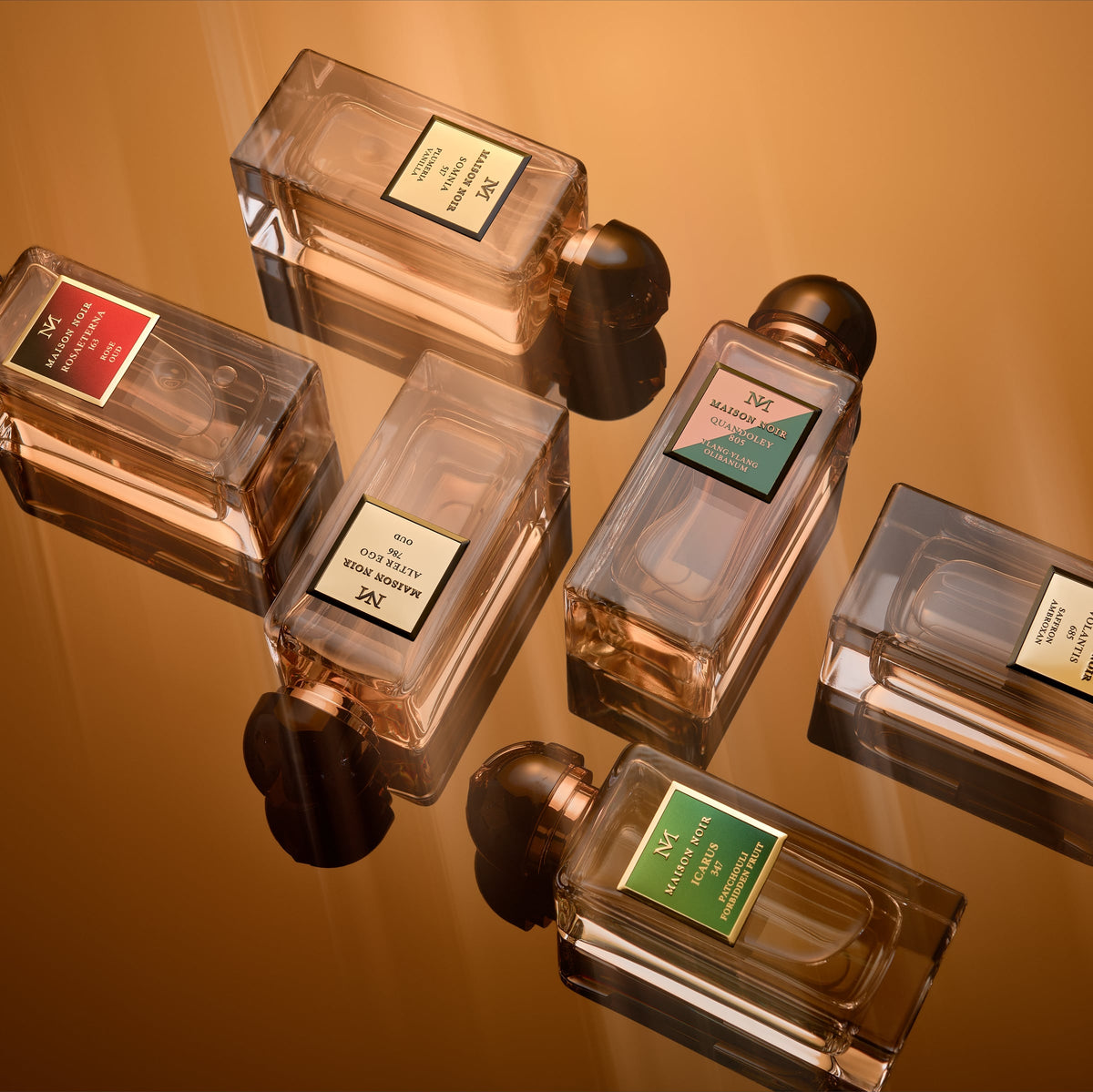
Discovery Set & Gift Card Bundle (CHF)
Explore our curated discovery set to experience authentic Arabic fragrance traditions.
$150.00 - $230.00
Shop Now →What Distinguishes Arabic Perfume from Western Fine Fragrance
The clearest way to understand the difference is side by side.
| Dimension | Arabic Perfumery | Western Fine Fragrance | Notes |
|---|---|---|---|
| Primary format | Perfume oil (attar) or high-concentration spray | Eau de Toilette, Eau de Parfum, occasionally extrait | Attars contain no alcohol; sprays may |
| Typical concentration | Very high; attars are essentially undiluted | Variable; EdT 5-15%, EdP 15-20%, extrait 20%+ | Arabic EdP often sits at the high end |
| Core ingredient emphasis | Oud, musk, amber, resins, Taif rose | Citrus, floral, white musk, light woods | Though cross-over is increasing |
| Projection style | Close-to-skin over time; initial projection can be bold | Often designed for immediate linear projection | Different wear arc, not necessarily stronger |
| Gender framing | Traditionally non-gendered; marketing is a modern layer | Heavy gender segmentation through much of the 20th century | Both traditions are moving toward unisex |
| Application method | Oil: applied sparingly to pulse points; spray: standard | Spray: standard | Oil format rewards restraint and precision |
A common misconception worth addressing: bottle colour does not indicate scent profile, concentration, or quality. You'll encounter Arabic perfume bottles in gold, black, pink, and every colour between. A pink bottle doesn't mean a lighter or more feminine scent, and a gold bottle doesn't signal higher quality or oud content. Marketing aesthetics and fragrance composition are separate decisions. Conflating them leads to purchases based on packaging rather than the juice inside.
The more meaningful distinction is between the attar format and the spray format. Attars interact with skin differently: without alcohol to carry top notes outward, they open more quietly and deepen steadily over hours. Many people who describe Arabic perfume as "overwhelming" have encountered a spray applied at the same quantity as an attar, or an attar applied too generously.
For context on how niche fragrance houses think differently about these choices, how niche fragrance houses think differently about scent explores the philosophy behind intentional composition. For the historical argument that gender-neutral fragrance is not a modern invention, why unisex fragrance has always been part of fine perfumery makes the case clearly.
Arabic Perfume for Men, Women, and Everyone: The Gendering Myth
Arabic perfumery did not historically separate scents by gender. The tradition pre-dates the marketing machinery that introduced gendered fragrance as a commercial category. Oud, musk, and amber were applied by everyone across the region regardless of gender.
The distinction shoppers encounter today, between "arabic perfume for men" and "arabic perfume for women," is largely a retail and marketing layer applied to a tradition that never needed it. Shoppers frequently search for fragrance options tailored to gender, and brands respond by segmenting their lines accordingly. But the underlying materials do not carry gender. Oud is not masculine. Rose is not feminine. The combination of the two is not gendered either.
What you'll find when you look past the labels is that most traditionally composed Arabic fragrances, particularly attars and high-concentration oils, work across the full range of skin chemistry. They respond to your body heat, your natural skin scent, and your own chemistry rather than announcing a predetermined gender category.
This is one of the areas where the tradition has something genuinely useful to teach contemporary fragrance culture. Wearing a scent that doesn't announce your gender is not subversive. In the context of Arabic perfumery, it is simply correct.
If you are approaching fragrance with the goal of finding something that suits you specifically rather than a demographic category, how to find a scent that suits you offers a practical framework for navigating the choice.
How to Wear and Layer Arabic Perfume
Apply Arabic perfume sparingly, directly to pulse points on clean, moisturized skin. That is the essential rule, whether you're working with an oil attar or a high-concentration spray.
The pulse points, inner wrists, the base of the throat, behind the ears, the inside of the elbows, are warm. That warmth activates the materials, encouraging them to open and evolve. With oud-heavy compositions especially, the difference between skin applied at a pulse point and fabric sprayed in the air is significant. These fragrances are designed to interact with body temperature.
Quantity matters more than with lighter fragrances. A single drop of attar oil, applied with the bottle's applicator to one or two pulse points, is usually sufficient for many hours of wear. With a spray concentration of EdP or extrait, two presses is a reasonable starting point. Adding more too quickly is the most common application error, and with dense materials like oud and musk, it's difficult to reverse. Layering. Arabic perfumery has a long tradition of wearing multiple scents simultaneously or in sequence. A common approach is to apply an unscented or lightly scented oil first, which helps the fragrance adhere to skin longer, then apply the primary scent over the top. You can also layer two complementary fragrances, a lighter citrus or floral over a resinous base, for depth and longevity.For a thorough guide to the craft of layering, how to experiment with fragrance layering covers the technique in detail. For practical advice on application that extends longevity across the full day, how to apply perfume so it lasts all day addresses the mechanics directly.
Longevity expectations. High-quality attars can last eight hours or more on skin. Spray EdP concentrations in this tradition often perform similarly. The dry-down, the final stage after the heart notes have settled, is frequently the most interesting phase in Arabic perfumery: the base materials warm and deepen over time rather than fading.---

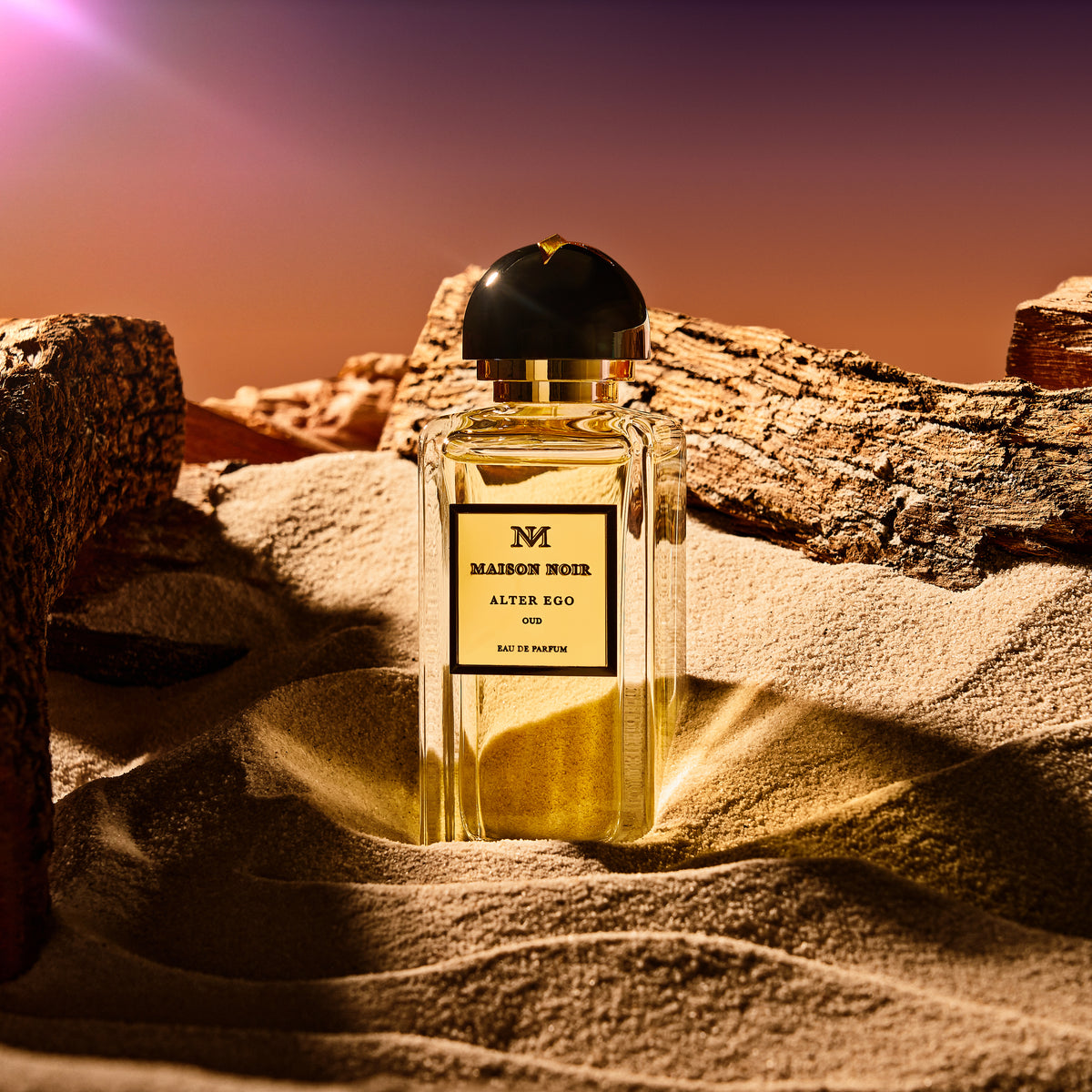
Alter Ego 786
Alter Ego 786's spicy, woody notes layer beautifully in traditional Arabic style.
$125.00 - $195.00
Shop Now →How Middle Eastern Ingredients Shaped Niche Fragrance Today
Middle Eastern ingredients, particularly oud, amber resins, and Taif rose, have shaped modern niche fragrance more profoundly than perhaps any other regional tradition.
The shift became visible in the early 2000s, when niche houses began engaging seriously with oud as a creative material rather than a novelty. What followed was a sustained renegotiation of what fine fragrance could smell like. Dense resinous bases, animalic musks applied with less restraint, and the deep interplay of wood and spice entered mainstream niche composition in ways that would have been considered challenging decades earlier.
This is not simply a trend toward "Eastern-inspired" fragrance. It is a recognition that the palette available to perfumers is broader than any single regional tradition, and that Middle Eastern materials offer compositional possibilities that lighter, alcohol-forward Western formats do not.
Contemporary fine fragrance houses working with master perfumers engage with these materials thoughtfully, understanding their origin, their variation, and the craft required to use them well. Maison Noir, composed in France with master perfumers and designed in Switzerland, works within this expanded palette, approaching each composition with the same attention to depth and intentionality that the Arabic tradition has always demanded.
Before committing to a full bottle of any fragrance in this space, sampling on skin is the most honest way to understand how a composition actually wears. How to use fragrance samples to find your perfect scent explains the process. For those interested in the broader community around fragrance discovery, how fragrance communities trade samples and discover new scents offers a view into how serious fragrance enthusiasts approach the process.
---

RosaEterna 163
RosaEterna 163 showcases how floral and woody Middle Eastern ingredients define niche fragrance.
$125.00 - $195.00
Shop Now →Frequently Asked Questions About Arabic Perfume
What distinguishes Arabic perfumes from other fragrance traditions?
Arabic perfumery is defined by its core materials, particularly oud, musk, amber, and Taif rose, and by its emphasis on depth, longevity, and close-to-skin wear over time. The tradition also differs in format: perfume oils (attars) are non-alcoholic and applied directly to skin, a fundamentally different wearing experience from alcohol-based sprays. For occasion and seasonal guidance, how to choose the right fragrance for the occasion and season provides useful context.
Which Arabic perfume brands rank among the most popular?
Certain brands appear frequently in consumer searches for Arabic perfumes, including Lattafa, Swiss Arabian, Ajmal, and Rasasi, which offer widely accessible entry points into the tradition. Beyond these, a range of regional and artisan houses work at different price points and concentrations. Researching a brand's distillation and sourcing practices, where that information is available, gives a clearer picture of quality than price alone.
What is the technical term for Arabic fragrances?
The traditional term is "attar" (also spelled "ittar"), derived from Arabic and Persian roots, referring to concentrated perfume oils distilled without alcohol. In contemporary retail, Arabic fragrance may also appear simply as Eau de Parfum or extrait from a Middle Eastern house, which are alcohol-based spray formats rather than traditional oils.
Are Arabic perfume samples available for testing before buying?
Yes. Many Middle Eastern fragrance houses offer sample vials or discovery sets, and third-party decant services exist for a wide range of brands. Given the intensity and complexity of oud-based compositions, sampling before purchasing a full bottle is strongly advisable. What smells striking on paper or on first application may evolve considerably over the following hours of wear on your skin.
How do I purchase Arabic perfume in bulk or wholesale?
Wholesale purchasing typically requires establishing a retailer or reseller account directly with a brand or their regional distributor. Most major Middle Eastern fragrance houses have international distribution networks, and their websites list regional contacts. Individual bulk purchase for personal use is less common in this category; most houses sell directly to consumers in standard bottle sizes.
What is the real difference between perfume oils and spray perfumes?
Perfume oils (attars) contain no alcohol. They are applied with a glass or metal applicator directly to skin, in very small quantities, and they interact with skin chemistry and body heat in a way that alcohol-based sprays do not. Spray perfumes, whether EdT, EdP, or extrait, use an alcohol base that carries the fragrance outward and evaporates quickly, projecting the scent into the surrounding air. Neither is superior; they are genuinely different formats with different wearing experiences. For seasonal guidance on choosing between formats, how to choose autumn fragrances that work with the season touches on how format affects cold-weather wear.
Entering the World of Arabic Fragrance
Start with skin. That is the most useful next step from here. Arabic perfume, whether an oil attar or a high-concentration spray, reveals itself over time and through the chemistry of the person wearing it, not on a testing strip or from across a room.
The tradition covered in this article is one of the oldest in the world, shaped by trade, craft, and a philosophy of scent as something worn with intention. Its defining materials, oud, musk, Taif rose, amber, frankincense, have influenced contemporary niche perfumery in ways that continue to expand the creative palette available to master perfumers. The format distinction between attars and alcohol-based sprays matters practically: they wear differently, project differently, and reward different application habits. And the gender categories often applied to Arabic fragrance in retail contexts are a modern marketing layer on a tradition that long pre-dated them.
For those navigating the broader landscape of fragrance families, how to decode the floral and gourmand fragrance families offers a clear guide to where Arabic-influenced compositions sit within the wider map of scent. For the larger picture of how traditions connect and inform one another, the broader culture of scent and how traditions connect provides essential grounding.
The most reliable way into any unfamiliar fragrance tradition is through sampling, worn on skin, across a full day. If you're ready to begin that process with a house that brings French master perfumery and Swiss design sensibility to every composition, explore the Discovery Set and find your first door into the collection.
Read more
Learn how to choose a fragrance for work that balances personal expression with shared-space courtesy. Covers families, concentration, application, and seasonal wear.
The Best Unisex Fragrances for Autumn: Niche Picks for Cooler Days Unisex fragrance is a scent composition designed to wear beautifully on any skin, regardless of gender, typically built around ...