
How French Perfumery Training Shapes a Master Perfumer's Craft
How French Perfumery Training Shapes a Master Perfumer's Craft
A master perfumer trained in France is a specialist who has completed years of formal chemistry and sensory education, typically within institutions that exist nowhere else on earth, and who can design a coherent fragrance composition from raw materials to finished accord.
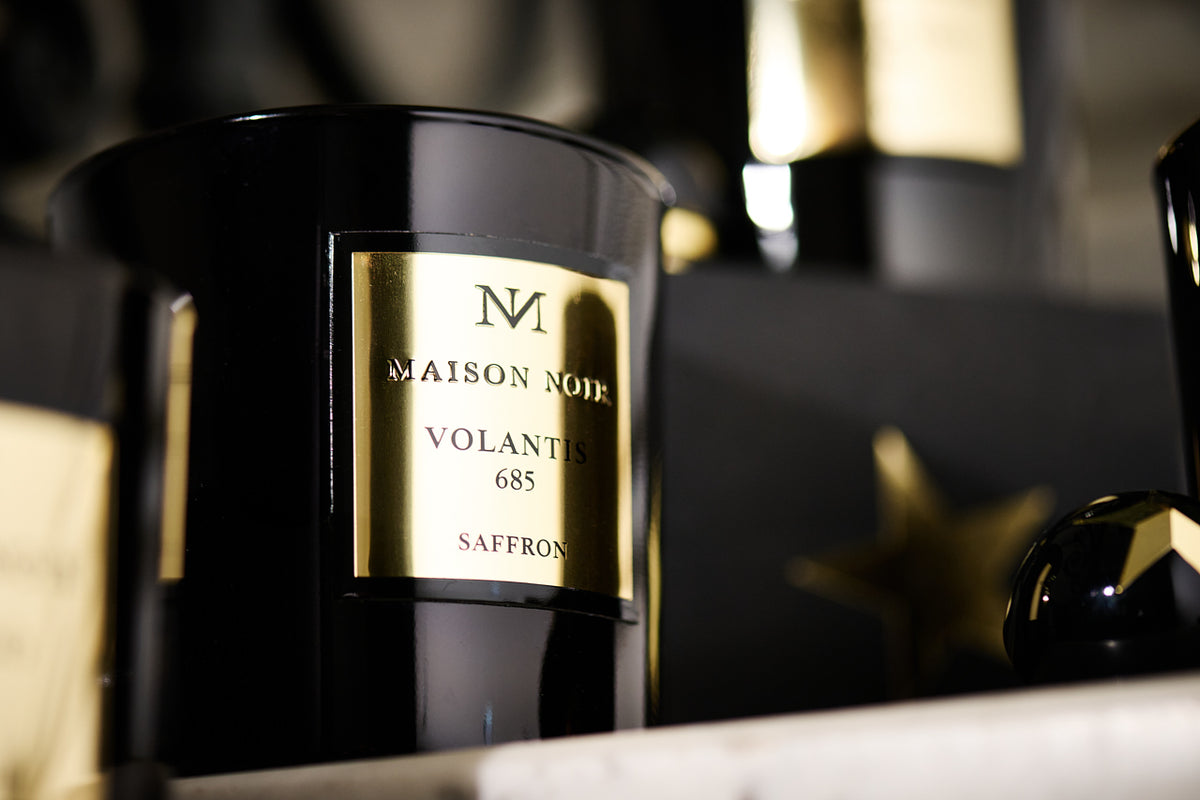
French perfumery training involves a structured combination of organic chemistry, raw material study, and thousands of hours of sensory practice. France holds this position globally because of Grasse's centuries-old ingredient industry, the presence of the world's leading fragrance companies on French soil, and a cultural respect for perfumery as a genuine craft discipline. The output is tangible: compositions that are balanced, intentional, and built to last. A house like Maison Noir, which carries the positioning "Born in Switzerland. Crafted in France.", draws directly on this tradition. Understanding what goes into a master en france qualification helps you read fine fragrance with greater clarity, whether you are choosing a scent for yourself or beginning to study the craft.
That clarity matters beyond academic interest. Fine fragrance is one of the most demanding sensory arts, and the training behind it shapes everything in the broader culture of scent. Knowing what separates niche fragrance houses from the mainstream starts with understanding the education that makes a genuine compositional voice possible.
What Defines a Master Perfumer in France
A master perfumer in France is not a marketing title. It is a professional designation earned through accredited study and, in most cases, years of supervised practice within the industry. The distinction matters because many fragrance brands use the word "master" loosely, without any formal qualification behind it.
Formal training in France typically follows a degree pathway: an undergraduate foundation in chemistry or biology, followed by a specialist postgraduate programme focused on perfumery composition. The most recognised institution is ISIPCA (Institut Supérieur International du Parfum, de la Cosmétique et de l'Aromatique Alimentaire) in Versailles, founded in 1970. Givaudan, one of the world's largest fragrance ingredient companies, also runs its own internal school for its perfumers. Both operate with rigorous selection processes and structured curricula that cannot be replicated by a short online course.
The title gains its authority from this institutional framework. A practitioner who has studied at ISIPCA or through a comparable programme can demonstrate not just what a material smells like, but why it behaves as it does at a molecular level, how it interacts with other raw materials, and how to predict its performance in a finished formula across different concentrations and skin types.
The common mistake is treating all perfumery credentials as equivalent. A weekend workshop and a two-year specialist master's programme are not the same thing. The former may sharpen your appreciation of scent; the latter equips a practitioner to build compositions that are stable, coherent, and technically sound. For a consumer, the difference shows up directly in the fragrance on your skin: in the balance of the top notes, the depth of the heart, the staying power of the base.
If you are looking for evidence of this training in the brands you buy, independent fragrance houses that work with master perfumers offer the clearest signal of institutional craft applied to creative work.
Why France Leads the World in Fragrance Expertise
France leads in perfumery because of geography, history, and institutional concentration working together over several centuries. No other country has the same density of raw ingredient production, professional education, and industry infrastructure in one place.
The town of Grasse in Provence has been the centre of European fragrance ingredient cultivation since at least the seventeenth century. Fields of jasmine, rose, and lavender made it the natural home for extraction techniques that still underpin modern perfumery. That agricultural foundation attracted chemistry expertise, which in turn attracted the laboratories and ingredient companies that now operate globally.
The expertise France has accumulated is not purely historical. Today, two of the largest fragrance ingredient companies in the world, Givaudan and Firmenich (now merged as dsm-firmenich), maintain significant French operations. International Flavors and Fragrances and Symrise also have a French presence. These companies train their own perfumers, partner with academic institutions, and fund research that advances the field continuously. A student entering ISIPCA or a comparable programme enters a network that connects directly to this industry.
France also benefits from a cultural attitude that places perfumery alongside gastronomy, haute couture, and fine wine as a legitimate craft discipline worthy of serious study and professional respect. That parity is not universal. In many countries, fragrance remains a peripheral skill set rather than a recognised professional vocation with its own accredited pathways. In France, the infrastructure treats it as both a science and an art, and the educational programmes reflect that dual expectation.
This dual grounding is what how scent culture developed across different traditions ultimately traces back to, and France's position at the centre of it is the product of sustained institutional investment rather than accident.
How Fragrance Education Is Structured in France
French fragrance education runs on two parallel tracks: rigorous scientific training in chemistry and raw material science on one side, and disciplined sensory development on the other. Understanding how these streams relate helps clarify what a qualified practitioner actually knows.
The scientific foundation typically begins at undergraduate level with a degree in chemistry, biochemistry, or a related field. This is not optional background reading. The fragrance chemist education in France treats organic chemistry as the grammar of the field: you need to understand molecular volatility, ester formation, and odour thresholds before you can work meaningfully with a formula. Without that grounding, composition becomes guesswork.
The specialist postgraduate level, such as the Master's offered at ISIPCA, builds on that chemistry base and adds structured sensory training, raw material olfaction, formula construction, and regulatory knowledge. Fragrance formulas are subject to IFRA guidelines and EU regulations, so understanding compliance is part of the job. Programmes typically run between one and two years at this specialist stage, with a total educational pathway from undergraduate to qualified practitioner taking anywhere from four to six years.
On language: some programmes at ISIPCA and within industry apprenticeships operate in French, and a working knowledge of the language is often expected. A small number of programmes and short courses are available in English, particularly through industry partners, but the core specialist master's pathway is predominantly French-medium. Confirm directly with institutions before applying.
Regarding cost, this is where confusion often sets in. Not all French Master's programmes are free. Public universities in France charge regulated tuition fees set by the government, which are generally lower than fees at comparable institutions in the United Kingdom or the United States. Private specialist schools such as ISIPCA have their own fee structures, which are higher and vary by programme. Scholarship options do exist through the French government's Campus France agency, through EU Erasmus funding for eligible students, and through industry-sponsored bursaries. For an honest assessment of affordability, research how to develop your own fragrance vocabulary first, then investigate funding routes specific to your nationality and the institution you are targeting.
The Perfumer's Nose: Building a Sensory Memory Over Years
The most distinctive element of French perfumery training is the systematic, long-term development of olfactory memory. A perfumer's nose is not a natural gift that some people have and others do not. It is a trained capacity built over years of structured exposure.
During training, a student learns to identify and memorise hundreds of raw materials individually, then in combination. Early on, materials like bergamot and vetiver are studied in isolation: their odour profile, their volatility, their behaviour on skin over time. Bergamot sits high in a composition, bright and citric, fading quickly without fixatives. Vetiver anchors a base with its smoky, rooty complexity. A student learns not just what these smell like in the abstract, but what they contribute architecturally to a formula.
As training advances, more challenging materials are introduced. Ambroxan, a synthetic molecule derived from ambergris, is studied for its diffusive, skin-close warmth and its ability to amplify other notes around it. Oud, one of the most complex and variable natural materials in the perfumer's palette, requires extended study to understand how a trained nose reads oud in a composition, since its profile shifts dramatically depending on origin and extraction method.
This layered, cumulative approach to learning is why a short course cannot replicate a formal training programme. Olfactory memory builds slowly, through repetition and contrast, and it requires sustained exposure to a wide material library before a practitioner can reliably predict how a formula will smell.
Maison Noir's numbered fragrance wheel is a direct expression of this trained, systematic thinking made visible to the consumer. Each fragrance carries a number that decodes its character across the house's olfactive categories, offering a structured entry point that reflects the same logic how fragrance families are taught and categorised in formal perfumery education.
French Perfumery Training Paths at a Glance
There is more than one route into professional perfumery in France, and the right path depends on your existing background, professional goals, and the kind of role you want to hold in the industry.
| Training Path | Typical Duration | Primary Focus | Key Institutions | Language of Instruction |
|---|---|---|---|---|
| Undergraduate Chemistry | 3 years | Organic chemistry, molecular science, lab skills | French public universities | French (primarily) |
| Specialist Perfumery Master's | 1 to 2 years | Formula composition, raw materials, sensory training, regulation | ISIPCA, University of Nice | French; limited English options |
| Industry Apprenticeship | 1 to 3 years | Applied composition, client briefs, ingredient sourcing | Givaudan School, IFF, dsm-firmenich | French and English (varies) |
| Continuing Professional Development | Variable (weeks to months) | Material updates, regulatory changes, trend briefings | Industry-run short courses | Varies by provider |
The table illustrates that formal perfumery qualification is a multi-year commitment, not a single credential. The undergraduate and master's stages together represent the core academic pathway. Industry apprenticeship stages are often employer-funded, which makes them the most financially accessible route for candidates already working within a fragrance company.
On affordability: public university tuition fees in France are regulated and lower than in many comparable countries, while private institutions like ISIPCA carry their own fee schedules. Scholarships are available through Campus France, the Erasmus programme, and some industry partners. Researching funding early is advisable; eligibility criteria differ significantly between domestic French students, EU students, and those from outside Europe.
How Training Shapes the Fragrance in the Bottle
The fragrance in the bottle is the direct output of everything a trained perfumer has learned. Fragrance education makes that connection visible once you know what to look for.
A formally trained perfumer understands volatility: the science of which materials evaporate quickly and which linger. Top notes, by definition, are high-volatility molecules that create the first impression and then fade. Heart notes are slower to emerge and carry the character of the composition. Base notes are the slowest, the materials that fix the formula and give it lasting presence on skin. Balancing these three layers is a compositional skill that takes years to develop.
Consider Bohemia 265 from Maison Noir: fresh bergamot and aromatic cardamom balanced with woody notes on a foundation of subtle amber vetiver. That balance, citrus brightness against aromatic warmth against an earthy base, is the result of deliberate decisions about volatility and proportion, not accident.
Icarus 347 demonstrates the same trained thinking: tonka beans and ambroxan under forbidden fruit and patchouli. Ambroxan in the base amplifies the composition's skin-close quality, while the fruity and patchouli notes in the heart give it character and depth. A perfumer without formal training might produce something that smells pleasant in the bottle; a trained practitioner constructs something that wears coherently over hours.
Vertigo 236, bold and fresh and ozonic at heart with aromatic citrus at the top, shows a different approach: an aquatic brightness that demands precise calibration, since ozonic notes can easily overwhelm or disappear depending on concentration.
Understanding how concentration and application affect how a fragrance wears connects directly to these compositional decisions, as does how trained compositional thinking informs fragrance layering.
Frequently Asked Questions
Q: What defines a Master's-level qualification in French perfumery?A Master's-level qualification in French perfumery typically involves postgraduate study at an accredited institution, combining advanced chemistry knowledge with structured sensory and compositional training. At institutions such as ISIPCA, the programme is designed for candidates who already hold an undergraduate science degree and want to specialise in fragrance creation or formulation. The qualification is recognised by the French higher education framework and by the major fragrance ingredient companies that recruit from these programmes.
Q: Are specialist perfumery programmes in France free to study?No, not all programmes are free. This is a common and consequential misconception. Public universities in France charge tuition fees regulated by the government, which are generally modest compared to UK or US institutions. Private specialist schools, including ISIPCA, set their own fees, which are higher and vary by programme and level. Assuming a programme is free without checking its institution type can lead to significant financial planning errors.
Q: What does training in France typically cost?Costs vary by institution and programme type. Public university fees are regulated and generally lower; private school fees are institution-specific and typically higher. Industry apprenticeship stages are often employer-funded, making them the most financially accessible route. Rather than stating figures that may have changed, contact institutions directly or consult the Campus France agency for current, verified information.
Q: Is pursuing formal perfumery training in France a worthwhile investment?For those who want to work as practising perfumers or in fragrance development for global companies, formal French training provides access to a professional network, institutional credibility, and a depth of material knowledge that informal study cannot replicate. The investment is most clearly returned in roles within ingredient companies, fine fragrance houses, and product development teams. For those interested in fragrance as informed enthusiasts, using fragrance samples to develop your olfactive vocabulary offers a more proportionate starting point.
Q: Which programmes are taught in English?Most specialist perfumery programmes at institutions such as ISIPCA are delivered primarily in French. Some industry-run short courses and continuing professional development programmes are available in English. International students who plan to study in France should assess their language readiness honestly and confirm delivery language with the institution before applying.
Q: What options exist for international students?International students can apply to French public universities and specialist schools, though admission requirements, language requirements, and tuition fees differ from those for domestic and EU students. The Campus France agency provides country-specific guidance and can assist with application procedures. Erasmus+ funding is available to eligible EU students; non-EU students should research bilateral agreements and institution-specific scholarships.
Q: Are distance-learning or work-study arrangements available?Some continuing professional development programmes in fragrance are available through blended or distance formats, though the core specialist master's pathways remain predominantly in-person, given the sensory nature of the training. Work-study (alternance) arrangements are a formal feature of the French higher education system and are available for some programmes, allowing students to combine study with paid industry placements. This is worth exploring, as it can substantially reduce the financial burden of training.
Q: What scholarships or funding options exist?Scholarship options include French government grants administered through Campus France, Erasmus+ for eligible EU students, and industry-sponsored bursaries offered by fragrance companies. Some institutions have their own financial aid arrangements. Eligibility criteria vary significantly by nationality, academic background, and the specific programme. Research funding options early in the application process, since deadlines are often earlier than programme deadlines.
For broader context, how contemporary perfumers are shaping unisex fine fragrance gives a useful picture of the professional landscape these training pathways lead into.
Craft You Can Smell: What French Training Means for the Fragrance You Wear
French perfumery training is the source of craft that makes fine fragrance coherent, lasting, and worth wearing. That is the argument this article has made from the first paragraph, and it holds at every stage of the journey from raw material to finished scent.
A formally trained master en france has spent years learning how bergamot fades, how vetiver anchors, how ambroxan radiates quietly from skin. That knowledge is not decorative. It shapes every decision in the composition: which notes to use, at what concentration, in what balance. The result is a fragrance that wears with integrity across time rather than collapsing after the top notes have gone.
When a house positions itself as "Born in Switzerland. Crafted in France.", it is making a specific claim about where that knowledge lives and how it has been applied. It is not marketing shorthand. It is a provenance statement, and understanding French training helps you assess what that provenance actually means.
For the fragrance buyer, this knowledge is useful in two ways. First, it gives you a framework for choosing the right fragrance for every occasion and season, because trained compositional thinking is what makes some scents versatile across contexts and others specific. Second, it connects to how trained perfumers think about seasonal scent composition, since volatility and material choice are inseparable from the conditions in which a fragrance is meant to be worn.
If you want to put the training to the test on your own skin, the most direct way is to work through the range systematically. The Maison Noir collection is composed in France with master perfumers, and the numbered system makes the compositional logic legible even before you apply anything. Explore the Maison Noir Discovery Set to begin with the full range in one place, and let the trained craft speak for itself.
Read more
Scent Swapping: How Fragrance Communities Trade Samples and Why It Works What Scent Swapping Is and Why It Matters Scent swapping is the practice of trading fragrance samples, decants, or small...
Oud perfume vs cologne explained: learn what oud actually is, how concentration levels work, and how to choose the right format for your skin and lifestyle.