
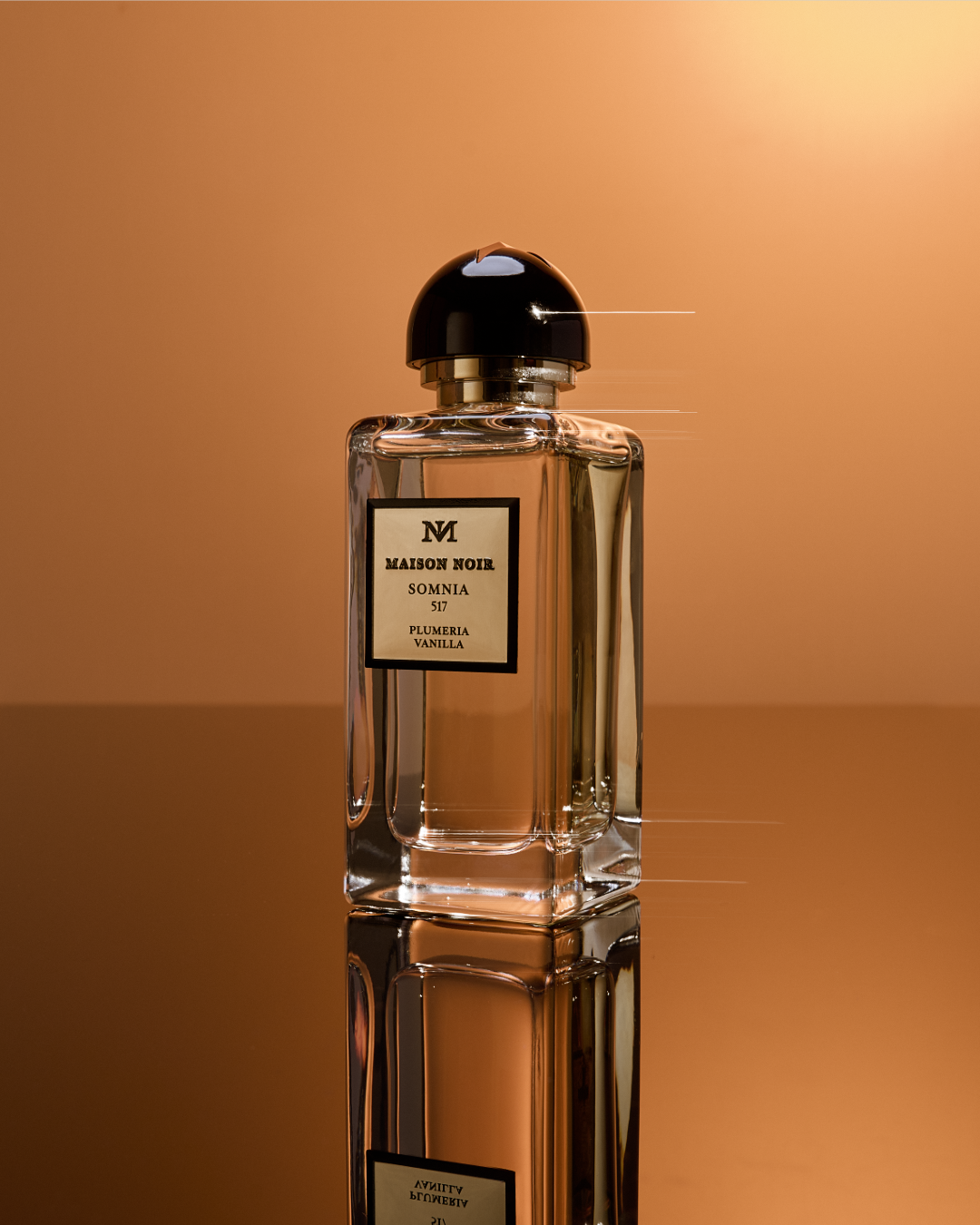
Oud Perfume vs. Cologne: What's the Real Difference?
Oud Perfume vs. Cologne: What's the Real Difference?
Oud perfume and cologne are not separate fragrance genders: they are different concentration formats that can each carry oud as an ingredient. This is one of the most common points of confusion in fine fragrance, and clearing it up changes how you shop entirely.
The word "cologne" does not mean a fragrance made for men. It refers to a specific concentration of fragrance oil in an alcohol base, typically the lightest available. "Perfume" describes a much higher concentration. Oud, meanwhile, is a raw material: a resinous wood ingredient that can appear in an eau de cologne, an eau de parfum, or any level in between.
So when you ask about oud perfume vs. cologne, you are really asking two overlapping questions: what does oud bring to a composition, and how much of it will you actually smell? Both questions have clear answers. You do not need to choose between oud and cologne as if they were opposing categories. You need to understand how concentration and ingredient interact, then choose accordingly.
For context on how independent fragrance houses approach ingredient selection, see how independent fragrance houses approach ingredient selection.
---
What Exactly Is Oud?
Oud is a resinous material formed inside the heartwood of Aquilaria trees when they become infected with a specific mold. It is one of the most costly raw materials in perfumery, valued for its density, complexity, and the way it anchors a composition on skin.
Sensory character matters here. Oud reads differently depending on its origin and how it is processed. You might encounter warm, animalic depth; dry, smoky woodiness; or a sweeter, almost balsamic richness. What unites those variations is density: oud has weight, and it projects that weight slowly over time. It does not perform like a light citrus top note that opens brightly and disappears. It settles, deepens, and holds.
The mistake many people make is treating oud as a fragrance category in its own right, as if buying "an oud" is the same as buying "a floral" or "a woody." It is not. Oud is an ingredient. A perfumer can build an oud-forward composition or use oud as a subtle anchor underneath brighter notes. Either way, the fragrance still belongs to its family based on its full structure, not solely on the presence of oud.
This also means oud is not exclusively masculine. The resin has been central to perfumery traditions across cultures and centuries, worn by anyone who valued its warmth and tenacity. A contemporary oud fragrance can sit anywhere on the olfactive spectrum: smoky and austere, sweet and approachable, or layered with florals and fruit.
Understanding which broader fragrance families suit your preferences will help you place oud in context. See understanding which fragrance families suit you for a practical guide.
---
What Is Cologne, Really?
Cologne, properly called eau de cologne, is a concentration format, not a gender category. It describes a fragrance in which the aromatic compounds are diluted to roughly 2 to 5 percent in an alcohol and water base. That is the standard industry convention, and it means the fragrance is lighter, more volatile, and shorter-lived than higher-concentration formats.
The conflation of "cologne" with "men's fragrance" is a marketing convention, not a chemical one. Retailers and advertisers began shelving lighter, fresher formulas under the cologne label for a male-coded audience, and the association stuck. But the concentration label itself carries no gender. An eau de cologne can be built around rose and iris just as easily as cedar and vetiver.
Practically speaking, eau de cologne performs very differently from an eau de parfum or extrait. Because the fragrance oil content is lower, the opening is typically bright and immediate, but the dry-down is faster. You may need to reapply across a long day, and the sillage (the trail a fragrance leaves) will be modest rather than commanding.
This matters when you consider oud in particular. Oud's depth and tenacity are part of its character. A very light concentration of an oud-forward formula can thin out those qualities, leaving you with a suggestion of oud rather than the ingredient itself. That is not necessarily a flaw; some compositions use oud lightly and deliberately. But you should go in knowing what to expect.
The broader point: why concentration labels have nothing to do with gender is worth understanding before you shop.
---
Perfume Concentration Explained: Every Level at a Glance
Perfume concentration refers to the percentage of aromatic compounds in a fragrance formula. Higher percentages mean stronger projection, longer wear, and generally a richer dry-down. Understanding this spectrum is the foundation of making any informed fragrance decision.
| Concentration | Fragrance Oil % | Typical Longevity | Sillage |
|---|---|---|---|
| Eau de Cologne (EDC) | 2-5% | 2-3 hours | Close to skin |
| Eau de Toilette (EDT) | 5-15% | 3-5 hours | Moderate |
| Eau de Parfum (EDP) | 15-20% | 5-8 hours | Noticeable trail |
| Parfum / Extrait | 20-40% | 8-12+ hours | Rich, expansive |
These ranges reflect standard industry convention. Individual formulas vary based on the specific ingredients used, the quality of the aromatic materials, and the perfumer's intent.
For oud, the practical implication is significant. Oud's most distinctive qualities, its smoky depth, its animalic warmth, its slow-releasing base character, emerge most fully at higher concentrations. An eau de parfum or extrait gives oud room to develop through its full arc on skin. An eau de cologne may capture a lighter facet of the same material but will not deliver the full-bodied experience.
That said, perfume concentration explained simply is this: higher is not universally better. A light, citrus-forward composition may be exactly right at eau de cologne strength for a summer morning. The question is always whether the concentration serves the formula's intention and your context of wear.
For practical guidance, see how to apply fragrance for maximum longevity at any concentration and matching concentration to occasion and season.
---

Alter Ego 786
Experience woody and spicy notes in a concentrated fragrance format.
$125.00 - $195.00
Shop Now →Oud Eau de Parfum vs. Oud Cologne: Which Should You Choose?
Choosing between an oud eau de parfum and an oud cologne depends on three practical factors: how long you want the fragrance to last, what character you want it to take on skin, and when and where you plan to wear it.
An oud eau de parfum delivers the ingredient's full depth. The dry-down is longer and more complex, moving through its top notes relatively quickly before the resinous base settles. Expect noticeable longevity and a trail that announces itself in a room. This is the format to choose when you want oud to be the central story of a day or evening.
An oud cologne, by contrast, offers a lighter, fresher interpretation. Some houses use this format intentionally, placing oud alongside citrus or aquatic notes for a composition that reads as approachable and immediate rather than dense and immersive. If you are newer to oud or prefer a fragrance that stays closer to the skin, this format is a reasonable entry point.
On the question of quality: a lower concentration does not signal an inferior fragrance. The oud material can be equally fine in both. What differs is volume and wear arc. Neither is categorically better; they serve different needs.
Seasonal suitability also shapes the choice. Oud eau de parfum tends to suit cooler months, when its warmth and density feel calibrated to the air. You can read more about how heavier concentrations of oud-rich fragrances suit cooler seasons.
---

Icarus 967 Extrait
Premium extrait concentration delivers rich woody and herbal oud character.
$265.00
Shop Now →How Master Perfumers Work with Oud
A master perfumer uses oud as a structural element, not a decorative one. Its role in a composition is usually architectural: oud forms the base, anchors the other materials, and determines how the fragrance behaves on skin over hours.
That work is genuinely precise. Oud can overpower a composition if handled without restraint. Perfumers balance it against other materials, sometimes using it as the dominant voice, sometimes threading it quietly beneath brighter notes so it only becomes apparent as the fragrance dries down.
Alter Ego 786 is a useful illustration of this approach. The composition is built on a solid oud wood base, over which a smoky top layer develops, with hints of raspberry adding a precise and deliberate contrast. The raspberry does not soften the oud into sweetness; it creates tension. The smoke and the fruit pull in different directions, and the oud holds the composition together underneath both. That is skilled use of the ingredient: oud as foundation rather than effect.
This kind of construction is why oud is associated with quality in fine fragrance. Used well, it has a gravity that simpler materials cannot replicate. But oud's presence does not automatically guarantee quality. A poorly constructed formula with oud will still read as poorly constructed. The ingredient is a tool, and the perfumer's judgment determines the result.
For further reading on building around oud, see layering oud-forward fragrances with complementary scents and how different note families interact with a resinous base like oud.
---
How to Decide: Oud Perfume or Cologne for Your Needs
Choosing between an oud perfume and a cologne format comes down to four clear questions. Answer them honestly, and the right format becomes obvious.
The practical decision framework:
- How long do you need the fragrance to last? If you want all-day wear without reapplication, choose eau de parfum or extrait. If a few hours is sufficient, eau de cologne or eau de toilette works.
- How prominent do you want oud to be? For oud as the dominant experience, choose a higher concentration. For oud as a quiet undertone, a lighter format serves that purpose.
- What season and occasion are you dressing for? Warmer, heavier concentrations suit cooler weather and evening occasions. Lighter concentrations work well in warm seasons and daytime settings.
- What is your skin chemistry like? Skin that runs warm and dry tends to amplify and hold fragrance well. On skin that reads cooler or oilier, a higher concentration often compensates.
Addressing eau de parfum vs. cologne directly: the difference is not quality or gender. It is intensity and duration. Both formats can carry excellent oud-forward compositions.
Before committing to a full bottle, testing matters. See using fragrance samples to understand how oud develops on your skin for a practical approach to sampling before you buy.
---

RosaEterna 163
Woody floral blend offers versatile option for any fragrance preference.
$125.00 - $195.00
Shop Now →Frequently Asked Questions
These questions come up consistently from people navigating oud perfume vs. cologne for the first time. The answers below cover the core distinctions concisely.
What are the key differences between perfume and cologne?The key difference is concentration of aromatic compounds. Perfume (or eau de parfum) contains 15 to 20 percent fragrance oil and lasts longer with more noticeable projection. Eau de cologne contains 2 to 5 percent, making it lighter and shorter-lived. Neither term indicates the gender of the intended wearer.
How do oud and perfume differ from each other?Oud is an ingredient; perfume is a product format. A perfume can contain oud, or it can contain none at all. Oud refers specifically to the resinous material from Aquilaria wood, and it appears across all concentration levels, from cologne to extrait.
What exactly is oud?Oud is a dense, resinous material that forms inside Aquilaria trees in response to fungal infection. It is one of the most valued raw materials in perfumery, known for its depth, warmth, and longevity on skin.
Is oud a type of perfume or cologne?Oud is neither. It is an ingredient that can appear in any concentration format: eau de cologne, eau de toilette, eau de parfum, or extrait. Calling a fragrance "an oud" is shorthand for saying oud is prominent in its composition, not that it belongs to a separate product category.
What does oud smell like?Oud is warm, deep, and woody, with character that shifts depending on its origin and processing. You may encounter smoky, animalic, or balsamic qualities. It is never light or fleeting; its nature is to project slowly and settle on skin over time.
Which is stronger, cologne or perfume?Perfume is stronger. Eau de parfum and extrait contain significantly higher concentrations of aromatic compounds than eau de cologne, resulting in more projection, a longer-lasting dry-down, and a richer overall presence on skin.
What is the difference between eau de cologne and perfume?Eau de cologne sits at the lightest end of the concentration spectrum, typically 2 to 5 percent fragrance oil, lasting two to three hours. Perfume or extrait sits at the other end, at 20 to 40 percent, lasting eight hours or more. Eau de parfum falls between them, and all three can feature any notes or ingredients, including oud.
For guidance on applying oud fragrances for the best longevity and balance, see applying oud fragrances for the best longevity and balance.
---
The Clearest Way to Choose
Choosing between oud perfume and cologne is simpler once you separate two questions that are often tangled together: what ingredient do you want, and how much of it do you want on skin?
Three takeaways to carry forward:
- Oud is an ingredient, not a category. It can appear in any concentration format, from the lightest cologne to the richest extrait.
- Concentration determines longevity and intensity, not gender or quality. A well-made oud eau de cologne and a well-made oud extrait can both be excellent. They serve different contexts.
- Sampling is the most reliable way to decide. Oud interacts with skin chemistry in ways that are difficult to predict from a description. What reads as dense and smoky on one person can be warm and approachable on another.
Before committing to a bottle, spend time with the fragrance on your own skin. See discover how sampling leads to more confident fragrance choices for a structured approach.
If you want to experience how oud and other carefully composed materials develop across different concentrations and note structures, the Maison Noir Discovery Set is a considered starting point. You can explore the Discovery Set and find the gateway that suits you.
Read more
How French Perfumery Training Shapes a Master Perfumer's Craft A master perfumer trained in France is a specialist who has completed years of formal chemistry and sensory education, typically wit...
How to Wear Fragrance Mist: When a Lighter Format Is the Right Choice A fragrance mist is a water-based or alcohol-light scent formulation containing roughly one to three percent aromatic compou...