
Eau De Parfum vs. Eau De Toilette: What the Concentration Actually Changes
Eau De Parfum vs. Eau De Toilette: What the Concentration Actually Changes
Eau de parfum and eau de toilette differ in fragrance oil concentration, typically 15-20% for EDP and 5-15% for EDT. But concentration does more than determine longevity. It changes which notes you perceive first, how the composition unfolds across your skin, and how far the scent projects. Two fragrances built from the same formula can feel like entirely different creations depending on their concentration.
Understanding this distinction matters whether you are building a collection or choosing your first bottle. EDP and EDT are not the same scent in different quantities. They are genuinely different olfactive experiences, shaped by how volatility interacts with concentration.
Two confusions surface repeatedly. Many people treat EDP and extrait de parfum as interchangeable, when they are not. Many also struggle to keep EDC, EDT, and EDP straight. This article clears both up.
You will find a concentration comparison table, an explanation of how note dominance shifts with concentration, realistic longevity guidance, occasion-matching advice, and correct application technique for each tier. For broader grounding in how fragrance works, the fragrance education fundamentals section of this site is a useful companion.
---
What EDP, EDT, EDC, and Extrait Actually Stand For
The abbreviations EDP, EDT, EDC, and Extrait are shorthand for four distinct concentration tiers, each with a different proportion of aromatic concentrate dissolved in alcohol and water.
Eau de Cologne (EDC) comes from the French for "water of Cologne" and carries the lightest concentration, typically 2-4% fragrance oil. It was historically the dominant form of personal fragrance and remains associated with fresh, citrus-forward compositions. Eau de Toilette (EDT) translates literally as "water of the toilet," the French word "toilette" referring to the act of grooming and personal preparation, not the room. EDT sits at roughly 5-15% concentration and is the most widely produced fragrance tier. Eau de Parfum (EDP) translates as "water of perfume" and sits at roughly 15-20% concentration. It is richer, more persistent, and tends to foreground the heart and base notes more readily than an EDT built from the same composition. Extrait de Parfum, also called Parfum or Pure Parfum, sits above all of these, at 20-40% concentration. This is where a crucial reader mistake becomes important: EDP and extrait are not the same thing. EDP is eau de parfum, a dilution in the mid-tier range. Extrait is the most concentrated form, often the densest, most skin-close expression a house produces. Conflating them leads to real surprises, usually around sillage and cost.For a fuller account of how all five concentration tiers relate to each other and where constructs like "intense" or "concentré" fit, see the full spectrum of fragrance concentrations.
---
Fragrance Concentration at a Glance: A Comparison
The difference between fragrance concentrations is best understood as a spectrum, not a hierarchy of quality. Here is each tier in comparable terms.
| Concentration | Abbreviation | Fragrance Oil % | Typical Longevity | Projection | Best For |
|---|---|---|---|---|---|
| Eau de Cologne | EDC | 2-4% | 2-3 hours | Close | Hot weather, light daywear |
| Eau de Toilette | EDT | 5-15% | 3-5 hours | Moderate | Everyday, office, warm seasons |
| Eau de Parfum | EDP | 15-20% | 5-8 hours | Medium-strong | Autumn/winter, evenings, longer days |
| Extrait de Parfum | Extrait / Parfum | 20-40% | 8-12+ hours | Intimate | Formal occasions, cold weather, skin-scent lovers |
A practical note: these ranges reflect industry conventions, not guarantees. Skin chemistry, hydration level, ambient temperature, and the specific formula all affect how a fragrance performs. An EDT on very dry skin may last no longer than two hours. An EDP on oily, warm skin may project strongly for the better part of a day. The table gives you a reliable starting point, not a fixed outcome.
For context on understanding all five concentration tiers, including constructs that fall between categories, the linked guide covers the full picture.
---

Icarus 967 Extrait Sample
Try a sample to experience concentration differences firsthand before committing.
$10.00
Shop Now →How Concentration Changes the Scent Itself, Not Just How Long It Lasts
A higher concentration does not simply make the same fragrance louder. It changes which notes you perceive most, and when you perceive them, because concentration alters the volatility balance within a composition.
This is the point most fragrance writing skips. Many people assume EDT and EDP versions of the same scent are identical in character, with the EDP just carrying more volume. That is rarely accurate.
Fragrance molecules differ in volatility, the speed at which they evaporate and reach your nose. Top notes-typically citrus, light herbs, some aldehydes-are highly volatile. They arrive quickly and fade quickly. Heart notes, florals, spices, certain green accords, evaporate more slowly. Base notes, woods, resins, musks, ambers, are the least volatile and persist longest.
When you increase concentration, you raise the absolute quantity of every ingredient in the formula. But the less volatile molecules, heart and base, benefit disproportionately. In an EDT, the top notes may feel bolder relative to what follows, because the base materials have less mass to assert themselves. In an EDP of the same composition, the base often announces itself much earlier in the dry-down, the heart reads as denser, and the entire arc from opening to dry-down takes longer.
The practical consequence: a fresh, green EDT may read as a warmer, woodier EDP, not because the formula has changed, but because concentration reweights the interplay between tiers.
This matters when you are sampling. If you try an EDT at a counter and find it too sharp or linear, the EDP may genuinely suit you better, not just last longer. The reverse is also true: an EDP that feels heavy in summer may be the same composition that works perfectly as an EDT.
Understanding how fine fragrance compositions are built helps you predict these shifts. And if you want to understand what EDP specifically feels like as it moves through its dry-down on skin, what eau de parfum actually feels like on skin addresses that directly.
---
Longevity and Projection: What to Realistically Expect
EDP typically lasts 5-8 hours on skin; EDT typically lasts 3-5 hours. Both figures assume average skin type and moderate application, and both can shift considerably depending on several variables.
Skin type is the most significant personal variable. Drier skin absorbs fragrance more readily and tends to hold it less well on the surface. Oilier skin creates a slightly richer medium for the aromatic compounds, and many people find their fragrances last longer as a result. Moisturising with an unscented lotion before applying fragrance is a reliable way to extend longevity regardless of concentration.
Projection, or sillage, differs between the two tiers, but not always in the way people expect. EDT tends to project more freely in the early phase, because the lighter, more volatile top notes disperse quickly into the air around you. EDP stays closer to the skin for longer before the same dispersal happens. Neither is objectively better. A close sillage in EDP can read as intimate and considered. A wider sillage in EDT can feel fresh and sociable.
Temperature amplifies both. Warm skin and warm air increase the rate of evaporation, which can make an EDT feel more lively in summer and can make a heavy EDP feel overwhelming.
The quality of application matters as much as concentration. More on that in the next section. For foundational guidance on placement and layering, how to apply perfume so it lasts all day covers the mechanics thoroughly.
---
Which to Choose: Matching Concentration to Occasion, Season, and Preference
EDP is the stronger concentration between the two, but stronger is not always better. The right choice follows context: season, occasion, environment, and how much sillage you want to project.
This is the direct answer to the "which is stronger" question many readers bring to this article. EDP is stronger, typically carrying more than twice the fragrance oil content of an EDT. But strength without context is the wrong lens. A strong concentration in the wrong setting can be intrusive rather than impressive.
Heat amplifies fragrance. In summer or in warm indoor environments, an EDT often performs better than its EDP counterpart, because the ambient heat is already doing the work of projection. Applying a concentrated EDP in midsummer heat can result in a sillage that overwhelms rather than intrigues. The EDT of the same composition may feel perfectly calibrated.
In autumn and winter, the equation shifts. Cooler air slows evaporation, which means lighter concentrations can feel muted or disappear quickly. An EDP in cold weather holds its presence, the base notes emerge steadily rather than fading before the heart fully develops.
For formal or evening occasions, the richer arc of an EDP suits the longer timeline and the expectation of a more considered sillage. For daytime office wear or social settings where you will be close to others, EDT's moderate projection is often the more thoughtful choice.
Personal preference also matters. Some people find close-to-skin, skin-scent wear genuinely more appealing than wide sillage; for them, an EDP worn lightly may produce exactly that. Others want the projection of an EDT's opening phase, for the energy it creates in a room.
For a practical framework that maps fragrance choices to specific occasions and seasons, choosing fragrance by occasion and season offers structured guidance. And if you are drawn to richer compositions as the year turns, autumn fragrances that reward a richer concentration is a natural companion read.
---

Icarus 967 Extrait
Extrait de Parfum offers the highest concentration for special occasions and evening wear.
$265.00
Shop Now →How to Apply Each Concentration Correctly
The correct application technique differs between EDP and EDT, because concentration and volatility require slightly different approaches to perform well.
For both, the principle of pulse points applies: inner wrists, the sides of the neck, behind the ears, the crook of the elbow. These areas produce warmth that supports controlled evaporation and projection.
Applying EDP correctly means using restraint. Because the concentration is higher, two to three sprays on pulse points is typically enough. More than that, particularly in warm weather or small spaces, can overwhelm. Apply to clean, slightly moisturised skin. Let the fragrance settle naturally. Do not rub the application site. Rubbing breaks down the molecular structure of the top notes and disrupts the intended dry-down arc, causing the composition to smear into a single flat accord rather than unfolding through its tiers. Friction generates heat and pressure that accelerate evaporation unevenly, destroying the balance between volatile and less volatile ingredients. Applying EDT correctly can allow for a slightly more generous application, three to four sprays, because the lower concentration means you are less likely to project aggressively. EDT also benefits from applying to hair or clothing if the formula does not stain, since the slower-to-absorb surface extends the fragrance's presence in the air around you.Both concentrations benefit from application to clean skin, and both last longer on hydrated skin.
For a detailed guide to placement, layering, and making fragrance last through the day, applying perfume for all-day longevity is worth reading alongside this. If you want a structured rule for how many sprays and where, the 3:1:1 fragrance application rule provides a clear framework.
---

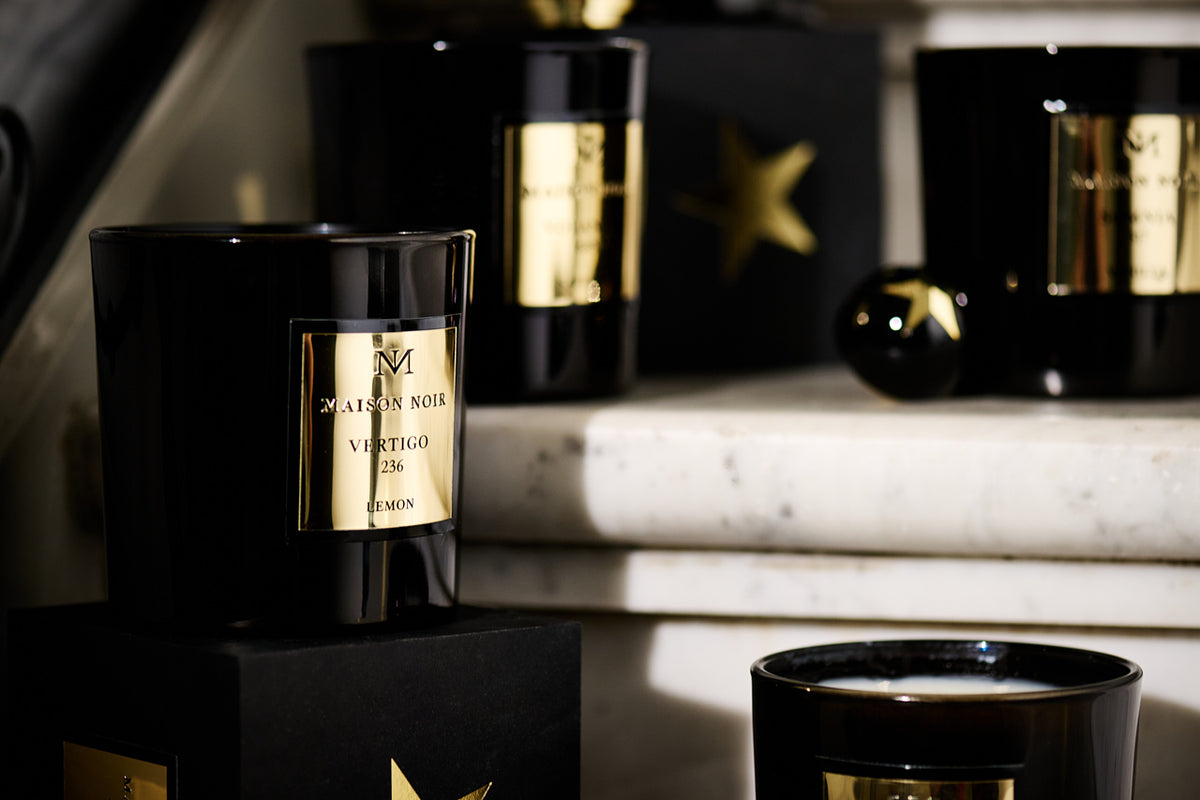
Vertigo 236
Explore versatile fragrances suitable for different concentrations and application methods.
$125.00 - $195.00
Shop Now →EDP vs. EDT vs. Extrait de Parfum: Where the Line Sits
The qualitative difference between EDT, EDP, and Extrait is not simply a matter of how long each lasts. The experience of wearing each tier is genuinely different in character.
An EDT tends to be the most outward-facing of the three. Its opening is often the most vivid, the most immediate. The top notes arrive confidently, and the overall arc is faster: the composition opens, develops, and quiets within a shorter window. This is not a flaw. It is a design quality that suits certain occasions and compositions.
An EDP sits in the middle of the spectrum and is often described as the most balanced expression of a fragrance. The heart and base notes have enough presence to assert themselves fully without the top notes disappearing before the composition settles. The arc is longer. The sillage is more sustained but not necessarily wider.
Extrait de Parfum is the most skin-intimate of the three. Its projection is often surprisingly close, not loud. The reason is that with very high concentrations of aromatic material, the composition does not need to project aggressively; it simply stays, deeply present, on the skin for hours. Extrait is often the choice for those who want to experience a fragrance in its most concentrated, most structured form.
The reader mistake worth correcting again: EDP and Extrait are not the same category. You will find both in fine fragrance collections. They feel materially different to wear. When a house offers multiple concentrations of the same composition, sampling each is the only reliable way to understand which suits you best.
For a sense of how niche fragrance houses approach the decision of which concentrations to produce and why, how niche houses approach concentration and formula offers relevant context.
---
Frequently Asked Questions
Concentration terminology generates more confusion than almost any other area of fragrance knowledge, largely because the abbreviations overlap, the French terms are unfamiliar, and marketing rarely explains the distinctions clearly. These questions address the most common points of uncertainty.
Which fragrance type is stronger between eau de toilette and eau de parfum?Eau de parfum is stronger. It contains a higher percentage of aromatic concentrate, typically 15-20%, compared to EDT's 5-15%. Strength in this context means concentration, not necessarily the impression you will make; the right concentration for a given context is not always the highest one.
How long does eau de parfum last compared to eau de toilette?EDP typically lasts 5-8 hours on skin; EDT typically lasts 3-5 hours. Both figures vary with skin type, ambient temperature, and the specific formula. Dry skin shortens longevity for both; moisturised skin extends it.
How do eau de toilette, eau de parfum, and pure parfum vary?EDT, EDP, and pure parfum (extrait) form an ascending concentration scale: EDT at roughly 5-15%, EDP at 15-20%, and extrait at 20-40%. Each tier changes not just longevity but the character of the dry-down, with extrait offering the most skin-intimate, base-forward experience. For finding your personal scent identity, understanding which tier suits your preferences is as important as finding the right composition.
What do the abbreviations EDP, EDT, and EDC stand for?EDP is Eau de Parfum. EDT is Eau de Toilette. EDC is Eau de Cologne. All three are French terms referring to the concentration of aromatic compounds in an alcohol solution, with EDC being the lightest and EDP the strongest of the three.
How do eau de parfum and eau de toilette differ in scent profile?They can smell meaningfully different even when built from the same composition, because higher concentration foregrounds the heart and base notes while lighter concentration allows the top notes to dominate the opening. An EDT may read as fresher or sharper; the same composition in EDP may read as warmer, richer, or woodier. Using fragrance samples to compare concentrations before buying is the most reliable way to discover which expression suits you.
Are eau de parfum and eau de toilette the same thing?No. They share a common category, fragrance, but differ in concentration and, in many cases, in the olfactive experience they deliver. They are not interchangeable, and assuming the EDT is simply a diluted EDP can lead to misplaced expectations.
What is the difference between eau de cologne and eau de toilette?Eau de Cologne is lighter than eau de toilette, containing roughly 2-4% fragrance oil compared to EDT's 5-15%. EDC lasts approximately 2-3 hours and projects lightly, making it suited to hot weather or situations where a very subtle presence is appropriate.
---
Choosing Your Concentration: The Short Answer
The difference between eau de parfum and eau de toilette comes down to two things: concentration changes the character of a scent, not just its duration, and the better choice is the one that fits your context.
EDP is not inherently superior to EDT. EDT is not a compromise version. Each concentration tier exists because different situations call for different olfactive presences. Summer heat rewards EDT. Autumn evenings reward EDP. Your skin type, your environment, and your preference for sillage all shape which feels right.
Before committing to a full bottle, sampling both concentrations of a composition you are drawn to is a sound approach. The difference can be subtle or it can be striking, and there is no substitute for wearing something through its full dry-down on your own skin.
For a practical way to compare concentrations before deciding, how to use fragrance samples to compare concentrations is useful reading. And if you are curious about the thinking behind unisex, intentionally composed fragrance, why unisex fragrance rewards intentional choosing offers a considered perspective.
To experience a range of compositions across concentration and character before committing to a full bottle, explore the Maison Noir Discovery Set.
Read more
What Eau De Parfum Actually Feels Like on Skin: Projection, Dry-Down & When to Choose It Introduction Eau de parfum contains roughly 15 to 20 percent aromatic compounds, which puts it squar...
How to Use Eau De Parfum Correctly: Application, Timing & Technique Eau de parfum sits at 15 to 20 percent aromatic concentration in an alcohol base, positioning it between eau de toilette a...