
Unisex Fragrance vs. Men's or Women's Perfume: How to Decide Which Is Right for You
What Is Unisex Fragrance, and How Does It Differ from Men's or Women's Perfume?
Unisex fragrance is a perfume composed, marketed, and worn without reference to a gendered audience. The question of unisex fragrance vs mens womens perfume resolves quickly once you understand that gendered fragrance categories are marketing conventions, not olfactory science. No note family is chemically masculine or feminine. No concentration format belongs to one gender. The divisions you see on department store counters reflect decades of advertising strategy, not anything intrinsic to the liquid in the bottle.
The practical answer: you can wear any fragrance regardless of the label on its box. What actually varies between fragrances is their note composition, their concentration, and the philosophy of the house that made them. Gender labelling is one shorthand for predicting those qualities, but it is an imprecise and increasingly dated one. Understanding what actually creates a scent's character gives you far more useful information.
Niche houses have understood this for years, which is why unisex fragrance is reshaping fine perfumery at the higher end of the market.
Why Are Some Perfumes Marketed for Men and Others for Women?
Gendered fragrance marketing emerged from the broader consumer goods industry, not from any meaningful difference in how men and women experience scent. Brands learned that separate product lines for separate audiences created more purchase occasions, enabled distinct pricing, and allowed targeted advertising. The gender binary on fragrance counters is, in this sense, a commercial infrastructure rather than a sensory one.
The conventions that resulted from that infrastructure are real, even if their origins are arbitrary. Fragrances marketed to women have historically emphasised florals, fruits, and softer musks. Those marketed to men have leaned on woods, aromatic herbs, leather, and fresh aquatic accords. These are tendencies, not rules, and many of the most celebrated "masculine" classics wear beautifully on anyone.
One specific misconception deserves a direct correction: Eau de Parfum is not a women's concentration, and Eau de Toilette is not a men's one. Concentration refers to the proportion of aromatic compounds in the formula, nothing more. You will find EdP formulations in men's lines and EdT formulations across women's collections. Conflating concentration with gender target leads to buying decisions based on a label that has no bearing on who the fragrance was actually composed for. For a clear account of what concentration actually changes in a fragrance, the distinction between EdP and EdT is worth understanding on its own terms.
The short version: gendered marketing tells you something about a fragrance's probable aesthetic territory. It tells you nothing about whether that territory is yours.
What Makes a Scent Feel Feminine, Masculine, or Unisex?
The feeling of a scent being masculine, feminine, or neutral comes from cultural association, not chemistry. Certain note families have been so consistently used in one direction that they carry a gender signal by habit. Knowing which families those are gives you a working vocabulary for navigating any fragrance counter.
Note families conventionally coded as feminine: florals (rose, jasmine, iris, peony), soft fruits (peach, lychee, raspberry), gourmand accords (vanilla, caramel, praline), light musks, and powdery aldehydes. How floral, fruity, and gourmand accords are built explains why these families smell the way they do and how perfumers construct them. Note families conventionally coded as masculine: dry woods (cedar, sandalwood), leather, tobacco, aromatic herbs (sage, lavender in dry rather than floral contexts), vetiver, and fresh aquatics. These read as masculine largely because fine fragrance marketing directed them that way through most of the twentieth century. Note families most often coded as unisex: citrus, clean musks, incense, resins, green accords, and most spice families. These tend to sit at the intersection because they carry fewer accumulated associations.Skin chemistry complicates all of this further. The same fragrance can read warmer, sharper, heavier, or lighter depending on your skin's pH, oil production, and temperature. A composition that reads intensely floral on one person may read predominantly musky on another. This is why a note list is a starting point, not a prediction. How to work out which note families suit you is worth consulting before you commit to a bottle.
The one thing to correct clearly: unisex does not mean bland. Many unisex compositions are among the most architecturally complex and confident fragrances in the market. "Neutral" in the gender sense has nothing to do with interest or character in the olfactory sense.

Icarus 347
Explore how clean and fruity notes transcend traditional gender boundaries.
$125.00 - $195.00
Shop Now →Gendered vs. Unisex Fragrance: A Side-by-Side Summary
The most practical way to see what actually separates gendered and unisex fragrances is to compare them across the dimensions that matter, not the ones that are simply assumed to matter. The table below covers the real differences and the ones that are more apparent than real.
| Dimension | Gendered Fragrance | Unisex Fragrance |
|---|---|---|
| Note conventions | Typically skews toward florals/fruits (women's) or woods/aromatics (men's) | Draws from the full palette; tends toward citrus, resins, incense, clean musks |
| Marketing framing | Targeted at one gender in name, visual identity, and advertising | Positioned without gender reference; often numbered or abstract |
| Concentration formats | EdP, EdT, EdC available across both; no concentration is gender-specific | Same concentration formats; no difference in format availability |
| Price positioning | Wide range; designer and niche both represented | Heavier representation at the niche and fine fragrance end |
| House philosophy | Often larger designer or mass-market houses with category segmentation | Often independent or niche houses that reject segmentation as a creative constraint |
| Who it suits | Anyone, regardless of the label | Anyone, regardless of the label |
The last row is the point. Both categories suit anyone. The meaningful differences are in aesthetic territory and commercial philosophy, not in who should or can wear them.
How niche houses approach fragrance differently from designer brands provides useful context for why the split between these two columns often aligns with the split between independent and mass-market perfumery.Is Eau de Parfum Designed for Women? Clearing Up Concentration Confusion
Eau de Parfum is not designed for women. It is a concentration format, meaning it describes the percentage of aromatic concentrate in a fragrance formula, and nothing else. The association between EdP and women's fragrance is a byproduct of marketing convention, not formulation practice.
Here are the standard concentration ranges as a practical reference:
- Eau de Cologne (EdC): approximately 2 to 4 percent aromatic concentrate. Light, brief wear.
- Eau de Toilette (EdT): approximately 5 to 15 percent. The most common format across all categories.
- Eau de Parfum (EdP): approximately 15 to 20 percent. Richer projection, longer longevity.
- Parfum or Extrait de Parfum: approximately 20 to 30 percent or higher. The most concentrated and typically most expensive expression.
You will find EdP formulations in men's lines regularly. You will find EdT formulations across women's collections. The format follows the perfumer's intention for how the fragrance should project and last, not the gender of the intended wearer.
The term "cologne" deserves a separate note. In common usage, "cologne" has drifted into meaning a men's fragrance. Technically, it describes a concentration level (Eau de Cologne), available to anyone. How EdP and EdT compare in wear and intensity covers the practical differences in more detail. For those considering the highest concentration available, when Extrait concentration makes a real difference is worth reading before deciding.
Why Niche Houses Often Skip the Gender Label Entirely
Niche perfumery tends to omit gender labels because the creative process starts with a concept, a material, or an emotion, not a target demographic. When the composition comes first, dividing the audience by gender before a single note is chosen makes no creative sense. This is not merely a marketing distinction. It reflects a genuinely different philosophy about what fragrance is for.
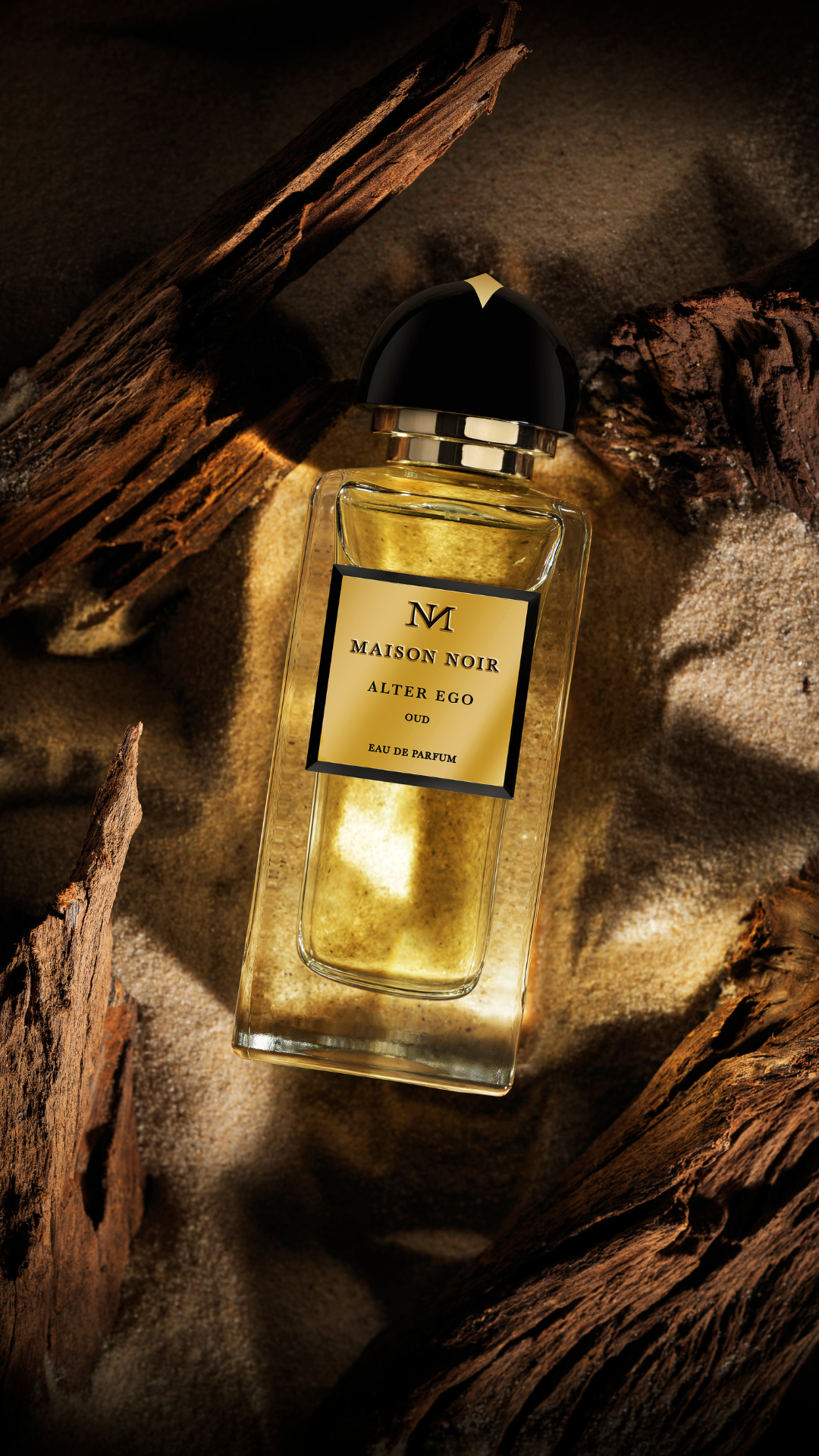
How independent fragrance houses think differently about scent covers the structural reasons why niche perfumery operates outside the conventions that govern mass-market fragrance. It is also worth understanding how oud sits across both gendered and unisex compositions, since oud is one of the materials most often claimed as masculine but equally at home in unisex territory.Maison Noir illustrates this well. The house composes every fragrance in France, designs in Switzerland, and releases the entire collection as unisex from the outset. Alter Ego 786, with its smoky oud base and raspberry-touched top, lands in territory that has been claimed by both masculine and feminine perfumery, while refusing to belong to either. Bohemia 265 opens with fresh bergamot and aromatic cardamom, dries to an amber vetiver base, and again occupies a space that any note-map would struggle to gender. Both compositions are numbered rather than named for a type of person, which is the point.

Bohemia 265
Discover a niche fragrance that blends citrus and woody notes beautifully.
$125.00 - $195.00
Shop Now →How to Decide Which Type of Fragrance Is Right for You
The simplest framework: ignore the gender label and focus on the three dimensions that actually predict whether a fragrance will suit you. Those are note families, concentration, and skin chemistry. Everything else is packaging.
Here is a practical numbered process:
- Identify the note families you already respond to. Think about fragrances you have worn or noticed on others and found appealing. Break them into top, heart, and base notes and look for patterns. Woody and resinous? Citrus and aromatic? Soft and floral?
- Decide on the intensity you want. Consider the context: a workplace, an evening, a warm climate. Higher concentrations project further and last longer. Lower concentrations are more intimate and more versatile across settings.
- Test on your skin, not on paper. Skin chemistry transforms a fragrance. A strip gives you a rough impression; your wrist gives you the truth. Allow at least twenty minutes before you decide.
- Do not let the gendered label redirect you. A fragrance described as "for men" that contains every note you love is a better choice than a fragrance described as "for women" that contains none of them. The label predicts aesthetic territory. Your skin and nose confirm it.
Sampling before committing to a full bottle is practical advice regardless of category. How to use fragrance samples to find your perfect scent gives a structured approach, and how to match a fragrance to occasion and season helps once you have identified your preferred families. A Discovery Set, such as the one available at maison-noir.com/pages/discovery-set, lets you test across multiple compositions before choosing.
Unisex does not mean inoffensive. Some of the most assertive, distinctive fragrances on the market carry no gender label at all.

Discovery Set & Gift Card Bundle (EUR)
Sample multiple fragrances to find your perfect scent regardless of marketing labels.
$125.00 - $195.00
Shop Now →Frequently Asked Questions
The questions below address the most common points of confusion around gendered and unisex fragrance. Each answer is self-contained, so you can use any one of them as a quick reference.
What are the main differences between men's and women's perfumes?
The differences are primarily in note conventions and marketing framing. Women's fragrances have historically emphasised florals, fruits, and soft musks; men's fragrances have leaned on woods, aromatics, and leather. Neither the notes nor the concentration format are exclusive to one gender, and both categories suit anyone who is drawn to their character. You can shop for fragrance with confidence using note families rather than gender labels as your guide.
What does unisex fragrance mean?
Unisex fragrance is a perfume composed and marketed without reference to a specific gender. It draws from the full spectrum of note families and is positioned for anyone whose nose is drawn to its character. The category is not defined by blandness or compromise; many of the most complex and considered fine fragrances on the market are unisex.
What is the 3:1:1 rule in perfume?
The 3:1:1 rule is a layering guideline suggesting you use three parts of a base or anchor fragrance for every one part of a complementary middle and one part of a lighter top note fragrance. It is a practical ratio for building a cohesive skin scent from multiple products rather than a formal industry standard. Not all perfumers or wearers follow it, but it offers a useful starting structure for those new to layering.
What is female cologne called?
There is no distinct term for a "female cologne" because Eau de Cologne is a concentration format available to anyone, not a gendered product category. The common assumption that cologne means a men's fragrance comes from decades of mass-market advertising. A woman wearing an Eau de Cologne concentration is simply wearing a lightly concentrated fragrance, the same way anyone else would.
What makes a scent feel feminine, masculine, or unisex?
Cultural association built over decades of fragrance marketing, not chemistry, creates the feeling. Florals and soft fruits read as feminine by convention; dry woods and aromatics read as masculine by convention. Skin chemistry then shifts the perception further: the same formula reads differently depending on the wearer's skin pH and temperature. Niche unisex fragrance often occupies note territory that falls outside the conventional codings entirely.
Which men's or women's fragrances work as unisex options?
Many fragrances marketed to one gender wear equally well on anyone. Woody florals and citrus-aromatic compositions in particular tend to cross the conventional divide easily. A niche buyer's guide to Eau de Parfum covers specific compositions worth considering. The most reliable method is to sample on your own skin rather than rely on the label or another person's assessment.
Is Eau de Parfum designed for women?
No. Eau de Parfum is a concentration format indicating approximately 15 to 20 percent aromatic concentrate in the formula. It has no gender association in terms of composition or intended wearer. The assumption that EdP equals women's fragrance is a marketing artifact, not a formulation fact. Men's lines regularly use the EdP format; women's lines regularly use EdT.
Is Eau de Toilette different from Parfum?
Yes, in concentration and therefore in projection and longevity. Eau de Toilette contains approximately 5 to 15 percent aromatic concentrate; Parfum (or Extrait de Parfum) contains 20 percent or more. Parfum tends to be richer, longer-lasting, and closer to the skin. Neither is gender-specific.
Why are some perfumes marketed for men and others for women?
Because gendered segmentation increases the number of purchasable units and allows targeted advertising, not because fragrance formulas require it. The industry inherited this model from broader consumer goods marketing and maintained it because it was commercially effective. Niche and independent houses have increasingly moved away from it on both creative and philosophical grounds.
The Only Label That Matters Is the One You Give It
Gendered fragrance categories are a commercial convention, not a sensory reality. The three things that actually determine whether a fragrance suits you are its note composition, its concentration, and the way it behaves on your skin. The gender label on the box predicts something about aesthetic territory. It predicts nothing about whether that territory belongs to you.
Three takeaways to carry forward: concentration formats such as EdP and EdT are not gender-coded; note families carry conventional associations that are cultural, not chemical; and niche unisex fragrance is a distinct editorial tradition built on composition rather than demographic targeting. How unisex fragrance is shaping the future of fine perfumery covers where that tradition is heading.
If you want to find where your nose actually lands, the most useful step is to sample across a range before committing. You can start that process by exploring the Discovery Set at maison-noir.com.
The only fragrance that is right for you is the one that smells right on you.
Read more

Discover why the most long-lasting perfumes for women and men go beyond concentration. Learn how base notes, skin chemistry, and application technique determine wear time.
Niche fragrances live by a different standard than the mainstream. They're composed by independent houses with master perfumers, built around creative...