
Long-Lasting Perfume: Why Longevity Depends on More Than Concentration
What Makes a Perfume Truly Long-Lasting?
A long-lasting perfume is one whose molecular architecture, application method, and interaction with your skin combine to sustain perceptible scent projection for six hours or more. If you are searching for the most long-lasting perfumes for women or men, concentration alone will not tell you the full story. Three factors determine how long a fragrance actually lasts on skin: the concentration of aromatic materials, the density and type of base notes in the composition, and the condition of your skin at the point of application. Understanding all three gives you a far more reliable way to shop than simply reaching for the bottle labelled Extrait.
Fragrance enthusiasts who approach their collection with care, thinking about wearing fragrance with intention, consistently find that a thoughtfully composed Eau de Parfum with a heavy base can outlast a carelessly applied Extrait. This guide addresses the longevity factors in perfume that most product pages skip entirely.
---
Concentration Is a Starting Point, Not the Whole Answer
Concentration sets the ceiling, not the guarantee. A higher percentage of aromatic concentrate means more raw material in the bottle, which creates the conditions for longer wear, but only if the formula's other elements support it.
Standard concentration tiers follow an accepted industry framework. Eau de Cologne typically contains around three to five percent aromatic concentrate, Eau de Toilette falls between five and fifteen percent, Eau de Parfum sits between fifteen and twenty percent, and Extrait de Parfum ranges from twenty percent upward. These are broad, acknowledged ranges; individual formulas vary. The practical implication is that an EDT built on a rich amber and resinous base will often outlast an EDP built primarily on light citrus and aquatic top notes, because the molecular weight of the ingredients matters as much as their quantity.
The common mistake is conflating signature scents with long-lasting ones. Many people choose a fragrance because it suits their personality or occasion, then assume that emotional resonance translates into durability. It does not. A scent that feels deeply "you" may be built on volatile aldehydes and fresh herbs that evaporate within two hours. Recognising this distinction is the first step toward building a collection that performs as well as it pleases.
You should also account for what concentration actually changes in a fragrance: not just intensity, but the relative balance of the formula's top, heart, and base, which collectively determine the shape of the fragrance over time.
---
How Base Note Architecture Determines Wear Time
The base notes of a fragrance are the primary determinant of how long it lasts, far more than the concentration tier alone. While top and heart notes define the character and first impression of a scent, the base provides the structural foundation that anchors everything else to skin.
A useful framework for understanding this is the 30/50/20 rule, a compositional principle referenced by perfumers to describe the rough proportional relationship between a fragrance's top, heart, and base. Under this model, top notes account for approximately 30 percent of the olfactive impression, heart notes for 50 percent, and base notes for 20 percent by volume, though the base carries a disproportionate weight in terms of longevity because its molecules are heavier and evaporate more slowly. A composition that skimps on the base in favour of a dazzling opening will fade significantly faster than one that invests in a well-developed foundation.
Certain ingredient categories are particularly associated with sustained wear. Musks, resins, woods, and amberaceous materials bond readily with the skin and continue to radiate hours after the lighter notes have departed. Ambroxan, derived from ambergris, is a widely used modern fixative with exceptional diffusion and staying power. Tonka bean, with its warm coumarin character, acts as a smooth anchoring material. Oud, one of the most tenacious naturals in perfumery, can persist on skin and fabric for an extended period.
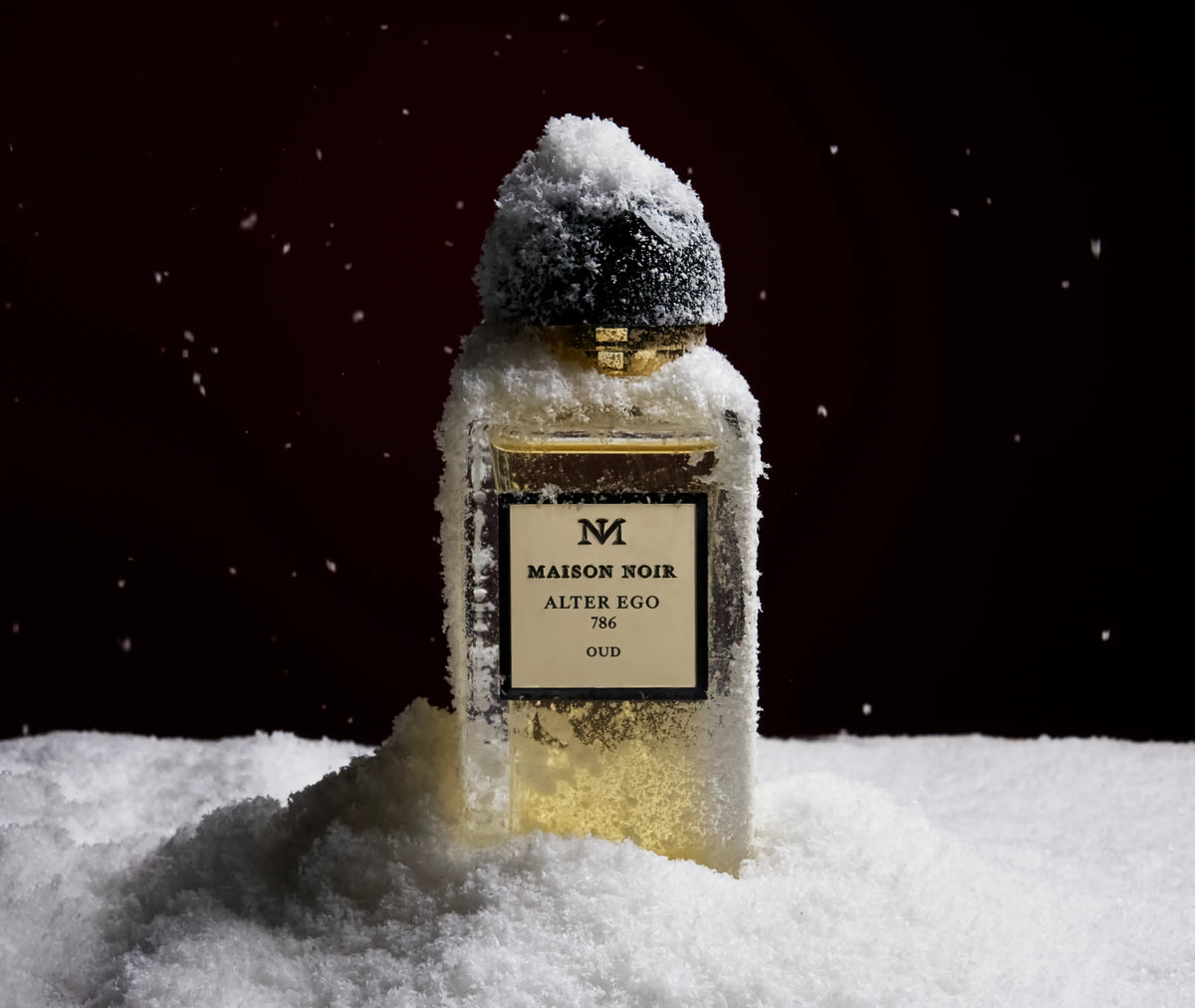
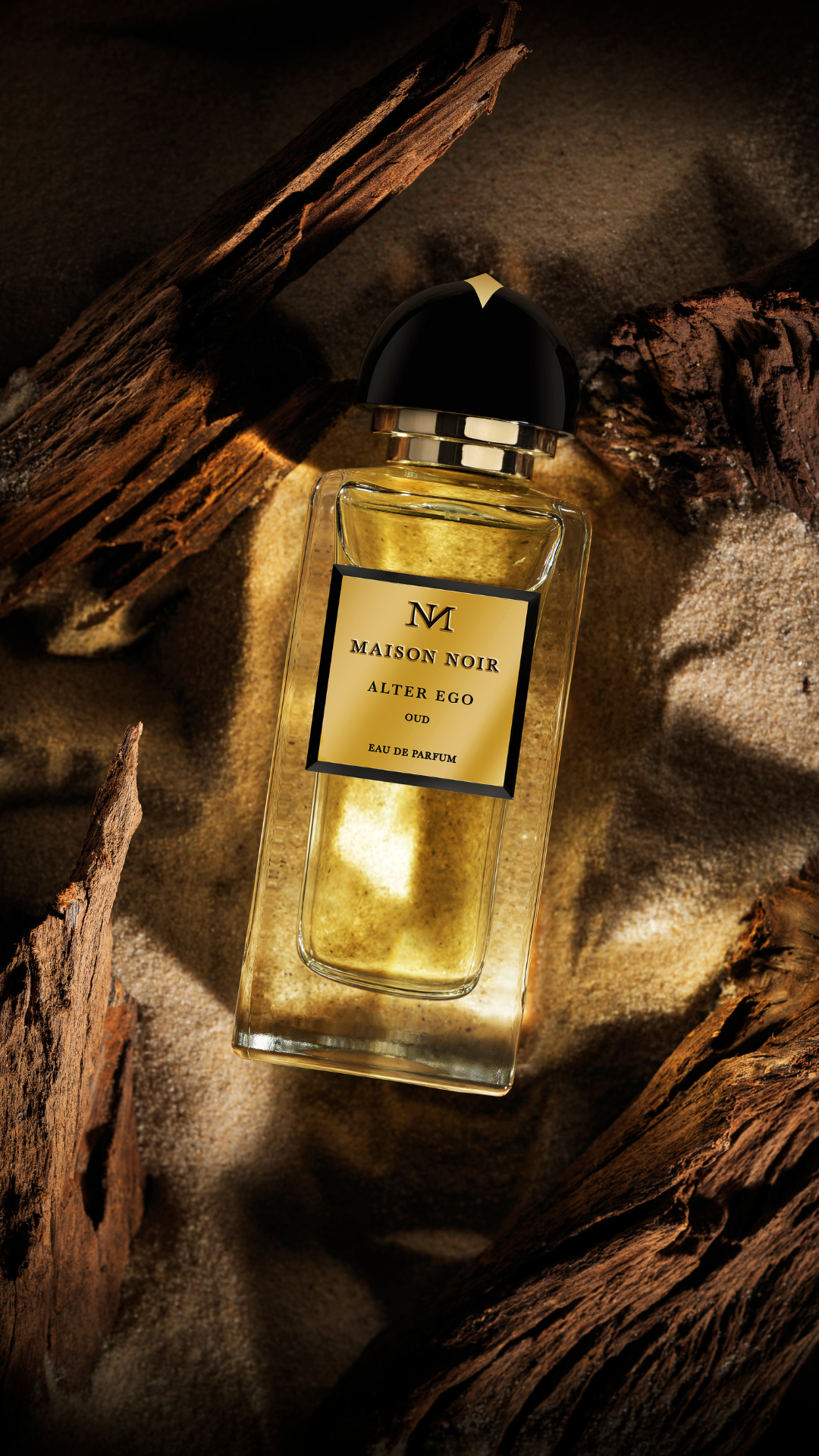
Maison Noir illustrates these principles through its verified compositions. Icarus 347 grounds its structure in ambroxan and tonka bean, materials specifically chosen for their radiance and durability. Bohemia 265 builds its base from amber vetiver, which provides both warmth and persistence. Alter Ego 786 uses oud wood as its foundational element, contributing to the kind of deep, slow-burning trail that distinguishes serious compositions from surface-level ones. For a practical introduction to how these structural layers interact, see a practical introduction to fragrance structure and wear.
---
Why the Same Fragrance Can Last Eight Hours on One Person and Three on Another
Skin chemistry and condition are the most overlooked longevity factors in perfume, and they explain why fragrance performance varies so dramatically between wearers. A scent's longevity is not a fixed property of the bottle; it is a product of the interaction between the formula and the individual skin it is applied to.
Oil content is the single most significant skin factor. Drier skin lacks the lipid layer that traps and holds aromatic molecules, which means the same fragrance will evaporate more quickly on someone with dry skin than on someone whose skin is naturally well-hydrated. This is why seasonal shifts affect longevity, central heating in winter strips moisture from the skin, which many wearers notice as a simultaneous decline in how long their favourite scent projects.
Hydration matters independently of oil. Well-moisturised skin creates a surface that aromatic materials can adhere to rather than simply skim across. Body temperature also plays a role: warmer skin accelerates diffusion, which can improve projection in the short term but shorten the overall arc of wear.
Wearers commonly report noticeable differences between how a fragrance performs on the inside of the wrist versus the crook of the elbow versus the nape of the neck. This is partly anatomical, since these areas differ in temperature, oil production, and exposure to friction, and partly practical, since areas less exposed to rubbing tend to retain scent longer.
Understanding these variables is important context for anyone building a fragrance wardrobe. A broader checklist of common application errors is covered in fragrance mistakes that undermine even the best scent.
---
Longevity Factors at a Glance: A Practical Reference
The key longevity factors in perfume can be grouped by their typical impact and whether you can control them. The table below summarises each factor clearly.
| Factor | Typical Impact on Longevity | Controllable? | Notes |
|---|---|---|---|
| Concentration tier | Moderate to high | No (fixed by formula) | Sets the ceiling; does not guarantee duration |
| Base note density | High | No (fixed by formula) | Resins, woods, musks anchor the scent to skin |
| Skin oil level | Moderate to high | Partially | Naturally oilier skin holds scent longer |
| Skin hydration | Moderate | Yes | Apply unscented moisturiser before spraying |
| Application site | Moderate | Yes | Pulse points and unexposed areas retain scent better |
| Body temperature | Low to moderate | Partially | Warmer skin diffuses faster; cooler skin holds longer |
| Layering with moisturiser | Moderate | Yes | Creates a lipid base that traps aromatic molecules |
The two most actionable columns are "Controllable?" and "Notes." You cannot change a formula's base note architecture once it is in the bottle, but you can meaningfully affect how long it performs through hydration, application site, and layering. Together, these controllable factors can extend a fragrance's wear time noticeably.
---
How to Apply Perfume so It Actually Lasts All Day
Perfume lasts longer when applied to clean, moisturised skin at sites with sustained warmth and limited friction. The method matters as much as the formula.
Follow these steps to maximise wear time:
- Moisturise first. Apply an unscented body lotion or petroleum-based balm to the application site immediately before spraying. The lipid layer gives aromatic molecules something to bond to rather than simply evaporating off dry skin.
- Target warm, stable pulse points. The inside of the wrist, the base of the neck, the crook of the elbow, and behind the knees are all consistently warm areas that sustain diffusion. Avoid areas subject to heavy friction, such as the inside of the forearm where a bag strap rests.
- Spray at the correct distance. Hold the bottle roughly ten to fifteen centimetres from the skin. Too close creates an oversaturated patch that evaporates unevenly; too far disperses the mist before it reaches skin.
- Do not rub your wrists together. This is the most common and most damaging application error. Rubbing generates heat and friction that physically breaks down the top note molecules and disrupts the composition's intended unfolding. Spray and leave.
- Consider the hair and clothing. Wearers frequently observe that fabric holds fragrance considerably longer than skin, since it neither absorbs nor metabolises aromatic molecules. Spraying lightly on a scarf or collar can extend the olfactive arc of a fragrance through the day. Natural fibres tend to hold scent better than synthetics.
- Spray before dressing. Applying to skin before pulling on clothing gives the top notes time to settle and reduces staining risk on delicate fabrics.
For further detail on placement and quantity, see applying perfume so it lasts through the day and how many sprays of perfume to use.
---

Alter Ego 786
Alter Ego 786's rich base notes ensure all-day wear with proper application.
$125.00 - $195.00
Shop Now →Why Long-Lasting Niche Perfumes Often Outperform Mass-Market Options
Long lasting niche perfumes tend to outperform mass-market alternatives in longevity because niche houses invest a higher proportion of their cost in raw materials rather than marketing and packaging. The formula is the product; the bottle is secondary.
Mass-market fragrance production operates under significant cost constraints. Ingredients are selected partly for price, and popular accords are diluted to a level that meets commercial margins. Niche houses operate differently: a smaller production scale means the cost savings come from lower marketing spend, not lower ingredient quality. The result is often a base note architecture with more of the heavier, more expensive materials that drive longevity, ambergris derivatives, genuine resins, high-grade woods.
Maison Noir's compositions reflect this principle directly. Icarus 347 uses ambroxan, a material valued specifically for its tenacity and skin-warming diffusion, alongside tonka bean as a smooth fixative. Alter Ego 786 is built on oud wood, one of the most persistent materials in fine perfumery, with a smoky top and hints of raspberry providing the character above the base. These are not decorative choices; they are architectural ones, chosen because they sustain the composition through a full day of wear.
The affordability objection is legitimate. Niche fragrance does carry a higher entry price than mass-market alternatives, and that matters. One considered path is to use fragrance samples to test longevity before buying, spending on a full bottle only after confirming how a composition performs on your skin across a full day. Maison Noir's Discovery Set offers exactly this: a low-risk entry point into the collection before committing to a full bottle. You can explore the collection and the Discovery Set to find a starting point.
For broader context on what makes a niche fragrance house different, and for long-lasting niche options for men, see the relevant guides.
---
Choosing Long-Lasting Fragrances for Occasion and Season
Occasion and season shape which long-lasting fragrance is right for you, because the conditions of wear directly affect how a composition performs and how it is perceived.
Heavy base notes, the same ingredients that drive longevity, also tend to project more intensely in warm conditions. Oud, amber, and thick resins that feel restrained in a cool autumn office can become overwhelming in summer heat. Understanding this dynamic helps you build a collection that is both durable and socially appropriate across different contexts.
For cooler months, fragrances built on dense bases perform exceptionally well. Alter Ego 786, with its oud wood foundation, smoky top, and raspberry facets, suits environments where the fragrance can unfurl slowly through layers of clothing and cool air. The depth of the composition means it projects steadily without the sharp amplification that heat can cause.
Bohemia 265 offers a different register for occasions where you want durability with a lighter touch. Fresh bergamot and aromatic cardamom sit above a foundation of amber vetiver: the opening reads as clean and considered, while the base ensures the composition persists. It is the kind of fragrance that works through a long day of meetings or travel without demanding attention.
For guidance on matching a composition to context more precisely, see choosing the right fragrance for occasion and season. Those moving between formal and informal settings will also find how to use an Eau de Parfum correctly across different settings a useful companion.
---

Discovery Set & Gift Card Bundle (EUR)
Discover multiple long-lasting fragrances to find your perfect seasonal match.
$125.00 - $195.00
Shop Now →Fragrance Layering as a Longevity Strategy
Layering fragrance with an unscented base creates a richer, more adhesive surface that extends wear time, because aromatic molecules bind more effectively to a lipid-rich layer than to bare skin.
The chemistry principle is straightforward. Fragrant molecules are largely non-polar, which means they adhere preferentially to other non-polar surfaces. The fatty acids in body lotion, shea butter, or even petroleum jelly create exactly that surface. When you apply an unscented moisturiser and allow it to absorb before spraying your fragrance on top, you are not simply adding hydration. You are creating a chemical anchor for the scent.
More advanced layering involves using a complementary scented base, such as a matching body oil or a harmonious fragrance in a lower concentration, beneath the main composition. This builds depth and extends the projection arc by introducing an additional reservoir of aromatic material that evaporates at a different rate.
The key word is complementary. Layering two clashing compositions does not extend longevity; it creates noise. When in doubt, use an unscented base and let the fragrance speak alone. For a considered approach to combining scents effectively, see how to layer fragrances without getting it wrong.
---
Frequently Asked Questions About Perfume Longevity
These answers address the most common questions readers bring to the topic of longevity factors in perfume, from application technique to brand choices.
How can perfume be made to last longer on the skin?Apply to well-moisturised skin at warm pulse points, do not rub the application site after spraying, and consider layering over an unscented body lotion. Targeting stable, warm areas such as the neck and inner elbow rather than areas subject to friction also makes a meaningful difference.
What does the 30/50/20 rule mean in perfume composition?The 30/50/20 rule describes the approximate proportional relationship between top notes, heart notes, and base notes in a fragrance: roughly 30 percent top, 50 percent heart, and 20 percent base by olfactive impression. Despite forming the smallest proportion, the base carries the most weight in terms of longevity, because its heavier molecules evaporate slowly and anchor the composition to skin.
Which fragrance families have the longest wear time?Oriental, woody, and resinous families consistently produce the most tenacious compositions, because the materials that define these families (ouds, ambers, musks, and resins) have high molecular weight and evaporate slowly. Citrus and aquatic families tend toward shorter wear due to the volatility of their core materials.
Do niche fragrances genuinely last longer than mass-market options?Often, though not always. Niche houses typically invest more of their cost in raw materials and less in advertising, which can result in higher concentrations of performance-driving base note materials. That said, longevity depends on the specific formula, not the label. Testing on your own skin remains the most reliable method; use fragrance samples to test longevity before buying before committing to a full bottle.
Does higher price always mean better longevity?Not automatically. Price reflects ingredient cost, production scale, and brand positioning. A higher-priced composition often uses more expensive base materials that contribute to durability, but this is not guaranteed. Understanding the longevity factors in perfume, particularly base note architecture and skin chemistry, is a more reliable guide than price point alone. If you are finding a scent that fits your skin and preferences, start with samples.
What about brands like Lattafa and Zara that are often mentioned for longevity?Lattafa and Zara are brands frequently cited by fragrance enthusiasts in discussions of accessible long-lasting options. Performance varies considerably by individual formula and skin type, and no general claim about a brand's longevity applies universally. As with any fragrance purchase, testing on your own skin across a full day is the most reliable indicator.
---
Choosing a Long-Lasting Fragrance with Confidence
Choosing a fragrance that genuinely lasts comes down to three things: a composition built on heavy base note materials, a formula whose concentration is appropriate to the occasion, and an application method that gives those materials the best possible surface to adhere to. No single factor is decisive on its own.
The most long-lasting perfumes for women and men share a common structural logic: tenacious ingredients in the base, thoughtfully chosen and well proportioned, applied to moisturised skin at stable, warm sites. Price and concentration are indicators, not guarantees. For those approaching the choice with care, see shopping for perfume with confidence beyond the counter and why unisex fragrance reflects a broader shift in fine perfumery.
If you are ready to test how these principles translate in practice, explore the Discovery Set to find a considered entry point into the Maison Noir collection before committing to a full bottle.
Read more
A unisex niche fragrance is a scent composed by an independent or artisan perfume house with no gendered marketing intent, created with a wider ingredient...
Unisex, men's, women's: the categories are marketing, not science. Learn what actually separates fragrances and how to choose without the label.