
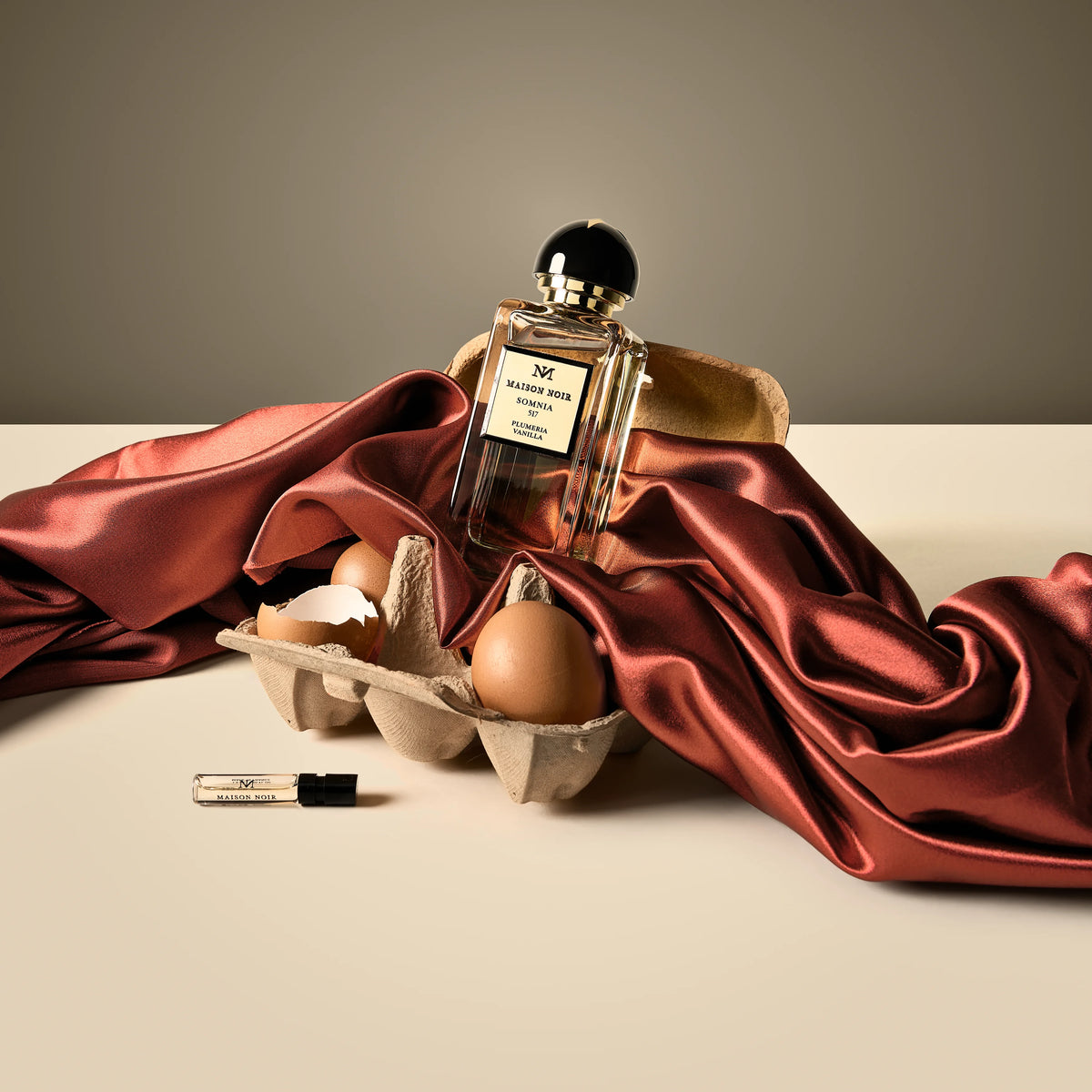
How Many Sprays of Perfume Should You Actually Wear?
How Many Sprays of Perfume Should You Actually Wear?
The right number of perfume sprays is two to four for most people, in most situations, most of the time.
Start with two sprays. Smell yourself an hour later. Ask someone nearby whether they can detect it. If the answer is no, add one more next time. If the answer is a strong yes from across the room, stay at two or reduce to one. Calibration is the method; the number is the starting point, not the rule.
Concentration complicates the picture. An extrait de parfum is dense with aromatic material, so one or two sprays carries far. An eau de cologne is lighter, and three to five is reasonable. The same logic applies in reverse when the weather is warm or the space is enclosed: diffusion increases, and what reads as subtle outdoors may feel overpowering in a meeting room.
The variables worth understanding are concentration, skin type, body heat, occasion, and whether you are spraying skin or fabric. Knowing how they interact means you spend less time second-guessing and more time enjoying wearing fragrance with intention. The sections below take each variable in turn, so you can build a reliable personal approach rather than memorising a single number. For the question of placement and longevity together, the guide on how to apply perfume so it lasts all day is a useful companion.
---
How Many Sprays of Perfume Should You Apply?
Spray count follows aromatic density: the more fragrance oil a formula contains, the fewer sprays you need. For an eau de parfum, two to three sprays on skin is a reliable starting point for most compositions. For an eau de toilette, three to four. For an extrait, one to two is often generous.
These are ranges, not rules. Compositions vary even within the same concentration tier. A sheer, citrus-forward eau de parfum may behave more like a heavier eau de toilette in terms of presence. A dense, resinous eau de cologne from a niche house will project differently from a mass-market version at the same dilution. The underlying principle is always the same: more aromatic material means stronger projection per spray, so you need fewer of them.
One common confusion worth addressing: perfume quantity is measured in millilitres or counted in sprays, not in quarts or fluid ounces as a daily-wear unit. A standard 50 ml bottle contains roughly 500 to 700 sprays, depending on the atomiser. That figure comes from widely used industry guidance and is a useful reality check: even applied generously, a bottle represents months of daily wear, not weeks.
Understanding what concentration actually changes about a fragrance will help you read a bottle's designation as a practical guide rather than just a marketing category. Once you know which tier you are working with, the guidance on how to use an eau de parfum correctly gives the next level of detail for the most common concentration in the niche category.
---
Spray Count by Concentration: A Quick Reference
The concentration of a fragrance determines its aromatic density, which directly sets the useful spray range. Start at the lower end of the range for enclosed spaces or warmer days, and move toward the upper end in cool, open environments.
| Concentration | Typical Spray Count | Expected Longevity on Skin | Best Occasion Use |
|---|---|---|---|
| Extrait de Parfum | 1-2 sprays | 8-12 hours | Evening, special occasions, intimate settings |
| Eau de Parfum | 2-3 sprays | 6-8 hours | Daily wear, office, cooler weather |
| Eau de Toilette | 3-4 sprays | 4-6 hours | Daytime, casual, warmer weather |
| Eau de Cologne | 3-5 sprays | 2-4 hours | Warm weather, sport, high-activity days |
These ranges reflect general guidance across well-made compositions. Individual fragrances deviate: a particularly dense eau de toilette may last as long as many eau de parfums, and a light extrait may project less than you expect. Personal testing remains the final word, because skin chemistry, body temperature, and the specific formula all shift the outcome.
---

Bestseller Discovery Bundle
Explore different fragrances to find your perfect spray count.
$20.00
Shop Now →Do You Put Fragrance on Skin or Clothes?
Fragrance belongs primarily on skin. The warmth of the body activates and evolves the composition in a way fabric cannot replicate. Clothes hold scent longer than skin does, and the choice involves real trade-offs worth understanding.
Spraying directly on skin, particularly at pulse points, lets the fragrance move through its full arc: top notes first, heart notes as the skin warms the formula, base notes settling into the drydown. Pulse points are simply areas where blood vessels run close to the surface, generating more heat. The inner wrists, the base of the throat, the sides of the neck, and the inside of the elbow all serve this purpose. The warmth at these sites helps diffuse the aromatic molecules into the air around you.
Clothing holds scent for longer because fabric does not absorb and break down fragrance the way skin does. There are two genuine risks worth noting. First, some fragrance ingredients can stain delicate or light-coloured fabrics permanently. Second, the composition does not evolve on fabric the way it does on skin, so you experience a flatter, less dynamic version of the scent. For precious or expensive clothes, spray the skin underneath rather than the fabric.
A few practical tips apply immediately. Hold the atomiser eight to twelve centimetres from the skin rather than pressing it directly against the surface; closer creates a wet patch and concentrates top notes unevenly. Let the fragrance dry naturally rather than rubbing sprayed areas together: rubbing crushes the top notes and accelerates the drydown. Apply before dressing so the fragrance settles onto skin first.
For further techniques, the guide on techniques that help fragrance last longer on skin covers preparation, layering, and timing in detail. If rubbing and other habits are already in play, common fragrance mistakes and how to fix them is a direct corrective.
---
What Is the 3:1:1 Rule for Perfume?
The 3:1:1 rule for perfume is a practical application guide that suggests spraying three pulse points, holding the bottle one inch from the skin, and applying once to each point. It is a memory aid rather than a scientific formula, and its value lies in preventing over-application.
Different sources interpret the rule slightly differently, so do not treat any single version as definitive. Some describe it as three sprays across one pulse point cluster, applied one time per occasion. Others frame it around three body zones, with one spray each. The consistent thread across interpretations is the intent: keep application deliberate, targeted, and restrained.
Where the 3:1:1 rule genuinely helps is as a counterweight to the instinct to spray more. Many people apply fragrance without a clear method, stacking sprays until the scent feels present enough. The rule introduces intentionality. Three defined points, one spray each, is a concrete action rather than a vague instruction to "apply a few sprays."
Where it falls short is nuance. A one-spray-per-point approach may be perfectly calibrated for a dense extrait and slightly light for a fresh eau de cologne. Weather, occasion, and the specific composition all affect whether the rule's output is optimal or just a starting approximation. Use it as a floor, not a ceiling. Start with the rule's framework, then adjust one spray at a time based on how the fragrance performs on your skin.
For a fuller treatment of the logic and variations, the article covering a deeper look at the 3:1:1 rule for fragrance application examines each interpretation in detail.
---
How Much Perfume Is Too Much?
Too much perfume is the amount that others can detect before they want to. That is a social calibration, not a precise measurement, but it is the only calibration that matters in practice.
The primary reason people over-apply is olfactory fatigue, also called olfactory adaptation. After a few minutes of exposure to a scent, your own nose stops registering it clearly. You apply what feels like enough, then stop perceiving it, then add more. The fragrance has not faded; your sensitivity to it has temporarily reduced. The people around you, encountering it fresh, experience the full accumulated strength.
Knowing this should change the method. Apply your usual amount, wait ten minutes, then ask someone you trust whether the fragrance is present. Their answer, not your own nose, is the accurate reading. If you need to recalibrate independently, reduce by one spray the next day and observe whether the result feels lighter to others.
The concrete signs of over-application are worth noting. Guests or colleagues commenting on the scent unprompted, a persistent headache near someone wearing fragrance, or a noticeable trail that lingers in a room after you have left are all indicators. In enclosed spaces, aeroplanes, lifts, or meeting rooms, the threshold for over-application drops significantly because ventilation cannot diffuse the scent.
Seasonal temperature also matters. Heat amplifies diffusion, so a spray count that is perfectly balanced in February may feel aggressive in July under the same roof.
A practical guide to wearing fragrance covers the broader calibration picture, and the guide on choosing the right fragrance for occasion and environment addresses how context changes the appropriate amount.
---
Why Does Your Fragrance Seem to Disappear?
Your fragrance has almost certainly not disappeared from the room. Your nose has adapted to it. Olfactory adaptation is the mechanism by which continuous exposure to a scent reduces your perceived intensity of that scent, even when the fragrance is still projecting normally to everyone else.
This is the most common reason people ask why their cologne becomes undetectable after a couple of hours. The scent is there. Your nose has simply stopped prioritising it as new information. The solution is not more spray.
Genuine longevity failure is a separate issue and does happen, though less often than people assume. It tends to appear with lighter concentrations on dry or dehydrated skin. The skin's natural oils help carry and hold fragrance molecules; without them, the scent evaporates faster. Applying an unscented moisturiser before fragrance is a straightforward fix. Well-hydrated skin holds a scent noticeably better than dry skin, particularly in the base notes where longevity matters most.
For reapplication, one spray to a single pulse point is usually sufficient if you genuinely need a mid-day refresh. Avoid layering multiple fresh applications on top of a drydown that is still present; the result is an unbalanced mix of early and late-stage notes.
The full picture of preparation, placement, and reapplication is in the guide on how to make perfume last longer on skin.
---
How Many Sprays for Different Occasions?
Occasion determines the appropriate spray count as much as concentration does. A number that reads as subtle in an open outdoor space may overwhelm a closed office meeting room.
Office or professional setting: Two sprays maximum, placed at the neck or wrist, not both. Enclosed ventilation and proximity to others makes restraint essential. An eau de parfum at one to two sprays is appropriate; an extrait at one spray. Evening or social occasion: Two to three sprays, with scope for an additional one at a pulse point lower on the body, such as the inside of the elbow. More open environments and reduced close-contact intensity give the fragrance room to project. Warm weather or outdoor settings: Temperature increases diffusion significantly. Reduce your standard count by one spray. A three-spray eau de toilette routine in autumn becomes a two-spray routine in summer. Intimate settings: One to two sprays, placed close to the body rather than broadcast points like the throat. The goal is discovery at close range rather than projection across a room.Season amplifies everything above. Warm air accelerates diffusion; cold air suppresses it. Adjust your count with the temperature, not just the occasion.
For a full framework, the guide on how to choose the right fragrance for every season and occasion covers both scent selection and application adjustments. If you are working with more than one fragrance and want to combine them, how to experiment with fragrance layering offers a structured approach.
---

Alter Ego 786
Woody and spicy notes work beautifully for evening occasions.
$125.00 - $195.00
Shop Now →Frequently Asked Questions
How many sprays or pumps of perfume should be applied?Two to three sprays is the practical starting point for an eau de parfum; one to two for an extrait; three to four for an eau de toilette. Start at the lower end and increase only if a trusted second opinion confirms the scent is not registering. Your own nose adapts quickly and is a poor judge of whether you have applied enough.
What is the 3:1:1 rule for cologne application?The 3:1:1 rule generally describes spraying three pulse points, holding the bottle approximately one inch from the skin, and applying once to each point. It is a guide toward intentional, restrained application rather than a precise formula. Definitions vary slightly between sources, so treat it as a useful starting framework, not a fixed standard.
Why does cologne become undetectable after a couple of hours?In most cases, this is olfactory adaptation, not longevity failure. Your nose reduces its sensitivity to a scent you have been wearing for a sustained period. The fragrance is still present to others. If genuine fading is occurring, applying to moisturised skin or choosing a higher concentration will extend the wear time.
Where on the body should perfume be sprayed?Apply to pulse points: the inner wrist, the sides of the neck, the base of the throat, and the inside of the elbow. These areas generate warmth from nearby blood vessels, which helps diffuse the fragrance. Avoid rubbing pulse points together after spraying.
How much perfume is considered the right amount?The right amount is the amount a person nearby would describe as present but not overpowering. Because your own nose adapts, ask someone you trust rather than relying on self-assessment. One or two sprays less than you think you need is usually closer to the mark.
How often should perfume be reapplied throughout the day?For an eau de parfum, reapplication once mid-day is typically sufficient if needed at all. One spray to a single pulse point is enough for a refresh. Avoid layering multiple applications on top of an existing drydown, as the mixed stages create an unbalanced result.
How should perfume be stored to maintain quality?Store fragrance away from direct light, heat, and humidity. A cool, dark drawer or cupboard is ideal. Avoid bathroom storage, where temperature fluctuates with showers. Kept well, a properly sealed fragrance remains stable for several years.
How many bottles of fragrance should someone own?There is no correct number. Many people find a small wardrobe of three to five bottles covers their range of occasions and moods without becoming unmanageable. If you are uncertain which fragrances suit you, exploring how to use fragrance samples to find your next scent before committing to a full bottle is a considered approach. The guide on how to find the fragrance that suits you offers a broader framework for building a personal selection.
---
The Right Amount Is the Amount You Choose Deliberately
Two core principles run through every section above. Start lower than instinct suggests, because olfactory adaptation will make any amount feel like less to you than it registers to others. Then calibrate to your context, because concentration, skin, temperature, and occasion each shift the optimal number by a spray or two.
There is no single correct number, only an informed starting point and a method for adjusting it. Readers who wear fragrance well are not those with the most precise spray count. They are those who understand the variables and make a considered choice each time.
Sampling is the most honest way to understand how a fragrance behaves before committing to a full bottle. Wearing a fragrance across a full day, in your actual environment, on your actual skin, reveals what no counter test or paper strip can. Before applying the guidance in this article to a new fragrance, you will want to understand how it performs first.
To sample the Maison Noir collection and observe how each composition wears across a day, you can explore the Discovery Set. For the fuller picture of what a niche fragrance house brings to composition, what sets a niche fragrance house apart is a useful read alongside the complete guide to wearing fragrance.
Read more
How Do I Find My Natural Body Scent? A Perfumer's Perspective Your natural body scent is the baseline olfactive signature your skin produces through its microbiome, genetic makeup, and lifestyle,...
How to Know What Fragrance to Wear: A Practical Guide to Choosing Your Scent Knowing what fragrance to wear comes down to four practical variables: occasion, season, fragrance family, and concen...