
Niche Fragrance Definition: What 'niche' Actually Means in Fine Perfumery
Niche Fragrance Definition: What 'Niche' Actually Means in Fine Perfumery
What Is a Niche Fragrance?
A niche fragrance comes from an independent house that prioritises creative expression and selective distribution over mass-market volume. The term has nothing to do with price alone. It describes how a fragrance is made and sold: by a smaller house with a narrower brief, through carefully chosen retail partners, rather than department store counters worldwide.
This distinction matters because the term gets misused constantly. Many buyers assume niche simply means expensive, exclusive, or unisex. None of those are accurate. A fragrance is niche because of the brand's philosophy and distribution strategy, not because of a high price tag or gender-neutral packaging.
Understanding what niche actually means lets you spend more deliberately, evaluate quality more accurately, and avoid paying a premium for something that is not what you expected. This guide covers the defining characteristics of niche fragrance, how it compares to designer, and how to begin exploring the category without overspending.
For a broader foundation, start with the fragrance education guide.
The Core Definition: Independence and Creative Autonomy
A niche fragrance comes from an independent house that operates outside mass-market distribution. The house controls its own creative brief, chooses its perfumers with intention, and sells through selective retailers rather than global department store chains. That is the core definition: independence, creative autonomy, and deliberate distribution.
The word "niche" comes from the French word for a recess in a wall, a space carved out for a specific purpose. Applied to perfumery, it describes a brand that has carved out its own distinct space rather than competing in the mainstream. The term entered common fragrance vocabulary in the 1980s and 1990s as smaller houses began distinguishing themselves from large conglomerates.
Niche exists on a spectrum. Some houses are genuinely micro-scale, composing a handful of fragrances with a single perfumer. Others have grown considerably in size and reach while maintaining their independent structure and creative philosophy. The defining element is not the number of bottles sold, but the degree to which commercial pressures shape the composition itself.
One misconception worth clearing up immediately: niche is not a synonym for luxury or expensive. Some niche fragrances are priced comparably to mid-range designer options. Others command higher prices because of raw-material costs and production scale. Price is a consequence of how niche houses operate, not the definition of the category itself.
Fragrance enthusiasts who follow the category closely often note that the most compelling niche releases they encounter are not the most expensive ones, but the most considered ones. The goal of a niche house is olfactive interest, not aspirational pricing.
To understand how independent houses think differently about scent, and to see how the category contrasts with the mass market, it also helps to understand what commodity fragrance means in contrast.
Niche vs. Designer: The Structural Differences
The clearest way to understand the niche fragrance definition is to place it alongside designer fragrance directly. The differences run deeper than price.
| Dimension | Niche Fragrance | Designer Fragrance |
|---|---|---|
| Creative Autonomy | High: the house controls the brief with minimal commercial constraint | Lower: formulation is shaped by marketing, trend forecasting, and cost targets |
| Distribution Reach | Selective: specialist retailers, the brand's own boutiques, curated online | Broad: department stores, airports, mass-market beauty chains globally |
| Raw-Material Focus | Ingredients chosen for olfactive contribution; smaller batches allow cost flexibility | Volume requirements often favour cost-efficient substitutes for natural materials |
| Price Orientation | Reflects production scale and ingredient cost; not always higher than designer | Priced for broad accessibility, with significant marketing spend factored in |
| Typical Concentration | Often EDP or extrait; concentration is chosen for the composition, not convention | Varies widely; EDT is common for accessibility and familiarity |
The table above is a generalisation, and there is genuine nuance in the middle. Some designer fragrances use excellent raw materials. Some niche fragrances are disappointingly safe in their compositions. The table describes tendencies, not absolutes.
One important nuance: price overlap is real. A well-constructed designer fragrance from a house with genuine perfumery heritage can sit at a price point that meets or exceeds a smaller niche release. Volume does not automatically mean cheaper. What it does mean is that formulation decisions are made with volume constraints in mind, which affects which ingredients are used and in what concentrations.
Dior, to address a question that comes up often, is a mainstream designer house. It belongs to a large luxury conglomerate, distributes globally through mass-market channels, and shapes its briefs around wide commercial appeal. Its fragrances can be excellent, but they are not niche by any industry definition.
The assumption that niche always costs more than designer is simply not accurate. It depends entirely on which designer fragrance and which niche house you are comparing. For a fuller framework on what genuine quality looks like in a composition, see how to judge quality in a fine fragrance.
What Actually Makes a Fragrance Niche?
A fragrance earns the niche designation through the structure of the house behind it, not through any single ingredient or olfactive quality. The core characteristics are independent ownership, creative brief freedom, selective distribution, and a composition philosophy that prizes olfactive interest.
Independent ownership matters because it determines who has the final word on a brief. When a founder or small creative team controls the house, the perfumer is not competing with a marketing department's trend report. The brief can be stranger, more personal, more specific. That latitude is what produces accords you do not encounter in airport duty-free.
Creative brief freedom produces the conditions for unusual work. Master perfumers given a narrowly defined, concept-driven brief tend to reach for materials and structures that would not survive a mass-market approval process. This does not guarantee a better fragrance, but it does produce a more considered one.
Selective distribution is both a practical and philosophical choice. Selling through fewer doors means the house maintains control over how the fragrance is presented, who handles it, and what the buying experience looks like. It also means smaller production runs, which affects what ingredients are economically viable.
One misconception worth stating plainly: niche does not mean unisex. This is a persistent misreading. Niche houses produce fragrances across all gender categories. Some lean traditionally feminine, some traditionally masculine, many are genuinely unisex. The lack of gender restriction in niche perfumery reflects creative freedom, not a defining rule of the category.
Concentration is another area where niche houses have more latitude. Because they are not bound to mass-market price ceilings, they can offer higher concentrations where the composition calls for it. For more on what that means in practice, see the five fragrance concentration levels explained and how concentration changes the way a scent wears. And to understand why the unisex tendency in niche is a creative choice rather than a category rule, why unisex fragrance is a creative choice, not a niche requirement covers it in full.

Alter Ego 786
Experience woody and spicy notes that define true niche craftsmanship.
$125.00 - $195.00
Shop Now →Is the Price Premium Worth It?
The honest answer is: sometimes, and it depends entirely on what you value. Niche fragrances often cost more than comparable designer options, but the price difference has real causes, and understanding those causes helps you decide whether the premium makes sense for you.
Small-batch production is expensive. When a house makes fewer bottles, fixed costs are spread across a smaller number of units. Raw materials represent a larger share of the final price because niche houses are not buying at the volume that earns the deepest supplier discounts. Selective retail distribution also means fewer wholesale accounts, which limits the revenue that offsets those costs.
What you are paying for, in practical terms, is a composition that was not filtered through cost-reduction targets, sold through a retail experience that knows the product, and produced in a quantity that allows for more unusual ingredients.
Whether that is worth it is genuinely personal. If you are drawn to familiar, crowd-pleasing scent profiles that you know will perform broadly, a designer fragrance may deliver exactly what you want at a lower cost. If you want olfactive complexity, unusual accords, or a scent that fewer people around you are wearing, the niche premium often makes sense.
Fragrance enthusiasts who collect across both categories frequently report that the most memorable fragrances in their wardrobes tend to come from smaller houses, not because of price, but because the compositions take more risks. Established collectors looking to give meaningful gifts beyond mainstream options regularly turn to niche houses for the same reason.
The most practical approach is to sample before committing. It removes the risk entirely and lets the fragrance make the case for itself on your skin. How fragrance samples let you decide before you commit explains why that step is worth taking every time.
How Niche Houses Build Fragrance From Concept
Many niche houses begin with a concept, not a brief in the conventional sense. The story, image, or world the fragrance inhabits comes first. The olfactive direction follows from that anchor. This is one of the clearest differences between how niche houses and mass-market brands approach composition.
When a fragrance starts from an image or an emotion, the perfumer is working with a creative constraint that produces more unusual outcomes. Rather than matching a trend or filling a market gap, they are translating something abstract into scent. The result tends to be more singular, even when the individual notes are familiar.
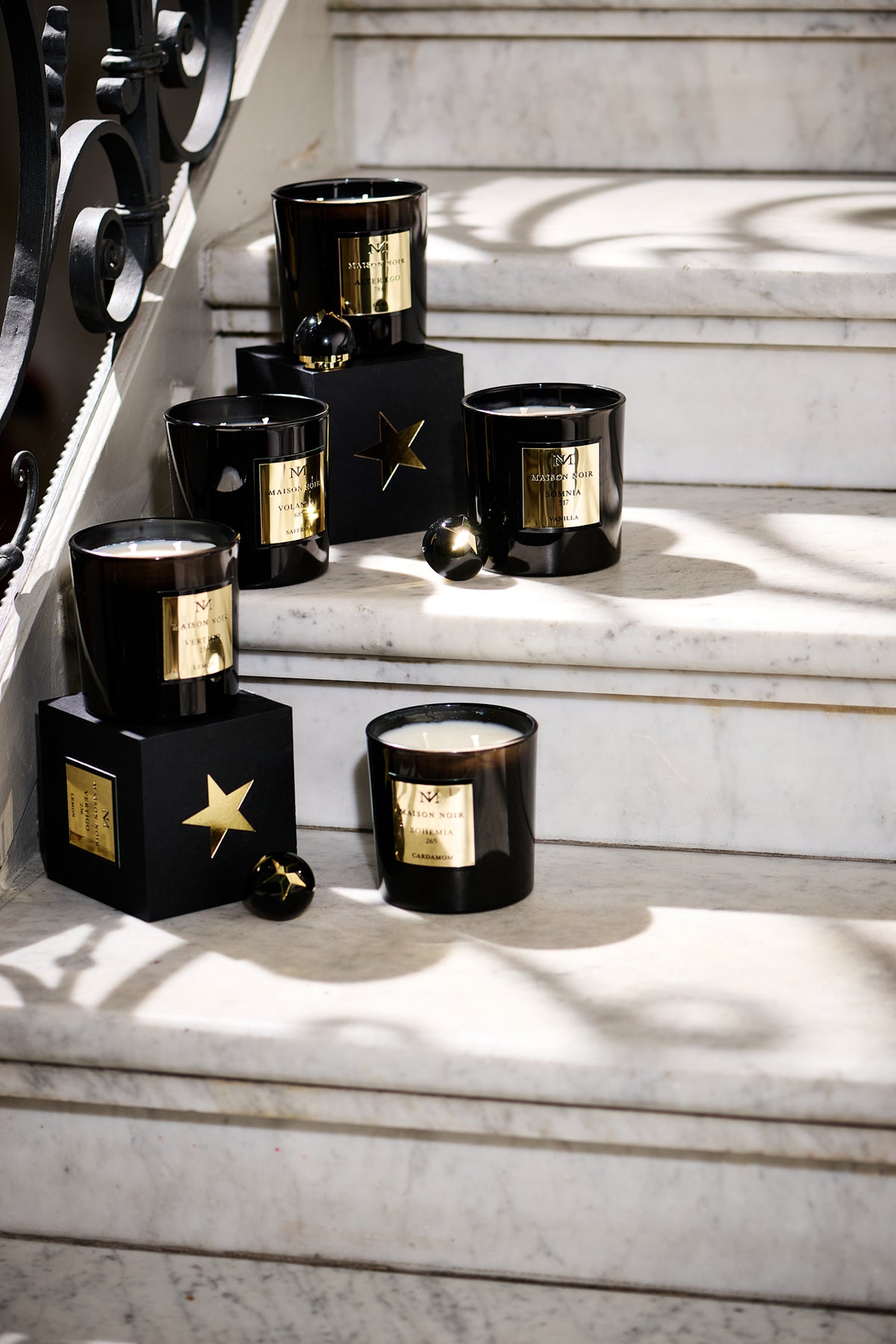
Maison Noir offers a clear example of this approach in practice. The house structures its entire collection around numbered doors in an imagined townhouse, each opening onto a distinct world. The number in each fragrance name is not arbitrary: it encodes the fragrance's dominant notes on the house's own fragrance wheel. Vertigo 236, for instance, carries the numbers that point toward fresh, citrus, and woody. You can "smell with your eyes" before you have encountered the fragrance on skin.
That concept-first architecture, born in Switzerland and built out through compositions crafted in France with master perfumers, shapes what the brief allows. The perfumer is not filling a category. They are building a room in a house.
This kind of numbered, narrative-driven approach is not unique to Maison Noir, but it illustrates what distinguishes niche creative philosophy from designer commercial logic. The concept disciplines the composition rather than the market doing so.
For fragrances worth discovering this season, see niche fragrances worth discovering this season. And for practical guidance on matching any of these to your own preferences, how to find the niche fragrance that fits you is the place to start.

Bohemia 265
Discover citrus and ambery layers that tell a fragrance's unique story.
$125.00 - $195.00
Shop Now →Finding Your Entry Point: How to Start Without Overspending
The simplest approach is to sample first, always. Discovery sets and individual vials exist precisely because fragrance on paper, on a tester strip, and on your skin are three different experiences. No review replaces wearing a fragrance through its full dry-down.
Start in a fragrance family you already know you respond to. If you wear fresh colognes, begin with niche offerings in the aromatic or ozonic space. If you gravitate toward warmth, explore orientals and woody ambers from independent houses. Your existing preferences are a reliable compass, even in an unfamiliar category.
Wear a sample through the full dry-down before forming an opinion. Many niche fragrances open in a direction that shifts significantly after thirty minutes. The opening notes are not the whole picture. Fragrance enthusiasts who regularly test new releases consistently note that snap judgements at the counter rarely match the considered impression after a full day's wear.
Established collectors report that the most cost-effective way into the niche category is a curated sample set from a single house. It gives you a clear sense of the house's signature, the materials it favours, and the kind of emotional territory it inhabits. That knowledge is worth more than buying a full bottle of a fragrance you have only smelled on paper.
Understanding how your nose interprets different scent families also helps you navigate the category more efficiently. What olfactory science says about how we perceive fragrance families gives that foundation. And once you have a shortlist, matching a niche fragrance to occasion and season will help you narrow it further.

Alter Ego 786 Fragrance & Candle Bundle
Explore niche fragrance with a curated bundle pairing scent and ambiance.
$260.00$150.00 - $205.00
Shop Now →Frequently Asked Questions
What is the basic definition of a niche fragrance?
A niche fragrance is a scent produced by an independent house that prioritises creative autonomy and selective distribution over mass-market volume. The term refers to the brand's philosophy and how it operates, not to price, exclusivity, or any single olfactive characteristic.
How do niche fragrances differ from designer fragrances?
Niche fragrances are produced by independent houses with smaller briefs, selective retail distribution, and more latitude in raw-material choices. Designer fragrances come from large commercial houses that formulate for broad appeal, wide distribution, and cost structures that reflect high-volume production. The difference is structural and philosophical, not purely qualitative.
Are niche fragrances worth the higher price compared to designer options?
It depends on what you are looking for. Niche fragrances often cost more because of small-batch production, raw-material spend, and selective retail. If olfactive complexity and originality matter to you, the premium frequently makes sense. If you prioritise familiarity and broad performance, a well-made designer fragrance may serve you just as well. Sampling first is the most reliable way to judge.
Do niche fragrances have to be unisex or gender-neutral?
No. This is a common misconception. Niche houses produce fragrances across all gender categories, including traditionally feminine and masculine compositions. The prevalence of unisex releases in the niche space reflects creative freedom and contemporary sensibility, not a defining rule of the category.
Is Dior considered niche or mainstream designer?
Dior is a mainstream designer house. It belongs to a large luxury conglomerate, distributes through global department stores and mass-market beauty retail, and shapes its briefs around wide commercial appeal. Its fragrances can be beautifully made, but by any standard industry definition, Dior is not a niche brand.
What are the different perfume concentration levels common in niche fragrances?
Niche houses commonly offer eau de parfum (EDP) and extrait de parfum concentrations, though eau de toilette (EDT) releases exist across the category. Concentration is chosen to suit the composition rather than to meet a price-point convention. For a detailed breakdown of how each concentration performs on skin, see how eau de parfum concentration performs on skin.
How can I explore niche fragrance affordably?
Start with sample sets from individual houses. They cost significantly less than full bottles and let you understand a brand's signature and philosophy before committing. Wear each sample through its full dry-down before deciding whether a full-size bottle is right for you.
What is the typical price range for niche fragrances?
Niche fragrances range widely, from around $80 to $250 and beyond for extrait concentrations. The price reflects production scale, raw-material costs, and distribution model rather than a fixed category price point. Many niche fragrances overlap with mid-range designer pricing, while others cost considerably more.
Choosing Deliberately: What Niche Fragrance Offers
Niche fragrance rewards the buyer who wants to understand what they wear. That is the core of what the category offers: not guaranteed quality, not automatic exclusivity, but a composition shaped by creative intent rather than commercial volume.
Three things set niche apart. The brief is free from mass-market constraints, which allows for olfactive risk. The distribution is selective, which shapes the retail experience and production scale. And the house identity, often built around a concept, a number, or a visual language, gives you a framework for understanding what you are wearing and why.
None of that means niche is for everyone, or that every niche fragrance is better than every designer alternative. What it does mean is that the category is built for the deliberate buyer. Someone who reads about notes, thinks about occasion, and wants to smell something that required a decision.
The sampling principle this article has returned to throughout is the most practical expression of that deliberate approach. If you want to apply it directly, the full fragrance education guide gives you the broader context. And to begin with a structured set of compositions from a house built on exactly this kind of intentional, numbered storytelling, you can explore the Discovery Set from Maison Noir: a considered way in, without the commitment of a full bottle.
Read more

Eau de parfum typically contains 15 to 20 percent aromatic concentrate dissolved in alcohol.
A leather fragrance is a scent built around an accord that evokes the smell of tanned, worked, or raw hide, constructed almost entirely from synthetic...