

The Seven Basic Smells: What Olfactory Science Tells US About How We Perceive Fragrance
The Seven Basic Smells: A Direct Answer
The seven basic smells, according to John Amoore's stereochemical theory, are: camphoraceous, musky, floral, pepperminty, ethereal, pungent, and putrid. These categories were proposed in the 1950s and 1960s as a way to organise the enormous range of human olfactory experience into a workable framework, much as colour theory reduces the visible spectrum to primary colours.
You will encounter different numbers depending on the source you consult. Some systems propose four categories, others five or six, and more recent receptor-based models suggest the number may be in the dozens or even hundreds. The confusion is real, and it reflects a science that is still developing. Amoore's seven persists in popular and educational contexts because it was the first systematic attempt to link smell categories to molecular shape, and it remains a useful starting point for fragrance education.
Understanding these categories does not just satisfy scientific curiosity. It gives you a vocabulary for describing what you smell, a framework for comparing fragrances across families, and a clearer sense of why certain scents feel familiar while others surprise you.
---
How the Seven Basic Smells Were Identified: Amoore's Stereochemical Theory
Amoore's stereochemical theory proposes that the shape of an odour molecule determines how it binds to olfactory receptors in the nose, and that molecules of similar shape tend to produce similar smell sensations. Put simply: the molecule fits the receptor the way a key fits a lock, and the lock's shape determines what category of smell you perceive.
Working in the 1950s and 1960s, John Amoore analysed thousands of aromatic compounds and proposed that five of his seven categories corresponded to distinct receptor shapes. Camphoraceous molecules tend to be spherical. Musky molecules are disc-shaped. Floral molecules resemble a disc with a tail. Pepperminty molecules carry a wedge-like configuration. Ethereal, or ether-like, molecules are thin and rod-shaped.
The remaining two categories, pungent and putrid, are distinguished not primarily by molecular shape but by electrical charge. Pungent compounds carry a positive charge; putrid compounds carry a negative charge or have properties associated with sulphur and decay. This makes them somewhat different in character from the shape-based five, and Amoore acknowledged this distinction.
The theory has real limitations. Modern research has identified hundreds of distinct olfactory receptor types in the human nose, each responding to a range of molecular features beyond shape alone. A single receptor can respond to multiple molecular structures, and a single molecule can activate multiple receptors. This complexity means no seven-category model fully captures the range of human smell perception.
That said, the seven-category model is not without value. It introduced systematic thinking to an area of science that had been largely intuitive, and its categories remain recognisable in everyday experience. Knowing what what makes a fine fragrance work begins, in part, with understanding the sensory vocabulary its creators work within.
---
The Seven Basic Smell Categories: What Each One Means
Each of Amoore's seven categories corresponds to a recognisable smell quality, and each has direct relevance to how fragrances are composed and experienced. Here is a clear account of all seven, along with real-world examples and a connection to perfumery practice.
Camphoraceous. This is the cool, medicinal quality associated with eucalyptus, white camphor, and certain herbs. In perfumery, camphoraceous notes often appear in aromatic and fougère compositions, lending freshness and clarity to the heart and top of a scent. Musky. Musk is warm, skin-close, and slightly animalistic. Natural musks were historically derived from animal sources, but contemporary perfumery relies almost exclusively on synthetic musks. They are the foundation of many base notes and give fragrances staying power and intimacy on skin. Floral. The most immediately recognisable category, encompassing rose, jasmine, ylang-ylang, and hundreds of other flower-derived or flower-inspired materials. Floral notes appear across nearly every fragrance family, functioning as a heart or as the dominant character of an entire composition. Pepperminty. Characterised by a sharp, cooling sensation produced by menthol and related compounds. In fine fragrance, pepperminty qualities appear as herbal accents rather than dominant notes, contributing brightness without the clinical register of pure mint. Ethereal. Thin, light, and sometimes fruity or dry-cleaning-adjacent, ethereal notes include many synthetic aldehydes and certain fruit esters. They appear prominently in classic chypres and aldehydic fragrances, providing a distinctive, almost abstract freshness. Pungent. Sharp, acrid, and penetrating. In perfumery, pungency is used with precision rather than abundance: a touch of bitterness or sharpness can anchor a composition and prevent it from reading as sweet or bland. Putrid. Associated with decay, sulphur, and certain animal-derived materials. Civet, castoreum, and indolic compounds carry putrid qualities in small doses that, paradoxically, make a fragrance feel alive and complex rather than simply clean.As for the question of how many categories there really are: Henning proposed six in the early twentieth century, Dravnieks worked with many more descriptors in the 1980s, and contemporary receptor biology suggests the system is far more granular than any single number implies. This is not a reason to dismiss Amoore's seven. It is a sign that olfactory science is still finding its language, and seven categories remain a workable entry point for anyone building a fragrance vocabulary.
Understanding how notes balance within a fragrance becomes more intuitive once you can identify the sensory categories those notes belong to. Similarly, recognising the camphoraceous and musky registers at play in an aromatic fougère is the kind of perceptual skill these categories help develop.
---

Bohemia 265
Explore citrus and woody notes that exemplify the seven basic smell categories.
$125.00 - $195.00
Shop Now →How Olfactory Perception Actually Works: From Molecule to Meaning
Smell begins with volatile molecules leaving a substance and travelling through the air to your nose. Once inside the nasal cavity, these molecules bind to olfactory receptor neurons located in the olfactory epithelium, a small patch of specialised tissue at the top of the nasal passage.
Each receptor neuron carries one type of olfactory receptor protein. When a molecule binds, it triggers an electrical signal that travels along the olfactory nerve to the olfactory bulb, and from there to higher brain regions including the olfactory cortex and the limbic system. The limbic system handles emotion and memory, which is why a scent can summon a specific moment or feeling with unusual precision and speed compared with other senses.
There are two routes by which odour molecules reach your receptors. The orthonasal route is the one you use when you sniff: molecules enter through the nostrils. The retronasal route operates when you eat or drink: molecules travel upward from the throat and mouth. This is why the same compound can seem like a slightly different smell depending on context.
Individual perception varies considerably. People differ in the number and type of functional olfactory receptor genes they carry, which means the same molecule can genuinely smell different to different people. Some individuals are anosmic to specific compounds, perceiving no smell at all where others detect something distinct. This receptor variation is one reason olfactory classification is so difficult to standardise.
All of this matters for finding a scent that suits you, and it partly explains why how concentration changes what a fragrance feels like on skin is not just a question of strength but of perceptual quality.
---
How Classification Systems Compare: A Reference Table
Multiple olfactory classification systems exist, and choosing between them is a matter of purpose as much as accuracy. No single model is universally accepted, but each reflects the state of knowledge at the time it was proposed.
| System | Proposed by | Number of Categories | Basis | Status |
|---|---|---|---|---|
| Smell Prism | Hans Henning | 6 | Phenomenological grouping of odour qualities | Historically influential, now superseded |
| Stereochemical Theory | John Amoore | 7 | Molecular shape and electrical charge of odorant molecules | Still referenced in popular science and education |
| Atlas of Odor Character Profiles | Andrew Dravnieks | 146 descriptors | Psychophysical profiling with trained panels | Used in sensory science research |
| Modern receptor biology | Multiple researchers | Open / hundreds | Individual receptor gene expression and binding | Active area of research, no fixed category count |
Amoore's seven persists because it was the first model to offer a mechanistic explanation rather than a purely descriptive one. For fragrance education and everyday sensory conversation, seven categories provide a usable map even if the territory turns out to be more complex. The broader landscape of fragrance education draws on multiple frameworks simultaneously, and this table helps orient you among them.
---
What Olfactory Classification Means for How You Experience Fragrance
Knowing the seven categories changes what you notice when you wear or sample a fragrance. Instead of registering a vague impression of "nice" or "not for me," you begin to identify which sensory registers are active and how they shift over time.
A fragrance's opening often presents its most volatile molecules: ethereal and pepperminty qualities tend to appear early because lighter molecules evaporate fastest. Floral and camphoraceous notes frequently emerge in the heart as those top notes dissipate. Musky and putrid (in their refined, carefully dosed form) anchor the dry-down, the phase that determines whether a fragrance feels finished or incomplete on your skin.
When you sample with this framework in mind, you are not just asking whether you like a scent. You are asking which categories it draws on, how they sequence, and whether that sequence suits the occasion and mood you have in mind. This is an active, learnable skill, not an innate talent.
Concentration also matters here. A higher concentration of the same formula tends to compress the temporal arc: the base registers more prominently from the start, and the volatile top notes are proportionally less dominant. Understanding the role of using fragrance samples to test a scent properly means giving each category its time to emerge before reaching a verdict.
The seven-category framework also opens up layering fragrances across scent categories as a deliberate practice. When you understand which sensory registers your two chosen fragrances occupy, you can predict whether they will reinforce or compete with each other. Meanwhile, how concentration changes a fragrance's character affects which of the seven categories you perceive most distinctly at any given moment of wear.
---

Alter Ego 786
Experience how fruity, woody, and spicy notes align with olfactory science principles.
$125.00 - $195.00
Shop Now →Frequently Asked Questions
These questions address the most common points of confusion about basic smell categories. Each answer is designed to stand alone, so you can return to a specific question without re-reading the whole article.
What are the basic smells or primary scent categories?
The seven basic smells proposed by John Amoore are camphoraceous, musky, floral, pepperminty, ethereal, pungent, and putrid. These categories were developed in the mid-twentieth century by linking the shape and charge of odour molecules to their perceived smell quality. They function as a starting framework rather than a definitive periodic table of smell.
How many fundamental smell categories exist?
There is no universally agreed number. Amoore proposed seven, Henning proposed six, and Dravnieks used over 140 descriptors in research settings. Modern receptor biology suggests the number of perceptually distinct smell qualities may be far higher. The variation across sources reflects genuine scientific disagreement, not error in any single account.
How do olfactory sensations work physiologically?
Volatile molecules bind to olfactory receptor neurons in the nasal epithelium. Each neuron carries a specific receptor protein; binding triggers an electrical signal that travels to the olfactory bulb and then to cortical and limbic brain regions. The limbic connection accounts for the strong link between scent and emotional memory.
What defines an odour scientifically?
An odour is the perceptual response to one or more volatile chemical compounds that bind to olfactory receptors in the nose. The same compound can produce different perceptual responses in different individuals due to variation in olfactory receptor genes and expression.
Why do I smell things differently from other people?
Human olfactory receptor genes vary considerably between individuals. Some people carry functional versions of receptor genes that others lack, meaning a compound that registers strongly for one person may be imperceptible or different in quality to another. This genetic variation is one reason olfactory experience is so personal.
How does Amoore's theory relate to modern fragrance families?
Amoore's categories do not map directly onto how niche fragrance houses approach composition, which uses families such as floral, oriental, woody, and fresh. But there is meaningful overlap. The musky category underpins many oriental and woody compositions, the floral category corresponds to an entire fragrance family, and the ethereal category appears prominently in fresh and aldehydic scents. Knowing both frameworks enriches the way you read a fragrance. The oriental floral fragrance family, for example, draws on musky, floral, and pungent registers simultaneously.
---
A Framework Worth Knowing
Amoore's seven basic smells remain useful not because they are the final word on olfactory science, but because they give you a structured way to begin. The framework has real limits: receptor biology has revealed a system far more complex than seven categories can capture, and individual variation means no map will be identical for every nose.
What the seven categories do offer is a starting vocabulary. Camphoraceous, musky, floral, pepperminty, ethereal, pungent, putrid: seven labels that cover the main territories of smell experience and help you describe what you perceive with more precision than "I like it" or "it's not quite right."
The practical application is straightforward. Sample across categories, pay attention to the arc from opening to dry-down, and notice which registers feel resonant and which feel foreign to your nose. For how to apply fragrance for best effect, and for choosing a fragrance for the occasion and season, this sensory self-knowledge is more useful than any formula.
If you want to put the framework to use immediately, explore the Discovery Set to sample across Maison Noir's collection and begin identifying which olfactory categories each fragrance draws on, and which ones feel most like yours.
Read more
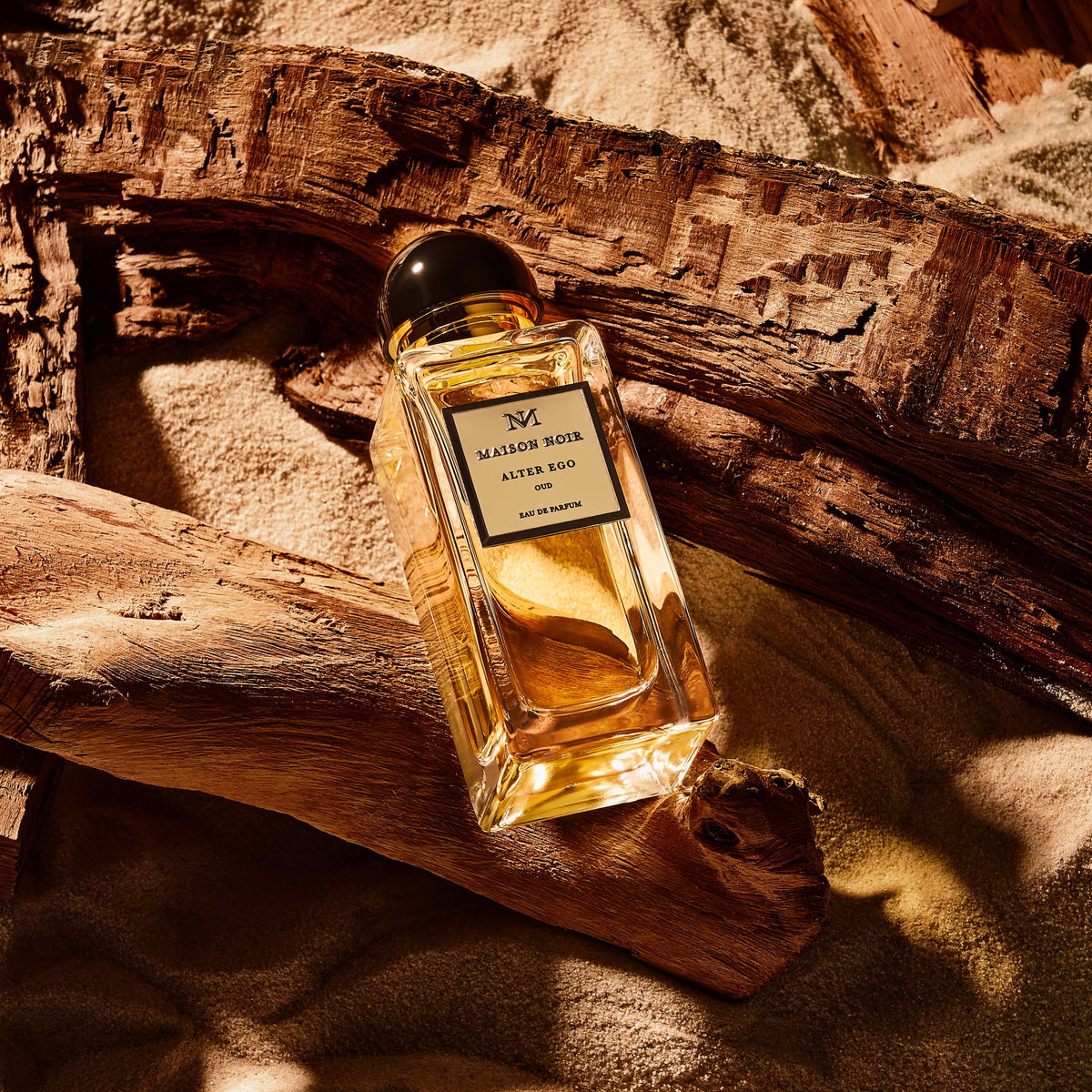
Perfume for women is any fragrance marketed toward a female audience, though that label describes a sales category rather than a composition standard.
A cologne sample is a small, trial-sized quantity of a fragrance, typically 1–2 ml, intended for on-skin evaluation before purchasing a full bottle.