
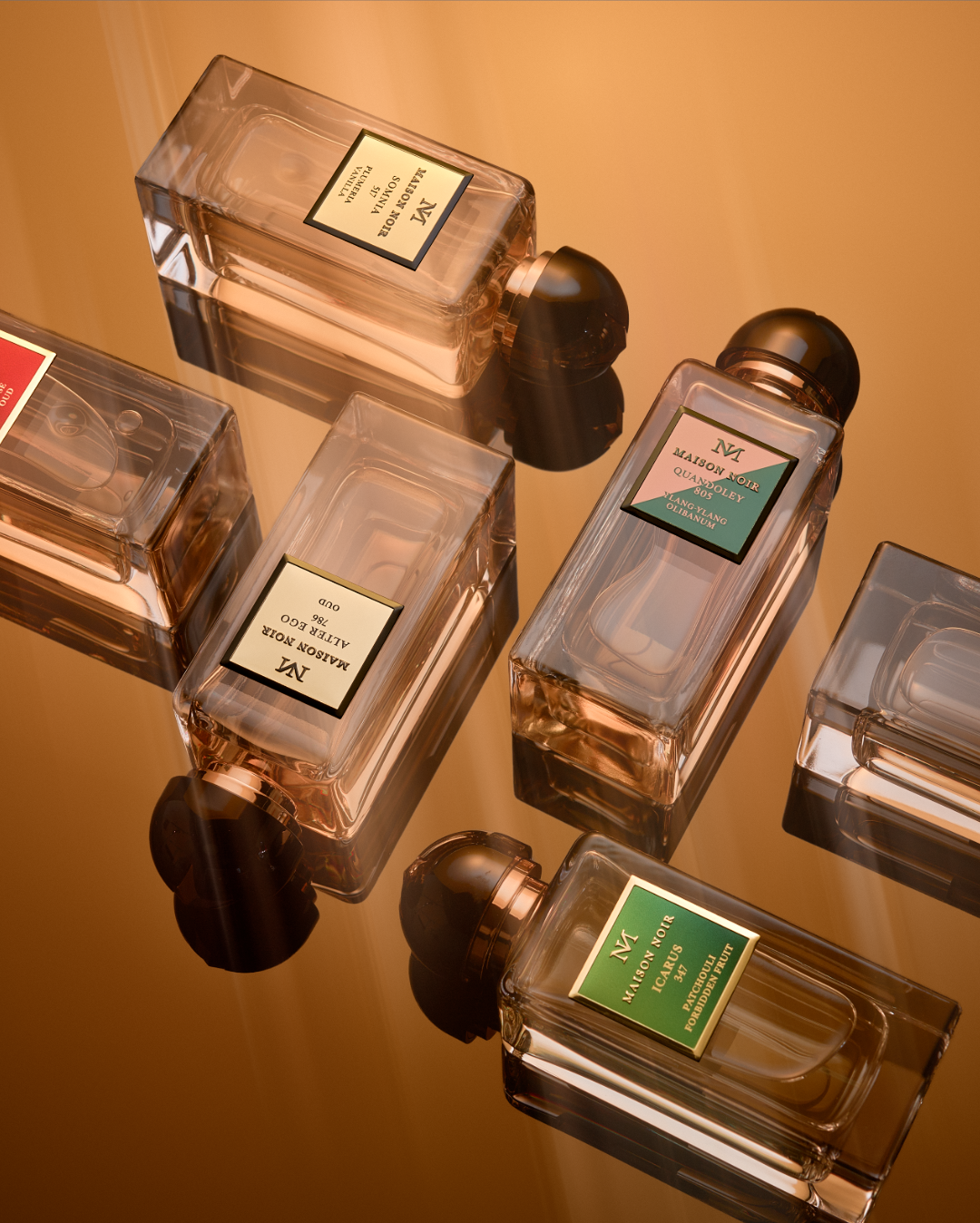
Five Fragrance Mistakes That Undermine Even the Best Scent (and How to Fix Them)
Five Fragrance Mistakes That Undermine Even the Best Scent (and How to Fix Them)
Wearing fragrance wrong means applying a scent in a way that distorts its intended structure, shortens its lifespan, overwhelms others, or prevents it from interacting correctly with your skin chemistry. The five most common mistakes are straightforward to fix: over-application, rubbing your wrists together after spraying, spraying on fabric instead of skin, misjudging how much others detect your scent, and ignoring how your own skin changes a fragrance.
None of these mistakes require expensive products or a perfumer's training. What they need is one small, deliberate shift in how you apply. Here are the five, and how to correct each one.
The five mistakes at a glance:- Applying too much fragrance
- Rubbing your wrists together after spraying
- Spraying on clothes instead of skin
- Misjudging olfactory detection (by yourself and others)
- Ignoring how your skin chemistry and hydration affect the scent
This guide addresses each mistake in practical terms. Think of it as the craft of wearing fragrance well distilled into its most correctable errors. No marketing. No superlatives. Just the knowledge that closes the gap between a fragrance that sounds right on paper and one that actually works on you.
---
Mistake 1: Applying Too Much Fragrance
Over-application is the single most common fragrance mistake, and its effects go beyond making others uncomfortable. Too many sprays collapse the fragrance's structure, pushing its drydown into a wall of scent rather than a layered evolution from top to heart to base.
The damage works in three directions. First, olfactory overwhelm: the people nearest to you cannot escape the scent, even at conversational distance. Second, social proximity problems: fragrance is meant to be discovered at arm's length, not announced across a room. Third, and this matters most if you care about craft, the fragrance's own architecture is disrupted. A well-composed scent is built to reveal itself over hours. Applied in excess, the top notes never lift cleanly, the heart is buried, and the drydown reads as noise rather than nuance.
Concentration matters significantly here. An extrait de parfum carries a higher proportion of fragrance oil than an eau de toilette, so the appropriate number of sprays differs. A single spray of an extrait may achieve what three sprays of an eau de toilette would. Understanding how concentration changes how many sprays a fragrance needs is one of the most practical pieces of knowledge you can carry into a fragrance wardrobe.
One persistent misconception: that heavier application suits one gender more than another. It does not. The right number of sprays depends on concentration, the formulation's projection, your skin chemistry, and the occasion. One to two sprays is a reasonable starting point for almost any fragrance, any wearer.
Start with less. You can always add. You cannot take it back.
---
Mistake 2: Rubbing Your Wrists Together After Spraying
Rubbing your wrists together after applying fragrance damages the scent. The friction generates heat, which accelerates the evaporation of the most volatile molecules in the composition, those responsible for the top notes. What you lose is the opening, the first chapter of the fragrance's story, and you skip straight to the heart.
This habit is widespread and often taught as if it helps. The logic seems sound: pressing the wrists together should blend the scent into the skin. In reality, it breaks it. The friction does not set the fragrance; it degrades the part of the structure you pay most attention to in the first minutes of wearing.
The correct technique is simple: spray, then wait. Let the fragrance dry on its own. If you apply to the wrists, keep them still. The warmth of the pulse point is already sufficient to diffuse the scent upward. No pressing, no blotting, no rubbing. This one change alone noticeably improves how a fragrance opens, and that opening matters far more than most people realise. Technique choices that affect how long a fragrance lasts often come down to these small, quiet habits.
The pulse points themselves are useful because they radiate heat consistently: wrists, inner elbows, the base of the throat, behind the knees. Choose two or three, spray lightly, and let the fragrance work.
---
Mistake 3: Spraying Fragrance on Your Clothes Instead of Your Skin
Spraying fragrance on fabric instead of skin means the scent misses the biological canvas it was composed for. Skin is not a passive surface. It generates heat, carries its own pH, produces natural oils, and shifts subtly throughout the day. All of these factors participate in how a fragrance evolves from its initial spray through its drydown.
Fabric cannot do this. What you get is a flat, linear version of the scent. It may project well and hold for a long time, but it does not evolve. The heart and base notes unfold more slowly and less organically because the warmth and chemistry of skin are absent.
The fabric approach does have genuine logic: longevity. Natural fibres, particularly wool and cashmere, hold fragrance molecules tenaciously. In cold weather, when skin application seems to disappear faster, many people reach for their clothes. The trade-off is worth understanding honestly. Fabric extends projection but removes the dynamic quality of a fragrance, that sense of something developing and changing across the hours of wear.
For the best result, apply to the skin at pulse points. If longevity is a concern in cold conditions, consider layering a matching body product rather than turning to fabric. You can find more detail on how to apply eau de parfum for the best result, including how to build a base that holds the scent longer on skin.
One additional consideration: fragrance on fabric can stain. Lighter formulations and those containing certain musks or resins may leave marks on delicate materials that washing does not fully remove.
---

Discovery Set & Gift Card Bundle (CHF)
Explore multiple scents to find your perfect fragrance match.
$150.00 - $230.00
Shop Now →Mistake 4: Misjudging How Much Others Can Detect Your Fragrance
If you stop smelling your own fragrance within an hour or two of applying it, that does not mean the scent has faded. It means your olfactory system has adapted to it. This is a normal biological process, not a product flaw, and understanding it changes how you approach application.
The nose habituates to persistent stimuli. Olfactory adaptation is efficient: the brain deprioritises information that is constant and familiar. Because your fragrance is always present on your own skin, it becomes background faster than any other scent in your environment. Others, encountering it fresh, continue to perceive it clearly for hours after you have stopped noticing it yourself.
This creates two distinct risks. The first is under-confidence, reaching for more sprays because you assume the fragrance has gone. The second is over-application, adding to a scent that others are already registering at full strength.
You should not expect to smell your own fragrance consistently throughout the day. That is by design. The honest test is proximity: ask someone nearby whether they can still detect it, or step outside briefly and return to a warm room where the scent has settled. Both methods give you a more accurate read than your own nose can.
To know whether others can detect your fragrance, note that arm's-length projection at around two hours of wear is a reasonable benchmark for most eau de parfums. If a trusted person can notice it at arm's length, it is present. More than that suggests you may be applying too heavily. Useful reference points appear in a practical guide to wearing fragrance from start to finish, as well as a look at whether a fixed application formula actually helps.
---
Mistake 5: Ignoring How Your Skin Changes a Fragrance
The same fragrance smells different on different people because skin is not a neutral substrate. pH, hydration, temperature, and the presence of natural skin oils all interact with fragrance molecules and alter how the composition reads. A scent that opens with sharp citrus on one person may open warmer and more resinous on another, with the same bottle, the same spray count, the same moment in the day.
pH is the primary driver. Skin that runs slightly more acidic tends to shorten the projection of top notes and amplify base materials like woods, musks, and resins. More alkaline skin often preserves the freshness of a fragrance longer into its wear. Diet, hydration, medication, and even stress can shift skin pH over time. These are not reasons to distrust a fragrance; they are reasons to test it on your own skin rather than from a blotter strip in a shop.
Hydration matters practically. Dry skin has less natural oil, and oil holds fragrance molecules. Applying an unscented moisturiser to pulse points before spraying gives the fragrance something to bond to, extending wear without altering the composition. This is one of the most useful, underused fixes in fragrance application.
Layering deserves mention here too. Wearing multiple fragrances at once creates its own chemistry, and not always a harmonious one. If you choose to layer, test the combination on skin over time rather than making a quick assessment on a blotter. Certain notes in combination create new accords; others clash in ways that neither fragrance would produce alone. A guide to how to layer scents without creating a clash is worth reading before you experiment.
Testing samples on skin across several hours remains the most honest way to understand whether a fragrance actually suits you. How to use fragrance samples to test a scent properly on your own skin over time is a step many skip and later regret.
---

Vertigo 236
Vertigo's citrus and woody notes adapt beautifully to your skin chemistry.
$125.00 - $195.00
Shop Now →The Five Mistakes at a Glance
The simplest way to audit all five mistakes at once is to run through this table before your next application. It covers what goes wrong and the correction for each.
| Mistake | What Goes Wrong | The Fix |
|---|---|---|
| Applying too much fragrance | Overwhelms others, collapses the fragrance's structure and drydown | Start with one to two sprays; add only if needed after assessing projection |
| Rubbing wrists together | Friction destroys top notes through heat and evaporation | Spray, then let the fragrance dry on its own without touching the skin |
| Spraying on clothes not skin | Scent becomes flat and linear, skipping the chemical evolution skin enables | Apply to pulse points on skin; use unscented moisturiser for longevity |
| Misjudging detection | You stop smelling yourself and over-apply, or assume the scent has faded | Trust olfactory adaptation; verify projection through a trusted third party |
| Ignoring skin chemistry | Fragrance smells different, shorter, or harsher than expected | Test on skin over time; moisturise first; choose samples before committing |
---
Frequently Asked Questions
What are the negative effects of applying too much perfume?Over-application causes olfactory overwhelm for people nearby and collapses the fragrance's layered structure, pushing all of its notes into an undifferentiated mass rather than allowing the drydown to unfold. Socially, it can make the scent intrusive at conversational distances. The fragrance's craft, that intentional arc from top to heart to base, is lost in the excess.
Why does the same fragrance smell different on different people?Skin pH, hydration levels, natural oils, and body temperature all interact with fragrance molecules and alter how a composition reads. A person with more acidic skin may find citrus top notes fade quickly while warm base materials intensify, whereas someone with different chemistry may experience the same fragrance as fresher and longer-lasting through its opening. Diet, hydration, and even stress can subtly shift these variables. Finding guidance on finding a fragrance that suits your skin and preferences is worth the time before committing to a full bottle.
How can you determine whether others can detect your fragrance?The most reliable method is asking someone you trust at arm's length, roughly two hours into wear. Your own nose adapts to familiar scents quickly and cannot give you an accurate read. A brief step outside into fresh air and then back indoors can also help you notice the scent as others might, though asking another person remains more dependable than self-assessment.
Should you be able to perceive your own fragrance throughout the day?No. Olfactory adaptation means your brain deprioritises constant stimuli, and your own scent becomes background information within an hour or two of application. This is a normal biological process, not a sign the fragrance has faded. Others will typically continue to detect it well beyond the point you stop noticing it yourself.
How do you prevent fragrance clashes when layering multiple scents?Test combinations on skin, not on blotter strips, and allow each layer time to settle before assessing the result. Shared or complementary base notes between the two fragrances reduce the risk of clashes. It also helps to consider how occasion and season affect the right fragrance choice, since some combinations that work in cool, dry air become discordant in heat. When in doubt, wear one at a time until you understand how each performs on your skin.
What is the best way to test a new fragrance before buying a full bottle?Wear samples on your skin across several days and different environments. A blotter strip or brief encounter in a store cannot tell you how a fragrance develops on your skin or how it performs in various conditions. Samples reveal how the composition evolves from opening to drydown, how your skin chemistry influences the wear, and whether the scent suits your life and occasions.
Does concentration really make that much difference in how I apply?Yes. An extrait de parfum contains significantly more fragrance oil than an eau de toilette, so fewer sprays are needed to achieve the same or stronger effect. Applying an extrait as if it were an eau de toilette will result in over-application. Understanding how concentration changes how many sprays a fragrance needs helps you apply correctly regardless of formulation.
---
Getting It Right: What Changes When You Apply Fragrance with Intention
Fragrance applied with care performs differently from fragrance applied by habit. The corrections here are not complicated. Spray less. Leave the skin alone after spraying. Apply to skin rather than fabric. Recalibrate how you assess your own scent's presence. Account for what your skin does to a composition. Together, these five shifts are the difference between wearing a fragrance and wearing it well.
None of this requires specialised knowledge or expensive tools. It requires attention, a willingness to test rather than assume, and enough patience to let a scent complete its arc on your skin over several hours.
Fragrance is a learnable practice. The more you understand about how niche fragrance houses approach composition differently, the more you will appreciate that each scent is designed to evolve. Application technique is what allows that evolution to happen as intended. The same principle applies when a lighter fragrance format suits the occasion: the right technique adapts to the formulation.
If you are still searching for the scent that works with your skin rather than against it, the practical next step is testing several fragrances on your own skin over time. You can start that process by exploring the Maison Noir Discovery Set, which allows you to wear each fragrance properly before committing to a full bottle.
Read more
What Is the 'Scent of Man'? How Biology, Culture & Fragrance Interact The scent of a man emerges from the convergence of biology, skin chemistry, cultural conditioning, and fragrance. None of...
How Do I Find My Natural Body Scent? A Perfumer's Perspective Your natural body scent is the baseline olfactive signature your skin produces through its microbiome, genetic makeup, and lifestyle,...