
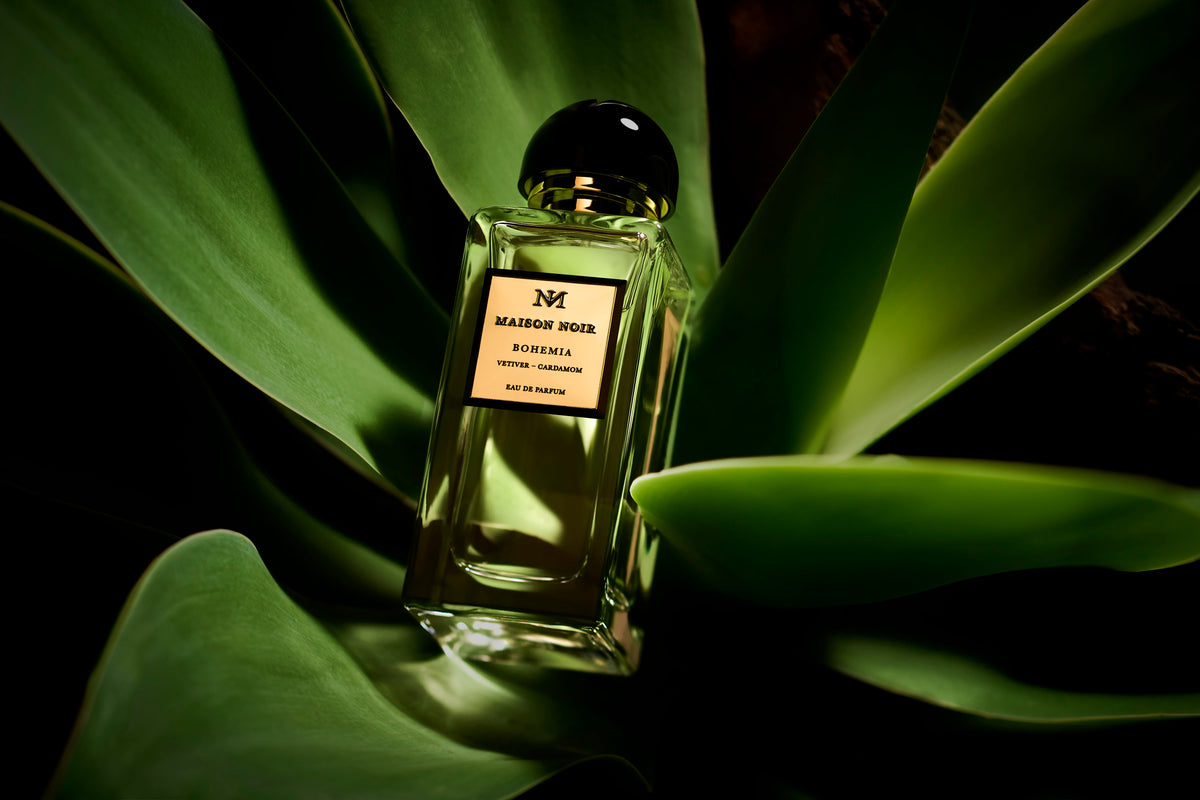
Perfume Samples: The Smartest Way to Explore Fine Fragrance Before You Buy
Perfume Samples: The Smartest Way to Explore Fine Fragrance Before You Buy
A perfume sample is a small quantity of a fragrance, typically 1 to 2 ml, that lets you wear and evaluate a scent across its full development before committing to a full bottle.
Samples are the most reliable way to discover whether a fragrance actually suits you. Skin chemistry, body temperature, and the natural oils you produce all shape how a scent develops over hours. No amount of sniffing a bottle cap or a cardboard strip will tell you what a fragrance becomes on your skin at hour four. The only method that works is wearing it, and samples make that possible without the financial commitment of a full bottle.
For niche fragrance, sampling is not optional. A niche fragrance often carries a more complex development arc than a mass-market release, with base notes that can shift dramatically from first spray to dry-down. Serious fragrance houses design their collections with this reality in mind. Some, like Maison Noir, offer a curated Discovery Set so the full range is available to explore systematically.
This guide covers everything you need to know: how skin chemistry changes what you smell, the difference between vials, decants, and discovery sets, where to find samples, how to test them properly, and how to narrow a shortlist into a final choice. Whether you are new to fine fragrance or refining a collection you have built over years, the approach remains the same. Start with a sample. The bottle can wait.
For the broader journey of finding your scent, or to understand what niche fragrance means and how independent houses approach scent, both complement this guide.
---
Why Testing a Perfume on Your Skin Changes Everything
Skin is not a neutral surface. The fragrance you smell on a strip at a counter is not the fragrance you will wear. Your skin's pH, moisture level, natural oils, and even diet all interact with a fragrance's molecules, shifting which notes read loudest and how long each phase lasts. Sampling on skin is not optional; it is the foundation of any serious fragrance decision.
Every fine fragrance unfolds in three distinct phases: top notes, heart notes, and base notes. Top notes are what you smell in the first five to fifteen minutes, often bright, fresh, or citrus-led. They are also the most volatile, meaning they disappear fastest. The heart emerges as the top fades, usually within twenty to thirty minutes, and it forms the true character of the fragrance. Base notes arrive last, anchoring everything, and they are what you will still be smelling six or eight hours later. On a strip, you catch only the top. On your skin across a full day, you experience all three.
The counter strip test has value, but its limitation is precise: it tells you whether a fragrance's opening appeals to you, nothing more. Many people have made full-bottle purchases based on a strip test, only to find that the fragrance's dry-down does not match their expectations. Some find the base warmer than the opening suggested. Others discover that woody or animalic base notes read quite differently on their skin compared to how they registered on paper.
Concentration adds another layer. An Eau de Parfum and an Eau de Toilette of the same composition will unfold at different rates and with different weight. How concentration affects how a fragrance unfolds on skin is worth understanding before you sample, since it will help you interpret what you are experiencing.
The practical method is simple: spray on a pulse point, let it sit undisturbed for at least thirty minutes, then revisit. Come back again in two hours. The fragrance you are evaluating is the one at hour three, not the one at minute three. For a comprehensive sampling protocol, see how to use fragrance samples to test methodically.
---
Understanding the Different Formats: Vials, Decants, and Discovery Sets
Perfume samples come in three main formats, each with distinct advantages: glass vials from a brand or retailer, decants filled from full bottles by a third party, and discovery sets curated by a fragrance house. Understanding the difference helps you choose the right starting point for your exploration.
Glass vials are the most common format for official samples. They are typically 1 to 2 ml, sealed by the brand or an authorized distributor, and stored under conditions that protect the fragrance's integrity. If you are sampling a relatively new release or a widely available fragrance, an official vial is the most trustworthy format. Decants are samples filled from a full bottle by an independent seller or enthusiast community. Volumes tend to be larger, often 5 to 10 ml, and they can provide access to fragrances that are hard to find as official samples, particularly limited editions or older releases. The reliability consideration with decants deserves clarity: the quality depends entirely on the seller's handling, the cleanliness of their equipment, and how the source bottle has been stored. From a reputable seller with transparent sourcing, a decant is genuinely useful. From an unknown source, there is no way to verify that the fragrance is unaltered. Many experienced collectors use specialist decant communities with established reputations, and that is a reasonable approach. Discovery sets occupy a different category altogether. Rather than a single sample in isolation, a discovery set gives you a curated cross-section of a house's collection, often five to ten vials selected to represent the range. They are the most effective format for understanding a house's aesthetic before deciding which scent to pursue. Maison Noir's Discovery Set does exactly this: it invites you to smell with your eyes as much as your nose, using the house's visual and numbered language to guide you into each fragrance. Each numbered fragrance is a gateway, a door in an imagined townhouse that opens onto its own distinct olfactive world. The Discovery Set lets you stand in front of several of those doors before choosing which one to walk through.If you want to understand how cologne samples let you audition a niche fragrance before you commit, that piece offers further reading on the audition approach.
---
Where to Find Perfume Samples: In-Store, Online, and Through Specialist Routes
Perfume samples are available through three main routes: in-store counters, official brand and retailer websites, and specialist decant or sample communities. Each has real advantages and specific limitations.
In-store sampling is the most immediate option. Department stores with fragrance counters, independent perfumeries, and boutique shops often carry vials for popular lines, and staff can spray a strip or offer a vial to take away. The limitation is range: in-store sampling tends to favour widely distributed brands. Niche houses with smaller retail footprints may have only one or two doors in a given city, if any. In-store testing is valuable for initial orientation, particularly if you are newer to fragrance, but it rewards shopping for perfume with confidence at the counter rather than arriving without a plan. Online is where variety expands significantly. Many niche fragrance houses sell official samples directly through their websites, often as part of a discovery or trial set. Some retailers aggregate samples from multiple brands into a single order. The shipping cost objection deserves a direct answer: a sample set that costs a small amount to ship typically protects you from a full-bottle purchase that proves wrong for your skin. The mathematics usually favour the sample. That said, watch for what functions as a marketing funnel disguised as a sampling programme. Truly free samples distributed via promotional channels, such as magazine inserts or brand-event gifts, are complimentary but rarely systematic enough to serve as a proper try-before-you-buy method. They are better treated as an unexpected introduction to a fragrance than as a deliberate sampling tool. Specialist communities and decant sellers occupy the third route, particularly useful for fragrances that are discontinued, geographically limited, or simply unavailable through official sample channels. For anyone building a broader knowledge of niche fragrance, these communities are a valuable resource. For those starting out, official channels are the simpler and more reliable entry point.For those approaching the question from a masculine fragrance angle, a niche buyer's guide to eau de parfum for men covers how to navigate sampling with that lens in mind.
---
Sampling Routes Compared: A Quick Reference
No single sampling route suits every situation. The right choice depends on what you are looking for, how widely available the fragrance is, and how much certainty you need before committing. The table below lets you compare the main options at a glance.
| Route | Typical Volume | Cost | Reliability for Niche Fragrance | Best For |
|---|---|---|---|---|
| In-store counter vial | 1-2 ml | Usually free | Moderate (limited niche selection) | First impressions, widely distributed brands |
| Official brand sample (online) | 1-2 ml | Low to moderate | High (sealed by the house) | Accurate representation of any house's range |
| House discovery set (online) | 5-10 ml across 5-10 vials | Moderate | Highest (curated by the house) | Systematic exploration of a full collection |
| Third-party decant (reputable seller) | 5-10 ml | Moderate | Good if seller is established | Limited-edition or hard-to-find fragrances |
| Promotional free sample | 0.5-1 ml | Free | Variable | Accidental discovery, not systematic testing |
The key trade-off is between cost and control. Free and low-cost options are useful starting points but rarely give you enough volume or reliability to make a fully informed decision on a niche fragrance. Discovery sets offer the best combination of breadth and reliability: you sample with intention, across a curated range, with enough volume to properly evaluate each scent.
---
How to Test a Perfume Sample Properly
Testing a perfume sample properly requires patience and a straightforward protocol: apply to a pulse point, do not rub, and evaluate at three distinct intervals over several hours. The spray-and-decide approach catches only the top notes and misses the fragrance's true character entirely.
Here is the method, step by step:
1. Start with clean, unscented skin. Avoid applying samples over existing fragrance, lotion with its own scent, or directly after using strongly scented soap. These will distort what you smell. 2. Spray or dab onto a pulse point. The inner wrist and inner elbow are reliable choices. These areas are warm, which helps the fragrance project, and they are easy to revisit throughout the day. 3. Do not rub. Rubbing the skin together after application breaks down the fragrance's molecular structure and flattens the development of the top notes before the heart has a chance to emerge. It is one of the most common sampling errors. Why perfumers say you should never rub cologne into the skin covers this in more detail. 4. Wait fifteen minutes before the first evaluation. The initial blast of top notes will have settled, and you will begin to smell what the fragrance is actually building toward. 5. Evaluate again at thirty to sixty minutes. This is the heart of the fragrance. The character you are experiencing here is the one you will live with most of the day. 6. Return at three to four hours for the base. The base notes tell you how the fragrance ends, and they are often what people mean when they say a scent feels warm, cool, earthy, or animalic on their skin. This phase determines whether you want to wear something regularly. 7. Avoid sampling more than two or three fragrances in a session. Olfactory fatigue is real. After several fragrances, your ability to distinguish accurately drops significantly. Use coffee beans or plain bread to reset, though the most reliable reset is simply fresh air and a break. 8. Test on more than one occasion. Stress, diet, humidity, and even medication can subtly alter how a fragrance reads on your skin day to day. A second wear confirms the first impression.For the full application method that also supports longevity, see how to apply perfume so it lasts all day.
---

Vertigo 236 Sample
Test a clean, citrus woody fragrance to practice proper sampling technique.
$8.00
Shop Now →Why Niche Fragrance Sampling Is Different from Mass-Market Testing
Niche fragrance requires more sampling time, more deliberate attention, and more patience than mass-market testing. The gap between first impression and final dry-down is typically wider in niche composition. The ingredients are often less familiar. The fragrance may resist instant appeal in favour of depth that reveals itself over hours.
At a mass-market counter, the testing logic is straightforward: a fragrance is designed to be immediately recognisable and pleasant, with top notes that convert quickly. The development is often relatively contained, and many buyers can make a reasonable decision based on the first few minutes. Niche fragrance is composed differently. The brief given to a master perfumer at a fine-fragrance house tends to prioritise character and complexity over immediate commercial impact. This means a fragrance may open in a way that is striking, unusual, or even challenging, before settling into something far more wearable and rewarding. Sampling that fragrance for three minutes at a counter, against twenty other sprays, is not a meaningful test.
The numbered naming convention used by some niche houses adds another useful dimension to sampling. Maison Noir, for example, encodes its fragrances numerically so that each digit maps to a note family on the house's fragrance wheel. Vertigo 236 points toward its fresh-ozonic-woody character through the numbers before you have even opened the bottle. This kind of systematic transparency invites you to sample with intention rather than guessing at a fragrance's direction.
The unisex angle deserves attention here. Many people approach niche sampling through the lens of gendered categories, looking for fragrances marketed to women or to men. Niche fragrance rarely operates that way. The question is not whether a scent is designed for a particular gender, but whether it works on your skin, suits your context, and resonates with you. How to explore unisex niche fragrance without category assumptions is a useful frame for approaching sampling without those limits.
If you are still at the stage of identifying what direction to explore, how to know what fragrance to wear before you sample is the place to begin.
---
How to Move from Many Samples to One Decision
When you have several samples in hand, the challenge shifts from finding options to narrowing them. A simple written log and a bracketing method will cut a shortlist of ten down to two or three with far less confusion than relying on memory alone.
Start with a log. After each wear, write down three things: the phase you are evaluating (top, heart, or base), one or two specific words describing what you smell or feel, and whether the fragrance is still on your radar. Keep the language concrete, not evaluative. "Warm amber and something slightly smoky" is useful. "Nice but not sure" is not.
After wearing each sample at least once to its base notes, arrange your log by the phase that matters most to you in daily wear. For many people, that is the base and heart, since those are the phases other people actually smell on you. Top notes will always be the most volatile, the most exciting for the first few minutes, and the least relevant for long-term satisfaction.
Apply a bracketing method. Take your sample set and divide it in half, keeping the ones that showed something meaningful in the heart or base. Test those again, against each other if possible, on different days. After two rounds of this, most people are left with one or two genuine candidates.
Consider whether layering is part of your practice. Some samples that feel incomplete alone combine beautifully with another. How to experiment with fragrance layering across your sample shortlist is worth reading before you dismiss a sample that seems close but not quite right on its own.
Finally, pay attention to how your natural body scent shapes how a fragrance develops on you, since your base skin tone will consistently pull certain fragrance families in directions that suit or resist your chemistry.
---
What a Fragrance Discovery Set Actually Gives You
A discovery set gives you something that piecemeal sampling cannot: an intentional, house-curated cross-section of a collection, presented in a format designed to let you understand a house's sensibility before committing to any single scent.
Piecemeal sampling, ordering individual vials one at a time, is useful when you already know what you are looking for. When you are new to a house, or new to niche fragrance more broadly, it tends to be inefficient. You make guesses based on individual notes and miss the relationships between fragrances that reveal what a house is actually doing as a whole.
A discovery set addresses this directly. With the Maison Noir Discovery Set, you gain access to multiple numbered gateways from a single order. Each fragrance carries its own number, its own visual language, and its own olfactive direction. The experience is designed so you can smell with your eyes as well as your nose, reading the imagery and the numbers before the first spray, then testing whether your intuition aligns with what the fragrance actually does on your skin.
There is a practical dimension worth noting. Many house discovery sets are structured so that the cost of the set can be redeemed against a full bottle purchase. This means the discovery set is not a sunk cost. If you find your fragrance, the sample investment becomes part of the full purchase. If you do not, you have paid a relatively small amount to reach a confident decision to look elsewhere, which is valuable information.
The discovery set also lets you explore adjacent fragrances you might not have considered. Many people find that the fragrance they end up purchasing is not the one they expected when they ordered the set. The numbered door they assumed would be theirs turns out to be less interesting than the one they had overlooked.
For further orientation on what is worth discovering this season, the best niche fragrances worth discovering this season offers a curated view.
---

Frequently Asked Questions About Perfume Samples
How can I obtain free perfume samples?Free samples are available through department store counters, brand events, and promotional inserts, but these tend to be small quantities from widely distributed lines rather than systematic sampling tools. Truly free niche fragrance samples are rare. The most reliable free-sample route is visiting a boutique that carries the brand and asking directly.
What is the best method to get perfume samples?The most reliable method combines an official discovery set from the house with any in-store sampling you can arrange beforehand. Discovery sets give you enough volume, the right context, and the full collection to compare, which individual promotional vials rarely provide.
How should perfume samples be tested?Apply to a pulse point, do not rub, and evaluate at three intervals: fifteen minutes, one hour, and three to four hours. Limit yourself to two or three fragrances per session to avoid olfactory fatigue. The base notes, evaluated at hour three, are the most important phase for a purchase decision.
Where can perfume samples be found locally?Department stores with fragrance counters, independent perfumeries, and niche fragrance boutiques are the main local sources. Availability varies significantly by location, particularly for niche houses with limited retail distribution. If your nearest stockist does not carry a sample, the brand's website is the next option.
What perfume sample sets are available?Niche fragrance is unisex by nature, and the more useful question is which fragrance works on your skin, suits your preferred contexts, and resonates with you. Discovery sets from niche houses give you a range of compositions to test on your own skin, which is the only reliable standard. For further reading, how to choose a fragrance for the right occasion and season may be more useful than a category-based list.
Are there perfume sample subscriptions available?Several third-party subscription services send curated fragrance samples monthly, drawing from a rotating library of brands. These are useful for breadth of exposure but vary in quality control and in whether they include niche houses. For focused exploration of a specific house's range, a one-time discovery set tends to be more efficient.
Which retailers offer perfume samples and discovery options?Dedicated niche fragrance retailers, independent boutiques, and house websites are the most reliable sources for discovery-oriented samples. Some department stores offer discovery programmes for the brands they stock. Direct from the house is usually the best option for accuracy and freshness.
What are decants in relation to perfume samples?A decant is a sample filled from a full bottle by a third party rather than sealed by the original brand. Decants are useful for accessing fragrances that are unavailable as official samples, particularly limited editions or older releases. Reliability depends entirely on the seller's handling and sourcing, so using established, reputable communities is important.
---
Start with a Sample, Arrive at a Signature
The most direct path to a fragrance you will wear with confidence is sampling methodically before you buy. That principle does not change whether you are new to fine fragrance or refining a collection you have been building for years.
The core method is straightforward. Choose the right format for where you are: a discovery set if you are exploring a house's range for the first time, official vials for targeted testing, decants for hard-to-find compositions. Apply to skin, not paper. Evaluate at three intervals across several hours. Keep a simple log. Bracket your shortlist through repeated wears and narrow by what the base and heart notes do on your skin, since those are the phases that determine long-term satisfaction.
Niche fragrance rewards patience more than impulse. A composition that is striking and unfamiliar in the first minutes may become irreplaceable by hour four. The reverse is equally true. A sample gives you the time to find out.
The numbered fragrances in the Maison Noir collection are each a gateway, a door that opens onto a distinct olfactive world. Some open onto cool, ozonic freshness. Others onto warm amber and smoke, or onto the tender green depth of an eternal rose. You will not know which door is yours until you wear each one.
If you are ready to begin, the Maison Noir Discovery Set is the place to start: a curated introduction to the full collection, designed for exactly this kind of intentional exploration.
For a broader framework, the full guide to finding your scent takes the sampling process further, and why unisex fragrance represents the future of fine perfumery offers useful context for approaching a collection without assumptions.
Read more

A perfumer is a trained creative professional who formulates fragrances from raw aromatic materials, working at the intersection of chemistry, sensory...

Eau de parfum typically contains 15 to 20 percent aromatic concentrate dissolved in alcohol.