
What Eau De Parfum Actually Feels Like on Skin: Projection, Dry-Down & When to Choose It
What Eau De Parfum Actually Feels Like on Skin: Projection, Dry-Down & When to Choose It
Introduction
Eau de parfum contains roughly 15 to 20 percent aromatic compounds, which puts it squarely in the middle of fine fragrance. It lasts longer than an eau de toilette, feels more approachable than a full parfum, and develops in ways that matter on your skin across several hours.
The specificity matters. Most people lump "perfume," "cologne," "eau de toilette," and "eau de parfum" together as loose synonyms. Each term actually describes a precise ratio of fragrance oil to carrier. That distinction shapes how you shop, how you apply, and whether a scent performs as you expect it to.
This guide covers what eau de parfum means, where it sits among the five main concentrations, how it actually unfolds on skin from first spray to final dry-down, and when to choose it over alternatives. If you're building your understanding from scratch, the fragrance education guide works well alongside this. For a direct comparison of all five concentration categories, see the five fragrance concentrations.
December peaks as gifting season for fragrance. The weeks before it are the right time to understand exactly what you're choosing, and why.
---
What Does Eau de Parfum Mean?
"Eau de parfum" translates from French as "perfumed water," which is intentionally imprecise. The phrase describes any fragrance where aromatic compounds dissolve in a predominantly alcohol-based solution, and it has been standard industry language for decades.
Pronunciation: "oh duh par-FAN." The final consonant is silent. It matters mainly so you can ask for it in a boutique without hesitation.
What the term does not mean is equally important. Eau de parfum is not a synonym for "women's fragrance." Cologne is not a synonym for "men's fragrance." Both reflect late-twentieth-century marketing conventions, not properties of the concentration itself. Cologne, formally "eau de cologne," simply means a fragrance with a lower aromatic compound percentage, around 2 to 4 percent. The word describes dilution, not gender. The piece on how perfume and cologne differ covers that history plainly.
"Eau de parfum," "eau de toilette," "parfum," and "cologne" are concentration categories. Using them interchangeably causes real confusion. Someone whose "perfume" fades within two hours may own an eau de toilette, not a flawed product. Someone overwhelmed by their "cologne" may have applied a high-concentration extrait that needs a lighter hand. The label tells you the ratio. It does not tell you quality, gender, or mood.
---
Fragrance Concentrations Compared: Where EDP Sits
Eau de parfum occupies the upper-middle tier of fragrance concentration. It's richer than the lighter categories but not as dense or resinous as a full parfum or extrait. Seeing exactly where it belongs requires looking at all five levels together.
| Concentration | Aromatic Compound % | Typical Longevity | Projection | Common Use Case |
|---|---|---|---|---|
| Eau Fraîche | 1-3% | 1-2 hours | Very close to skin | Warm weather, sport, casual refresh |
| Eau de Cologne | 2-4% | 2-3 hours | Light, fades quickly | Light layering, everyday freshness |
| Eau de Toilette | 5-15% | 3-5 hours | Moderate | Daytime wear, office, warmer months |
| Eau de Parfum | 15-20% | 5-8 hours | Moderate to strong | Versatile, evening, cooler seasons |
| Parfum / Extrait | 20-40% | 8-12+ hours | Intimate but lasting | Occasion wear, colder months, collectors |
Those ranges are approximate and honest. Industry labelling has no legal standard in most markets, so one brand's eau de toilette might overlap in concentration with another's eau de parfum. What matters is how a specific formula behaves on your skin, not the percentage on the box.
One misconception to address directly: extrait de parfum is not simply a stronger version of eau de parfum. The two are distinct formulations. Extrait concentrations are higher, but the composition shifts with them: heavier base materials, reduced top-note brightness, a different opening character. An EDP and its extrait counterpart built on the same theme will smell related but not identical in the first thirty minutes. The detailed guide to all five concentrations goes deeper, and the question of what makes one fragrance more refined than another regardless of concentration is addressed in what determines fragrance quality.
---
What Eau de Parfum Actually Feels Like on Skin
The experience of wearing an eau de parfum changes across three distinct phases. Understanding those phases changes how you evaluate a scent.
The opening arrives in the first five to fifteen minutes after application. This is the top-note phase: the most volatile aromatic compounds evaporate quickly, creating the first impression. Citrus, light herbs, and fresh green notes typically lead here. Projection peaks during this window. Someone nearby will register the scent most clearly now. The heart develops over the next one to three hours. As the top notes fade, the middle-note materials come forward: florals, spices, aromatic woods. This is the most stable phase of wear and usually where the perfumer most wanted your attention. Projection pulls slightly closer to the skin during this period without disappearing entirely. The dry-down is the final phase, the one that separates a well-composed fragrance from a flat one. Base notes, typically musks, resins, woods, and ambers, settle closest to the skin and can persist for hours. A good dry-down feels intimate rather than faint. It's the reason two people wearing the same EDP can smell noticeably different by day's end.Skin chemistry explains that difference. Skin pH, moisture level, natural oils, and even diet influence how aromatic compounds bind and evolve. A fragrance that reads as predominantly woody on one person may lean more resinous or floral on another. This is not a flaw. It is what makes fragrance personal rather than uniform.
For practical advice on maximising that final dry-down, see the guide on how to apply perfume so it lasts. If you're still finding your way, finding the right scent for your skin addresses the chemistry side plainly.
---

Icarus 347
Experience how EDP projection and dry-down evolve on your skin.
$125.00 - $195.00
Shop Now →How Eau de Parfum Differs from Eau de Toilette and Parfum
The practical differences between EDP, EDT, and extrait are real, though not always where people expect them.
An eau de parfum generally lasts longer than a comparable EDT and projects more confidently in its middle phase. The higher concentration also tends to give base notes more presence, meaning the dry-down is richer and more distinct. An EDT in a similar composition often fades before the base settles fully, particularly on drier skin.
Compared to an extrait, an EDP opens more expansively. The top notes in an extrait are often compressed or muted because the high concentration of base materials slows their evaporation. This is why extrait wearers frequently describe the opening as "quieter" or "heavier." An EDP gives the full arc of the composition more room to breathe.
Now, the quality question. Higher concentration does not mean higher quality. A poorly composed fragrance in extrait concentration is still poorly composed. Conversely, an EDT from a skilled perfumer can be more artful and more satisfying to wear than an extrait from a less considered source. Concentration is a parameter, not a measure of craft. That distinction matters when you're comparing how commodity and fine fragrance differ, and it's part of what niche fragrance houses do differently in their approach to formulation.
One further nuance: the word "parfum" appears on packaging inconsistently. Some houses label a product simply as "parfum" when they mean extrait de parfum at high concentration. Others use it for products closer to EDP range. Reading the percentage, when disclosed, is more reliable than the label alone.
---
When to Choose an Eau de Parfum
An eau de parfum suits occasions where you want a fragrance to carry through the day or evening without reapplication, and where moderate projection feels appropriate rather than excessive.
Cooler months and evening settings are where EDPs perform most visibly. Lower temperatures slow evaporation, which means the fragrance radiates steadily rather than burning off quickly. Autumn and winter are the seasons most associated with EDP wear for this reason. That said, a well-chosen EDP built around fresh or aquatic notes can work in spring and summer without becoming overwhelming, provided application stays restrained.
Workplaces with close contact, enclosed spaces, or formal settings call for a lighter hand with an EDP, or a shift to EDT. Projection is a consideration for the people around you, not only for yourself. An EDP applied to three pulse points in a warm meeting room will read very differently than the same fragrance outdoors.
Skin type matters too. Drier skin absorbs fragrance faster and holds it less assertively. Applying an unscented moisturiser before your EDP creates a slightly oilier surface for the aromatic compounds to bind to, which extends both longevity and projection without changing the fragrance's chemical composition. This is one of the most consistently useful application tips for anyone whose EDP seems to fade faster than expected.
Eau de parfum is not a gendered category. Any person, with any skin chemistry, can wear any EDP that suits their taste and occasion. Practical guides to choosing fragrance by occasion and season and autumn fragrances and when they work explore these decisions in more detail, and why unisex fragrance transcends gendered categories addresses the broader conversation directly.
---

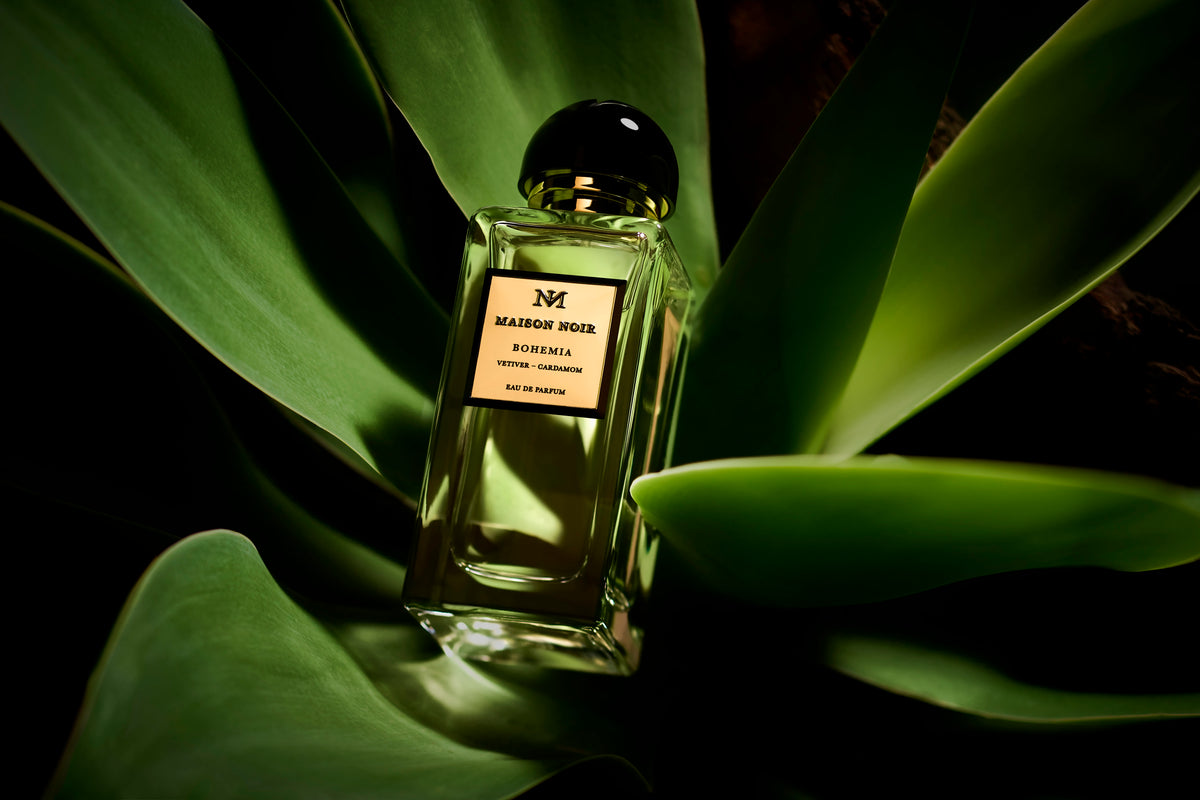
Bohemia 265
Discover a versatile woody-citrus EDP perfect for any occasion.
$125.00 - $195.00
Shop Now →How to Apply Eau de Parfum for Best Results
Apply to pulse points: the inner wrists, the base of the throat, and the inner elbows. These areas have blood vessels running close to the skin, generating gentle warmth that diffuses the fragrance steadily.
Don't rub your wrists together after spraying. Rubbing crushes the top-note molecules and accelerates their evaporation, which shortens the opening phase and can alter the composition's intended arc. Let the fragrance settle on its own.
One to three sprays is enough for an EDP. More than that rarely improves projection; it more often produces the opposite effect, where concentration becomes cloying rather than refined. If you find EDP intense, try a single spray at the base of the throat and let the warmth carry it upward.
Applying to hair or clothing rather than skin is an option for anyone whose skin chemistry seems to suppress fragrance quickly. Fabric holds aromatic molecules differently and can extend longevity, though the absence of body heat means the development arc is less dynamic.
The moisturiser tip bears repeating: an unscented lotion applied a few minutes before your EDP gives the fragrance something to adhere to, particularly on dry skin. The full guide to making perfume last all day covers this and other techniques, and the 3:1:1 application method offers a structured approach to layering and amount.
---
How to Find the Right Eau de Parfum Without Committing Blindly
The only reliable way to choose an eau de parfum is to wear it on your skin through all three phases before buying a full bottle. Paper strips in a shop tell you the opening. They tell you almost nothing about the dry-down, which is where you'll actually live with the fragrance.
When sampling, give each fragrance at least two to three hours on skin. Notice what happens in the heart phase, roughly thirty to ninety minutes in, and pay attention to the dry-down. If a fragrance still interests you after four hours, it will likely suit extended wear.
The Discovery Set from Maison Noir is built on exactly this principle: a curated selection of the collection's fragrances in sample sizes, designed for skin testing rather than shop-counter decisions. It's one practical way to work through different olfactive families before committing. The guide on how to use fragrance samples effectively gives a method for doing that systematically.
If you're still orienting yourself within fragrance families, the pieces on oriental floral fragrances and floral, fruity, and gourmand families offer clear starting points.
---

Discovery Set & Gift Card Bundle (EUR)
Try multiple EDPs risk-free with our curated discovery bundle.
$125.00 - $195.00
Shop Now →Frequently Asked Questions About Eau de Parfum
What does eau de parfum mean?Eau de parfum is a French term meaning "perfumed water." In fragrance industry usage, it refers to a concentration category where aromatic compounds make up approximately 15 to 20 percent of the formula. It is one of five standard concentration tiers.
How is eau de parfum different from eau de toilette?An eau de toilette contains a lower concentration of aromatic compounds, typically 5 to 15 percent, which results in shorter wear time and lighter projection. An EDP generally lasts longer on skin and develops a richer dry-down than a comparable EDT formulation.
How is eau de parfum different from parfum or extrait de parfum?Extrait de parfum contains 20 to 40 percent aromatic compounds and is not simply a stronger EDP. The composition itself is often reformulated for high concentration: base notes are more prominent, top notes quieter, and the opening is less expansive. Wearing an EDP and its extrait counterpart side by side is instructive.
How is eau de parfum different from cologne?Eau de cologne is a concentration category with around 2 to 4 percent aromatic compounds. It is lighter and shorter-lasting than EDP. The word "cologne" does not mean "men's fragrance"; it describes dilution. Similarly, "eau de parfum" does not mean "women's fragrance." Both are concentration terms, not gender categories.
How should eau de parfum be pronounced?"Oh duh par-FAN." The final "m" in parfum is not voiced. The "eau" is a single open vowel sound, similar to the English "oh."
Is eau de parfum a good quality fragrance?Concentration and quality are not the same thing. An EDP can be beautifully crafted or poorly made, depending entirely on the composition and the ingredients used. The same applies to extrait and EDT. Evaluating quality means considering the complexity of the composition, the longevity on your skin, and how it develops over time, not the percentage on the label.
What are the different concentration levels in fragrances?From lightest to richest: Eau Fraîche (1 to 3 percent), Eau de Cologne (2 to 4 percent), Eau de Toilette (5 to 15 percent), Eau de Parfum (15 to 20 percent), and Parfum or Extrait de Parfum (20 to 40 percent). These ranges are approximate; industry labelling is not universally standardised. For techniques that help any concentration last longer, the guide on layering fragrances for longer wear is worth reading, and the aromatic fougère family is a useful reference if you are exploring that particular lineage of EDP compositions.
---
Choosing Eau de Parfum with Intention
Understanding eau de parfum means understanding a system. Concentration is a parameter, not a ranking. EDP sits in the middle of five tiers, offering longevity and projection that suit most occasions without the density of a full extrait. The choice between EDP, EDT, and extrait depends on your skin, the setting, the season, and the composition itself.
The key distinctions are worth holding onto. EDP and extrait are different formulations, not the same scent at different volumes. Concentration does not determine quality. Cologne and parfum are not gendered terms. And the only way to know whether a fragrance suits you is to wear it through its full development on your skin.
This knowledge transfers. Understanding what EDP means, how it develops, and when to choose it makes every fragrance decision cleaner. It also makes sampling more productive, because you know what you're looking for at each phase.
The full fragrance education guide continues from here. To put the knowledge into practice before committing to a full bottle, you can explore the collection through the Discovery Set, a considered way to test each fragrance on skin across all three phases before deciding.
Read more

Learn how to wear fragrance correctly: pulse points, quantity by concentration, application methods, occasion choices, and the mistakes most people make.
Eau De Parfum vs. Eau De Toilette: What the Concentration Actually Changes Eau de parfum and eau de toilette differ in fragrance oil concentration, typically 15-20% for EDP and 5-15% for EDT. Bu...