
What Does a Master Perfumer Do? Inside the Craft Behind Fine Fragrance
What Does a Master Perfumer Do?
A master perfumer is a professional who formulates fragrance compositions by combining raw materials, natural and synthetic, into structured, emotionally resonant scents, and who has reached that standing through years of rigorous training and professional practice rather than through any single formal credential.
The title is earned, not issued. This is a distinction worth making early. Many readers use "perfumer" and "master perfumer" interchangeably, but the difference is significant. A perfumer is trained to build formulas and work within a creative brief. A master perfumer brings a deeper palette of raw material knowledge, a longer track record of successful compositions, and the kind of olfactory fluency that only sustained practice can develop. The word "master" reflects accumulated expertise, not a certificate hanging on a wall.
What does a master perfumer do in practical terms? They receive a creative brief, select from a vast library of raw materials, build and refine formulas through repeated trials, evaluate those formulas on skin and paper, and iterate until the composition meets both the creative vision and regulatory standards. Understanding what goes into a fine fragrance helps clarify why that process is as demanding as it is. For anyone drawn to the field, a solid fragrance education guide is a useful place to start.
---
What Are the Primary Responsibilities of a Master Perfumer?
A master perfumer's primary responsibility is to translate a creative brief into a finished fragrance formula, managing every stage from raw material selection through repeated blending trials to final approval. The work is systematic, sensory, and deeply iterative.
The process begins with a brief. In a commercial context, this document might specify a target market, a desired mood, key note references, and a cost-per-kilo ceiling for the formula. The perfumer reads the brief and begins selecting raw materials from their palette, which at a senior level can run to several thousand ingredients. Each material must be recalled from memory: its odour profile, its volatility, how it behaves in combination, and how it evolves over the fragrance's dry-down from top notes through the base.
Blending trials follow. The perfumer builds a series of test formulas, often called trials or iterations, and evaluates each one on mouillettes (thin strips of absorbent paper) before moving to skin evaluation. Skin evaluation matters because fragrance interacts with body temperature and chemistry in ways that paper cannot replicate. Trials are assessed blind where possible, refined, and repeated.
Regulatory review is part of the process, not an afterthought. International bodies set usage limits on certain raw materials, and a finished formula must comply before it reaches production.
The difference between this process at a mass-market house and at a niche house is worth understanding. Mass-market briefs often prioritise cost constraints and demographic data; the creative latitude can be narrow. At a niche house, as explored in how niche houses approach the creative brief, the perfumer typically works with fewer financial guardrails and greater creative trust. The brief may be more conceptual, an image, a mood, an emotion, rather than a market segment. That freedom places greater demands on the perfumer's judgement, not less.
Underpinning all of this is olfactory science, the study of how the nose and brain process smell, which informs how a master perfumer structures a composition to evolve predictably over time.
---
What Is the Study of Perfume Called, and How Does Training Work?
The study of perfume is most commonly called perfumery, while the broader scientific discipline concerned with how smell works is called olfaction or olfactory science. These two fields overlap but are distinct: olfaction explains the biology and psychology of scent perception; perfumery is the applied craft of creating fragrances.
Formal training in perfumery is rare and highly selective. The most widely recognised institution is ISIPCA, the Institut Supérieur International du Parfum, de la Cosmétique et de l'Aromatique Alimentaire, based in Versailles, France. ISIPCA programmes are intensive and competitive, drawing students from across the world into structured curricula that cover raw materials, formula construction, and sensory evaluation. Graduates typically enter the industry at a junior level and continue learning on the job for years, often decades, before reaching senior standing.
The major ingredient houses, Givaudan, Firmenich, IFF, Symrise, and others, run their own internal training programmes. These are arguably the most rigorous pathways in the industry, because they combine classroom instruction with daily hands-on work alongside experienced perfumers. Many of the most respected names in modern perfumery were trained through these in-house schools. Admission is competitive and training periods are long; it is not uncommon for a junior perfumer to spend five to ten years before being trusted with significant creative briefs.
Training in perfumery differs meaningfully from fragrance chemistry education. A fragrance chemist studies the molecular composition of aromatic materials, stability, and analytical techniques. A perfumer trains to smell, to identify materials by scent, to understand how they combine, and to build formulas that communicate an emotion or a story. Both roles demand rigour, but the core skill sets are different. Olfactory science sits at the intersection of both.
Understanding how commodity fragrance differs from fine perfumery also illuminates why the perfumer's training demands a different sensibility from the outset.
The journey from beginner to master is long by design. The craft rewards patience.
---
Is There a Perfumery School in the USA?
Yes, formal perfumery education exists in the United States, though the options are fewer than in France. The Natural Perfumers Guild and the Institute for Art and Olfaction both support community and education around scent, while the Fashion Institute of Technology in New York has offered coursework in cosmetics and fragrance. Some universities with chemistry programmes include aromatic chemistry modules.
That said, none of the US-based institutions currently hold the same industry standing as ISIPCA or the in-house training schools of the major ingredient houses. Many serious American students pursue education in France or enter the industry through apprenticeship and self-directed study.
This brings up a point that often causes confusion: "master perfumer" is not a formal credential issued by any school or certifying body. No institution can confer the title by examination or graduation. The designation is a matter of professional standing and peer recognition within the industry. A perfumer is considered to have reached master status when their body of work, their depth of raw material knowledge, and their creative output are recognised by colleagues and by the houses they work with. That recognition builds over years of practice, not over a semester.
This matters for anyone considering the career. The absence of a formal US credential pathway does not close the door. Self-directed learning, working with an established perfumery studio, or pursuing one of the more structured online programmes that have emerged in recent years are all viable starting points. How independent perfumers are shaping fine fragrance shows that the field is more accessible than it once appeared, even if reaching master level still demands sustained commitment.
---
How Many Master Perfumers Are There in the World?
The number of working master perfumers globally is commonly estimated in the low hundreds. It is a small profession, and deliberately so. The combination of factors that produces a master perfumer, rigorous training, years of practical experience, sustained creative output, and peer recognition, ensures that the pool remains narrow.
Several structural reasons explain this. First, entry into serious training is selective. The most respected programmes accept limited cohorts each year, and many candidates do not complete the journey to senior level. Second, the memory demands of the craft are exceptional: a working perfumer is expected to identify and recall hundreds or thousands of raw materials by smell alone. Building that library takes years of daily practice. Third, the industry is concentrated in a small number of geographic and corporate centres. France remains the primary hub, though the craft is practised across Europe, the United States, and beyond.
The low number is not a failure of supply or opportunity. It is a reflection of what mastery in this field actually requires. Many trained perfumers work successfully throughout their careers at a skilled practitioner level without being described as masters, and their work is no less valid for that. The distinction matters most in how briefs are assigned and how creative autonomy is extended.
For those drawn to the field, what niche fragrance houses look for in a composition offers useful context on how the market receives and rewards exceptional olfactory work.
---
What Qualifications and Training Does a Master Perfumer Need?
No single qualification defines a master perfumer, but several well-established pathways lead toward the depth of expertise the title implies. The table below maps the main routes, the typical time commitment, and where each tends to begin.
| Pathway | Duration | Focus | Common Entry Point |
|---|---|---|---|
| Ingredient house internal school (e.g., Givaudan, IFF, Symrise) | 3 to 7 years | Raw material library, formula construction, brief response, client work | Science or chemistry degree, competitive application |
| ISIPCA or equivalent formal institution | 1 to 3 years | Perfumery theory, raw materials, olfactory training | Open application, some science background preferred |
| Independent or studio apprenticeship | Variable, often 5 or more years | Hands-on blending, mentorship, natural or niche focus | Personal portfolio, referral, creative background |
| Self-directed study with industry engagement | 7 or more years | Raw material self-education, industry competitions, community | No formal requirement; discipline and access to materials essential |
After reaching their training pathway, a perfumer continues refining their skills throughout their career. The question of whether a master's degree is necessary is straightforward to answer: no, it is not. No academic postgraduate degree maps directly to the master perfumer designation, because the designation itself is not academic. What matters is the quality and breadth of the work.
The secondary question about fragrance chemist education requirements is worth separating here. A fragrance chemist, whose work involves analysing raw materials, testing stability, and ensuring regulatory compliance, typically holds a degree in chemistry or a related science. A perfumer's educational background varies more widely; some are trained chemists, others come from art or design backgrounds, and others entered through apprenticeship. The skills are complementary but not interchangeable.
Understanding how fragrance concentration reflects formulation decisions gives useful context for how a perfumer's technical choices translate into what you smell on skin.
---

Alter Ego 786
Experience the woody and spicy compositions master perfumers craft.
$125.00 - $195.00
Shop Now →What Does a Perfumer Career Look Like, and How Much Do They Earn?
A perfumer career typically takes one of three shapes: working within a major ingredient house, working in-house for a fragrance brand, or operating independently. Each offers a different balance of creative freedom, financial stability, and professional visibility.
The ingredient house path, at companies such as Givaudan, Firmenich, IFF, or Symrise, is the most structured. Perfumers at these houses work on briefs from multiple client brands simultaneously, developing formulas in competition with other internal and external perfumers. The work is demanding and commercially oriented, but the access to raw materials and mentorship is unparalleled.
An in-house role at a brand gives the perfumer a focused creative context, working consistently within the brand's identity and customer base. The brief-to-bottle cycle may be slower and the material palette more constrained, but the depth of brand knowledge built over time is an advantage.
Independent perfumers, often associated with niche fragrance, operate with significant creative freedom. The trade-off is commercial and financial risk. Building a client base and a reputation takes time.
On earnings: salary ranges vary considerably depending on geography, employer, seniority, and whether the perfumer is employed or independent. It would be misleading to state specific figures here without verified data. What is accurate is that senior perfumers at major houses are well-compensated professionals; entry-level positions are modest; and independent work carries the full range of outcomes typical of creative freelance careers.
The career's barriers are real but not insurmountable. How niche fragrance is creating new opportunities for independent perfumers documents how the field has opened in recent years, and understanding how signature fragrance families are built by practised hands shows what that craft looks like in practice.
---
How Master Perfumers Work with Niche Fragrance Houses
At a niche fragrance house, the relationship between the master perfumer and the creative team is typically closer and more collaborative than in mass-market production. The brief is shaped by vision rather than volume, and the perfumer is invited into the concept from an earlier stage.
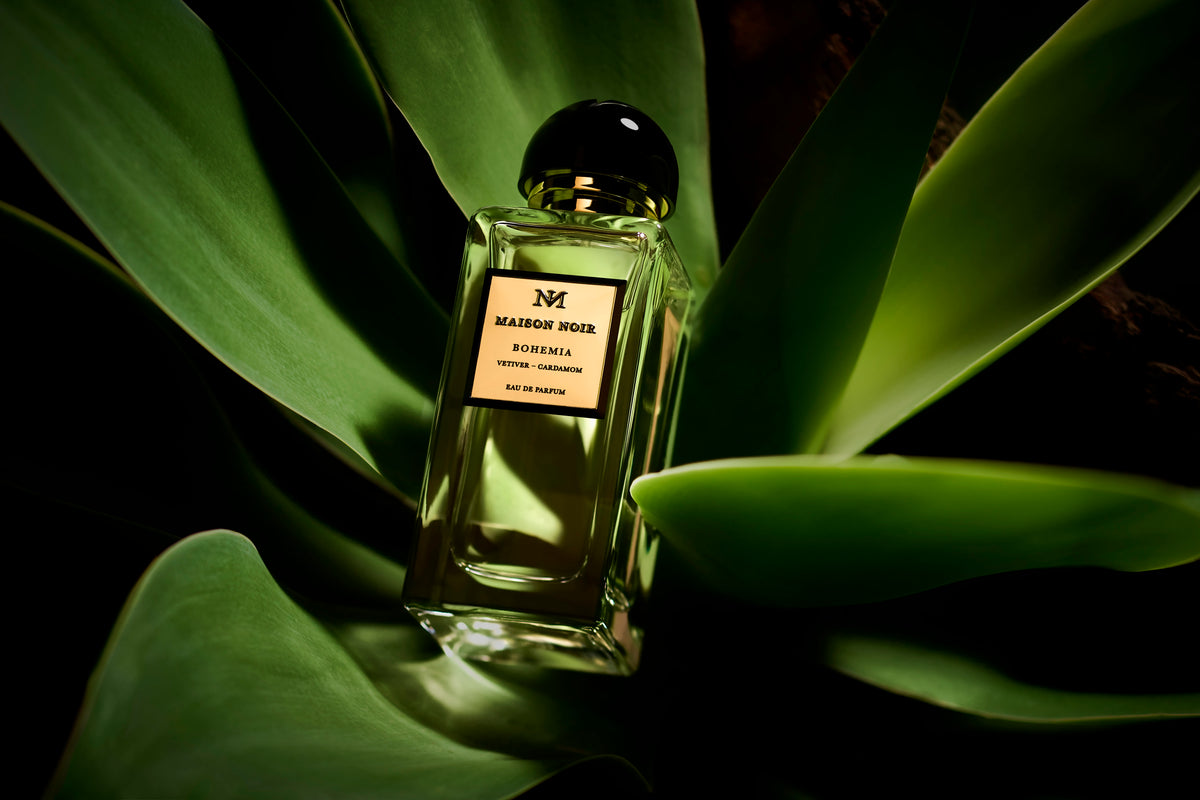
At Maison Noir, this collaborative approach is visible in the precision of each composition. Somnia 517, with its edgy vanilla under plumeria and cistus balanced by juicy Italian bergamot, reflects the kind of intentional layering that only results from close dialogue between a creative direction and a perfumer who understands that every element must serve the whole. Alter Ego 786 reveals a smoky top with hints of raspberry over a solid oud wood base, a pairing that demands both confidence and restraint in equal measure. Bohemia 265 balances fresh bergamot and aromatic cardamom with woody notes on a foundation of subtle amber vetiver, a composition where the structure is as deliberate as the scent itself.
The house's approach, "Born in Switzerland. Crafted in France.", captures why the brief-to-bottle journey matters as much as the final formula. The idea is composed in one place and given form in another, the way a paragraph is conceived before it is written. The phrase "smell with your eyes" reflects the same logic: at Maison Noir, each fragrance carries a number and a visual identity that makes the olfactive story legible before the cap is removed.
How niche fragrance houses think differently about scent provides useful context for why this approach produces compositions that reward attention. And how rich, layered fragrance families are built by skilled hands shows the structural thinking that underpins the most complex work.---

Quandoley 805
Discover niche fragrance artistry with complex ambery and spicy notes.
$125.00 - $195.00
Shop Now →Frequently Asked Questions
This FAQ addresses the most common questions about what master perfumers do and how to become one. The answers below cover responsibilities, training, earnings, and the distinctions that matter most when you are exploring this field for the first time.
What are the primary responsibilities and daily work of a master perfumer?A master perfumer receives a creative brief, selects raw materials from an extensive palette, builds and tests formula iterations on mouillettes and skin, and refines the composition until it meets creative and regulatory requirements. The work is both analytical and sensory, with significant time spent evaluating smell and making precise adjustments.
How much income do master perfumers typically earn?Earnings vary considerably depending on geography, employer, and seniority. Senior perfumers at major ingredient houses earn professional-level salaries; entry-level positions are more modest; and independent perfumers' income reflects the full range of creative freelance work. No verified salary benchmark is available here, and any specific figure would be misleading.
What qualifications and training are required to reach master perfumer status?Training typically runs through a formal institution such as ISIPCA, an in-house school at a major ingredient house, or a structured apprenticeship, followed by years of professional practice. There is no single required qualification; the designation is earned through the quality and breadth of the work over time.
Can someone become a perfumer without formal academic credentials?Yes. While formal training is a common and respected pathway, it is not the only one. Self-directed study, apprenticeship, and community engagement through organisations such as the Institute for Art and Olfaction have all supported working perfumers who did not follow a traditional academic route.
Is a master's degree in perfumery necessary for the profession?No. No academic postgraduate degree confers the title of master perfumer. The designation is a professional recognition based on experience and creative output, not on completing a degree programme.
How many perfumers are there in the world?The number of working master perfumers globally is commonly estimated in the low hundreds. The profession is small by design, given the depth of raw material knowledge and years of practice the craft requires.
What is the study of perfume called?The applied craft of creating fragrances is called perfumery. The scientific study of how smell works is called olfaction or olfactory science. Both inform the work of a practising perfumer, though they are distinct disciplines.
What is the difference between a perfumer and a master perfumer?A perfumer is trained to build fragrance formulas and respond to creative briefs. A master perfumer has built a substantial body of work, commands a broader raw material palette, and has earned professional recognition through sustained practice. The word "master" reflects experiential depth, not a formal credential or certification.
---
Understanding the Craft Behind Every Bottle
The craft of the master perfumer is what stands between a list of raw materials and a fragrance that feels coherent, emotionally resonant, and right on skin. That craft is the article's central subject, and it deserves a plain summary before you close the page.
Mastery in this field is not an award or a degree. It is the accumulated result of thousands of hours of evaluation, iteration, and trained sensory memory. When you encounter a composition like Icarus 347, with its tonka beans and ambroxan grounding a structure of forbidden fruit and patchouli, or Somnia 517, where edgy vanilla meets plumeria, cistus, and Italian bergamot, you are encountering the outcome of that accumulated craft. Every element is placed, not incidental.
If you want to understand how a thoughtfully made fragrance wears on skin before committing to a full bottle, how to use fragrance samples to find a composition that suits you is a practical next step. And if you are still building your sense of what suits you, a guide to finding your signature scent can help orient you.
For a direct encounter with what master perfumery produces, explore the Maison Noir Discovery Set and let the compositions speak for themselves.

Bohemia 265 Fragrance & Candle Bundle
Explore the craft behind fine fragrance with curated bundle collections.
$260.00$150.00 - $205.00
Shop Now →Read more
A leather fragrance is a scent built around an accord that evokes the smell of tanned, worked, or raw hide, constructed almost entirely from synthetic...
Guerlain, founded in Paris in 1828, holds the strongest documented claim as the oldest Parisian perfumery. Discover how French fine fragrance history unfolded.