
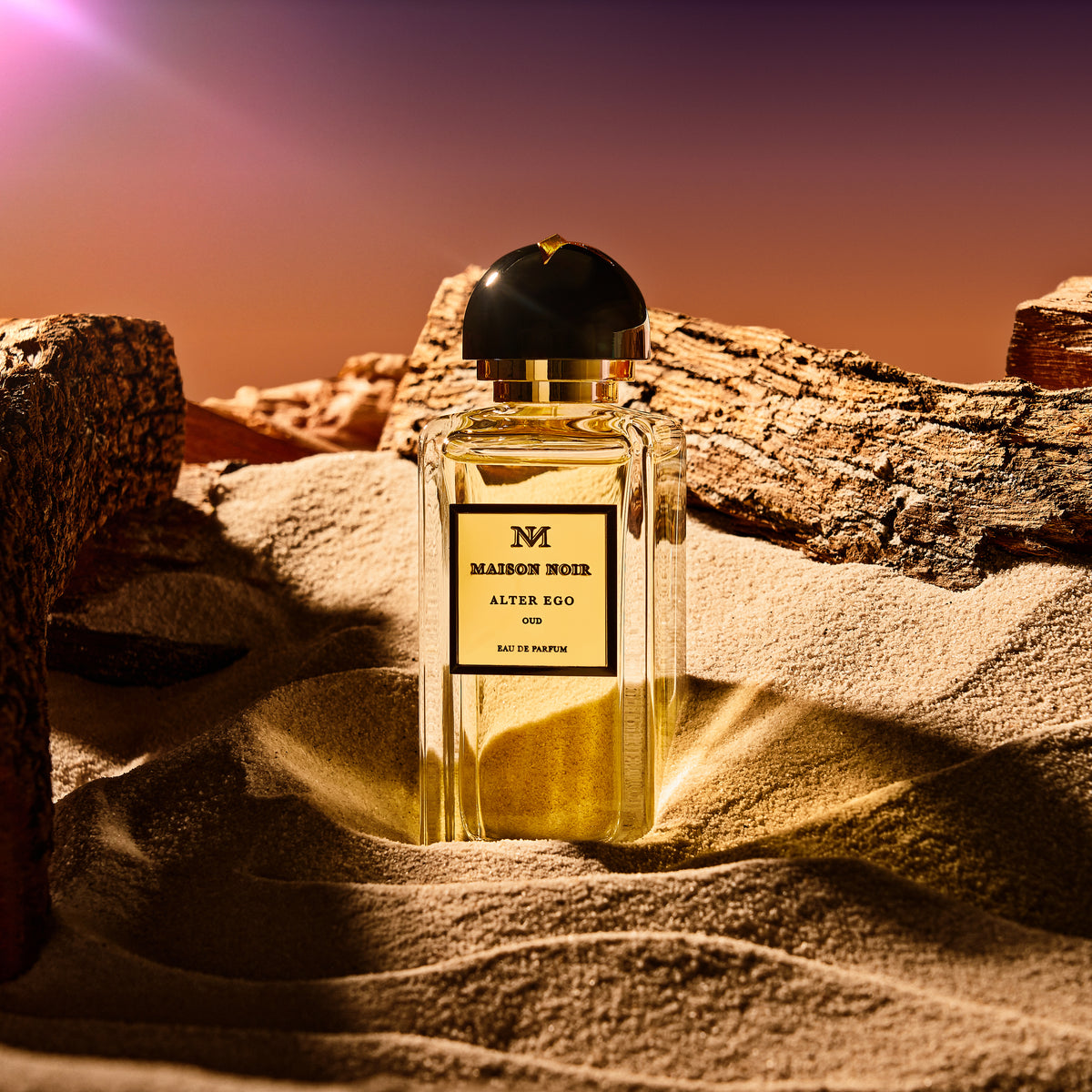
How to Choose a Fragrance for Work: Niche Scents That Project Professionally
A fragrance for work is a scent calibrated to project subtly, suit an enclosed shared space, and complement a professional context without drawing attention to itself over your presence.
Selecting a fragrance for work is not the same as choosing a weekend scent, and treating it as identical is the most common mistake people make. What performs beautifully on a summer evening, or fills a garden party with warm amber and vanilla, can become oppressive at close quarters in a meeting room by mid-morning. The tension at the heart of this choice is real: fragrance is one of the most personal forms of expression, and yet the professional environment asks that your expression remain legible to colleagues who did not choose to share it with you.
This guide covers the criteria that make a scent work-appropriate, the fragrance families worth considering, concentration and application, and how to find the right professional scent for your own skin. For broader context on matching fragrance to context and time of year, the choosing the right fragrance for the occasion guide offers a useful foundation.
---
What Makes a Fragrance Suitable for a Work Environment
A work-appropriate fragrance is one with controlled sillage, reasonable longevity, and a character that reads as clean and unobtrusive in close quarters. These three criteria do the most work when you are evaluating a scent professionally.
Sillage is the trail or projection a fragrance leaves. High sillage is desirable at a social event. In an open-plan office, it is a liability. You want a scent your immediate neighbour might notice pleasantly, not one that announces your presence three desks away. Longevity matters, but not at the expense of sillage. A fragrance that lasts eight hours with moderate projection is a better professional choice than one that lasts twelve with aggressive projection. Character refers to the overall impression a fragrance creates: fresh, warm, sweet, animalic, smoky. Character is where most people focus their attention, but projection and longevity are the more consequential variables in a shared space.There is an important distinction between a solo workspace and a shared open-plan office. If you work alone at a private desk, you have considerably more latitude. A richer, warmer composition worn at moderate application can be genuinely pleasant in that context. The shared open-plan environment, where colleagues at close range have no means of escape, demands more restraint.
One thing many people overlook is that concentration and notes are different levers. A fragrance built from fresh, aquatic notes can still overwhelm a room if it is applied in Extrait de Parfum concentration at four sprays. Conversely, a properly applied Eau de Toilette in a woody, slightly resinous composition can wear beautifully at the office all day. Understanding how application affects longevity and projection is as important as understanding the notes themselves.
---
Fragrance Families That Read Well in Professional Settings
The fragrance families most suited to professional wear are those with moderate projection, clean character, and compositions that settle quickly into skin rather than radiating outward. Aromatic, woody, and fresh citrus families consistently read well; heavy gourmands, animalic musks, and dense orientals require more caution.
Aromatic and Woody Families
Aromatic fragrances, built on herbs, vetiver, cedarwood, and similar materials, are among the most reliable for professional contexts. They have structure and presence without the kind of sweetness or density that can feel intrusive indoors. Vertigo 236 from Maison Noir illustrates this category well: bold and fresh with an ozonic heart and aromatic citrus, it projects enough to be noticed without saturating a room.
The woody family, particularly compositions built on sandalwood, vetiver, or cedar rather than the more intense oud-dominant expressions, offers similar reliability. Bohemia 265, with fresh bergamot, aromatic cardamom, and a foundation of amber vetiver, sits in this territory. It carries warmth and complexity without becoming dense, which makes it a sound choice for the office through most of the year.
Fresh Citrus Family
Fresh citrus fragrances are often defaulted to as the safe professional choice. That is partly correct: citrus compositions tend to stay close to the skin and project lightly. However, the assumption that "fresh equals appropriate" is worth questioning. A very light citrus that evaporates within two hours may lead to reapplication, which can create the same problems as a heavy scent applied once. Seek citrus compositions with some woody or aromatic base to anchor the longevity.

Vertigo 236
Vertigo 236 combines citrus brightness with woody depth for professional polish.
$125.00 - $195.00
Shop Now →Floral and Soft Floral Families
Soft florals, particularly those built on white flowers, rose, or green florals rather than heavy tuberose or gardenia, can work well professionally. The key is whether the floral is paired with clean musks and woods, or with dense resins and vanilla. The former reads as elegant and unobtrusive; the latter can feel heavy at close quarters.
The unisex angle is worth naming here, not as a trend, but as a practical professional benefit. Compositions designed without a gendered brief tend toward greater versatility: they read as intentional and composed rather than as specifically masculine or feminine. For a professional context where the goal is subtle authority rather than coded identity, this makes a real difference. Understanding how niche fragrance houses approach composition differently helps explain why these compositions often excel at this balance, and why unisex fragrance suits a modern professional wardrobe explores the practical case in more depth.
---
Fragrance Families at Work: a Quick Reference
The table below synthesises general perfumery knowledge about how each major fragrance family behaves in professional settings. It is a starting point, not an absolute guide, since concentration, application, and individual skin chemistry all modify the outcome.
| Fragrance Family | Typical Character | Office Suitability | Best Setting |
|---|---|---|---|
| Aromatic / Fougère | Herbal, clean, structured | High | Open-plan and shared offices |
| Fresh Citrus | Light, bright, short-lived | High (with woody base) | Any office; reapplication may be needed |
| Soft Floral | Gentle, clean, elegant | High | Private desk to open-plan |
| Woody / Earthy | Warm, grounding, subtle | Moderate to High | Best in cooler months or solo workspace |
| Amber / Oriental | Warm, resinous, complex | Moderate | Private workspace; light application only |
| Gourmand | Sweet, edible, dense | Low to Moderate | Solo workspace, not open-plan |
| Animalic / Heavy Musk | Sensual, intense, close | Low | Evening; not recommended for office |
Rich oriental compositions deserve particular attention before you reach for one in a professional context. Understanding understanding rich oriental compositions will help you identify where the line sits between a warm amber that reads professionally and a dense oriental that does not.
---
How Fragrance Selection Differs Between Work and Casual Settings
Work fragrance selection differs from casual fragrance choices primarily in three ways: projection must be calibrated to a shared space, character should avoid extremes of sweetness or sensuality, and the consistency of wearing the same scent repeatedly matters more.
In a casual setting, you might choose a fragrance that matches your mood, the weather, or the occasion. In a professional setting, you are also choosing with your colleagues in mind. That is not a constraint on taste so much as a form of social consideration.
The gendered question comes up frequently in searches, and it is worth addressing plainly. There are no notes that are inherently masculine or feminine. The framing of "fragrances for women at work" or "fragrances for men at work" is a marketing convention, not a perfumery truth. What actually matters professionally is projection and character, not gender coding. A bergamot-cardamom-vetiver composition reads as appropriate and refined on anyone. The most useful professional recommendations are those focused on those practical criteria rather than on gendered assumptions.
Season is a genuine modifier worth accounting for. Fragrance chemistry responds to temperature: warmer skin in summer amplifies projection, meaning a scent that feels subtle in November can feel much more present in July. How season changes what a fragrance does on skin covers this in detail. In practical terms, you may find you reach for lighter, fresher expressions in summer and richer, more grounded ones in winter, without changing the overall character profile you favour professionally. And if you tend to build a scent wardrobe, layering techniques that let you modulate intensity can help you adjust projection as the seasons shift.
---
Concentration and Application: Getting the Dose Right
Concentration and application together determine how a fragrance actually behaves on your skin. Choosing the right concentration for your professional context, and applying it correctly, matters more than any other single decision.
The standard concentrations and their approximate fragrance-oil content:
- Eau de Cologne (EDC): 2-5%. Very light projection, short longevity. May require reapplication.
- Eau de Toilette (EDT): 8-15%. Moderate projection, 4-6 hours typical longevity. Reliable for most office contexts.
- Eau de Parfum (EDP): 15-20%. Fuller projection, 6-8 hours. Best for private workspaces or with minimal application.
- Extrait de Parfum: 20-40%. Intense, long-lasting, close-wearing when applied sparingly. One careful spray can be enough.
For shared open-plan offices, an EDT applied to one or two pulse points is generally the right calibration. Wrist and the base of the throat are the most reliable spots. Apply, then leave it: rubbing wrists together breaks the molecular structure of the top notes and accelerates their evaporation.
For a private desk, you have more room. An EDP at one to two sprays remains appropriate. The temptation to compensate for short longevity by applying more is worth resisting. More sprays of a short-lived fragrance does not extend longevity; it simply creates an initial burst that can overwhelm those nearby.
The principles of wearing fragrance well covers the fundamentals, and the 3:1:1 application rule and whether it holds up examines how different application approaches affect the overall experience.---

Alter Ego 786
Alter Ego 786's balanced composition works across seasons in office settings.
$125.00 - $195.00
Shop Now →Fragrances That Work Across All Seasons in a Professional Context
A fragrance that works well across all seasons professionally is one built on a moderate, balanced structure: not so light that heat makes it disappear, and not so rich that warmth makes it overwhelming. Aromatic-woody compositions and structured soft florals tend to travel best across the calendar.
Temperature changes how fragrance volatilises on skin. In summer, top notes burn off faster and the overall projection of a composition increases. In winter, skin is often drier and cooler, which can dampen projection and make rich bases feel comfortable rather than oppressive. A scent calibrated perfectly for December may feel too dense in July worn at the same application.
Bohemia 265 is a useful illustration of a seasonally adaptable professional scent. Its architecture, fresh bergamot and aromatic cardamom over an amber vetiver base, moves between seasons without requiring significant adjustment. The fresh top keeps it feeling appropriate in warmer months; the woody, slightly resinous base carries it through cooler ones. That balance is what to look for when you want a single scent to carry professional weight across the full year.
By contrast, fragrances built primarily on heavy resins, smoke, or very dense vanilla are better thought of as cool-weather scents. Worn in summer, they project far more intensely than they do on a cold morning. For seasonal nuance, how to match fragrance to season across the year maps this in more detail, and what oud actually contributes to a composition helps explain why oud-forward fragrances tend to behave differently across temperatures.
---
How to Find the Right Professional Fragrance for You
Finding a professional fragrance that genuinely works for you requires sampling under realistic conditions, worn on your own skin, in the kind of environment you will actually wear it in.
Skin chemistry is not a minor variable. The same fragrance can project quietly and cleanly on one person and amplify significantly on another, depending on skin pH, hydration, and natural warmth. Reading other people's descriptions of how a fragrance wears is useful context, but it is not a substitute for testing on your own skin over a full workday.
When you sample a fragrance for professional wear, observe it at three points: immediately after application, one hour in (when the heart notes have settled), and four hours in (when the base is all that remains). The professional impression a scent makes is almost entirely carried by the heart and base; the top notes that smell beautiful in the first few minutes are rarely what your colleagues experience.
Test it in the conditions you will actually wear it: in a warm, enclosed room, not in the fresh air. Projection behaves differently indoors. How to use fragrance samples to find the right scent walks through this process in practical terms, and the process of finding a scent that is genuinely yours approaches the longer question of building a scent identity.
The Maison Noir Discovery Set is a practical entry point for this kind of sampling. Rather than committing to a full bottle on the basis of a strip, you can explore the Discovery Set to wear the compositions on your own skin across realistic conditions before you decide.
---

Discovery Set & Gift Card Bundle (CHF)
Explore niche professional scents with our curated discovery set and gift card.
$150.00 - $230.00
Shop Now →Frequently Asked Questions
These are the questions readers most consistently ask about wearing fragrance professionally. Each answer is written to stand independently as a direct response.
What makes a good perfume suitable for a work environment?
A work-suitable fragrance has controlled sillage, a character that reads as clean and unobtrusive, and a concentration appropriate to the space you are working in. The key is that it should be perceptible to those immediately close to you without projecting aggressively into shared areas. Aromatic, fresh, and lightly woody compositions with moderate longevity cover most professional contexts reliably.
How does fragrance selection differ between work and casual settings?
In a casual setting, personal expression is the primary guide. In a professional setting, shared-space courtesy becomes an equal consideration. This means favouring compositions with lower sillage, avoiding very sweet or animalic extremes, and accounting for how your fragrance behaves in a warm, enclosed room rather than outdoors.
Which fragrances work well across all seasons in a professional context?
Aromatic-woody and structured soft-floral compositions tend to travel best across the calendar. They are not so light that summer heat makes them disappear, and not so rich that they become oppressive in warmth. Bohemia 265, with bergamot, cardamom, and amber vetiver, is a verified example of this balance.
Are there specific fragrance recommendations for women in the workplace?
There are no notes that are inherently gendered, and restricting professional recommendations by gender limits the palette unnecessarily. The most reliable professional fragrances for any person are those with controlled projection, clean character, and a composition that wears well in enclosed spaces. Aromatic, soft woody, and clean floral compositions serve that purpose regardless of who is wearing them. Exploring the understanding the floral and gourmand families guide can help clarify which floral expressions read as refined rather than heavy.
Are there specific fragrance recommendations for men in the workplace?
The same principle applies: notes are not inherently masculine or feminine, and the most useful professional fragrances are those focused on projection and character rather than gendered coding. Aromatic fougères and woody compositions are often associated with men's fragrance historically, but they are simply families with clean, structured profiles that happen to suit professional settings well. Any person can wear them to the same effect.
What kind of everyday fragrance is appropriate for office wear?
An Eau de Toilette in a fresh, aromatic, or lightly woody family, applied to one or two pulse points, is the most reliable everyday office choice. It offers enough longevity to carry you through a full workday without aggressive projection. If your workspace is private, an Eau de Parfum at light application can also work.
Does fragrance choice matter for an individual workspace or desk?
It matters somewhat less than in a shared open-plan office, but it still matters. A private workspace gives you considerably more latitude with richer compositions and slightly fuller application. That said, colleagues who enter your space, whether for a conversation or a meeting, will still encounter your scent. The same principles of character and moderate projection apply, with a degree more freedom in concentration choice.
---
Choosing Your Professional Scent
The right fragrance for work is one that expresses something genuine about you while remaining considerate of the shared environment it enters. That balance is achievable, and it is worth taking the time to find.
Three things carry the most weight. First, sillage matters more than notes. A well-calibrated moderate projection in any family is more appropriate than a heavy application of an otherwise neutral scent. Second, concentrate thoughtfully: an EDT applied correctly to one or two pulse points is usually the most reliable professional choice. Third, test under realistic conditions. How a fragrance performs on your skin in a warm, enclosed room over a full workday is the only reliable measure of its professional suitability.
The sampling-first approach is both the most practical and the most respectful of your investment. Before committing to a full bottle, wear the composition across a real workday and observe how it projects, how it evolves, and how it settles.
For the full occasion and season fragrance guide, the context extends across every setting. As a starting point for the professional question specifically, explore the Discovery Set to sample the Maison Noir collection on your own skin before deciding.
Read more
EDP vs Parfum explained: concentration levels, longevity, projection, price, and when to choose each. A practical guide for deliberate fragrance buyers.
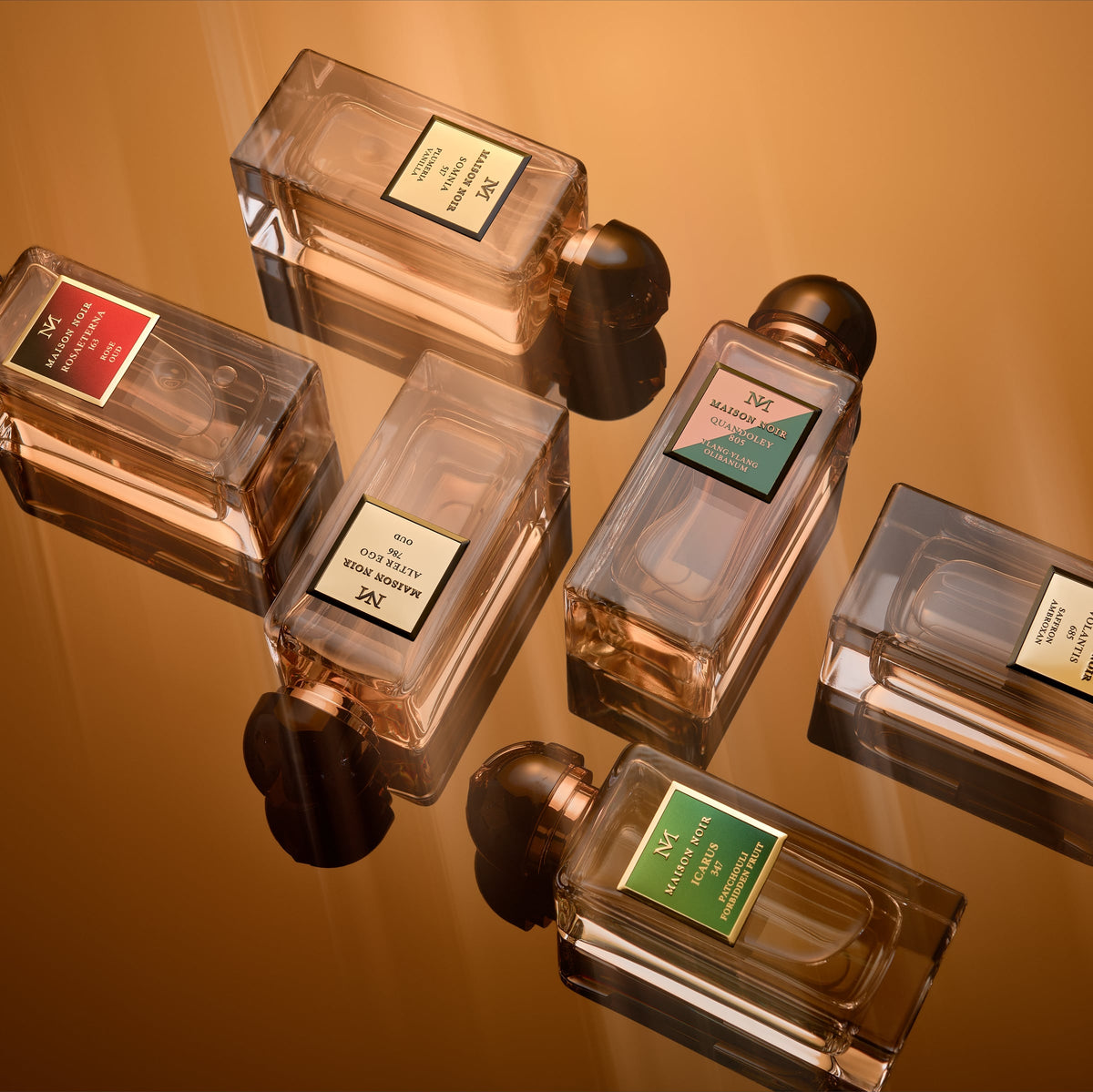
Arabic Perfume: The Ancient Tradition Behind the World's Most Intense Scents Arabic perfume is a fragrance tradition rooted in the Middle East, defined by dense, resinous ingredients like oud, m...