
Occasion & Season Guides: How to Choose the Right Fragrance All Year
Occasion & Season Guides: How to Choose the Right Fragrance All Year
Choosing the right fragrance for a given season or occasion is not about personal preference alone. It is about understanding how temperature, humidity, social context, and time of year shape the way a scent behaves on your skin and reads to those around you. A fragrance that feels perfectly calibrated on a cool October evening can become something entirely different, and unwelcome, on a warm July afternoon. Knowing how to navigate those variables removes guesswork and opens the possibility of building a considered fragrance wardrobe where each scent has a clear, intentional role.
The sections below move through season, occasion, temperature, and wardrobe logic in sequence, offering a working framework for matching fragrance to context across the year.
---
Why Season Shapes What You Wear
Season is not a background variable. It is an active force that changes how a fragrance opens, develops, and projects on skin.
Warmth accelerates molecular diffusion. In summer, top notes burn off quickly, meaning the heart and base arrive sooner and with more intensity. An amber-heavy base that reads as comforting in January can feel suffocating in a crowded room in August. This is not a flaw in the fragrance. It is physics.
Cold air does the opposite. It slows molecular release, keeping a scent closer to the skin and reducing sillage, the trail a fragrance leaves in the air. A delicate floral or aquatic that projects confidently in July may barely register on a December morning unless applied more deliberately.
Beyond chemistry, there is a sensory alignment worth honouring. Certain notes and qualities feel native to their season. Vetiver carries an earthy, smoky coolness that reads as refreshing in summer and grounding in winter, though for entirely different reasons. Iris has a powdery, rooty dryness that suits the spare light of autumn with quiet authority it does not command in June.
Fragrance is a kind of calendar. The door you choose to open naturally shifts with the light outside.
---
Spring and Summer: Light, Air, and Warmth
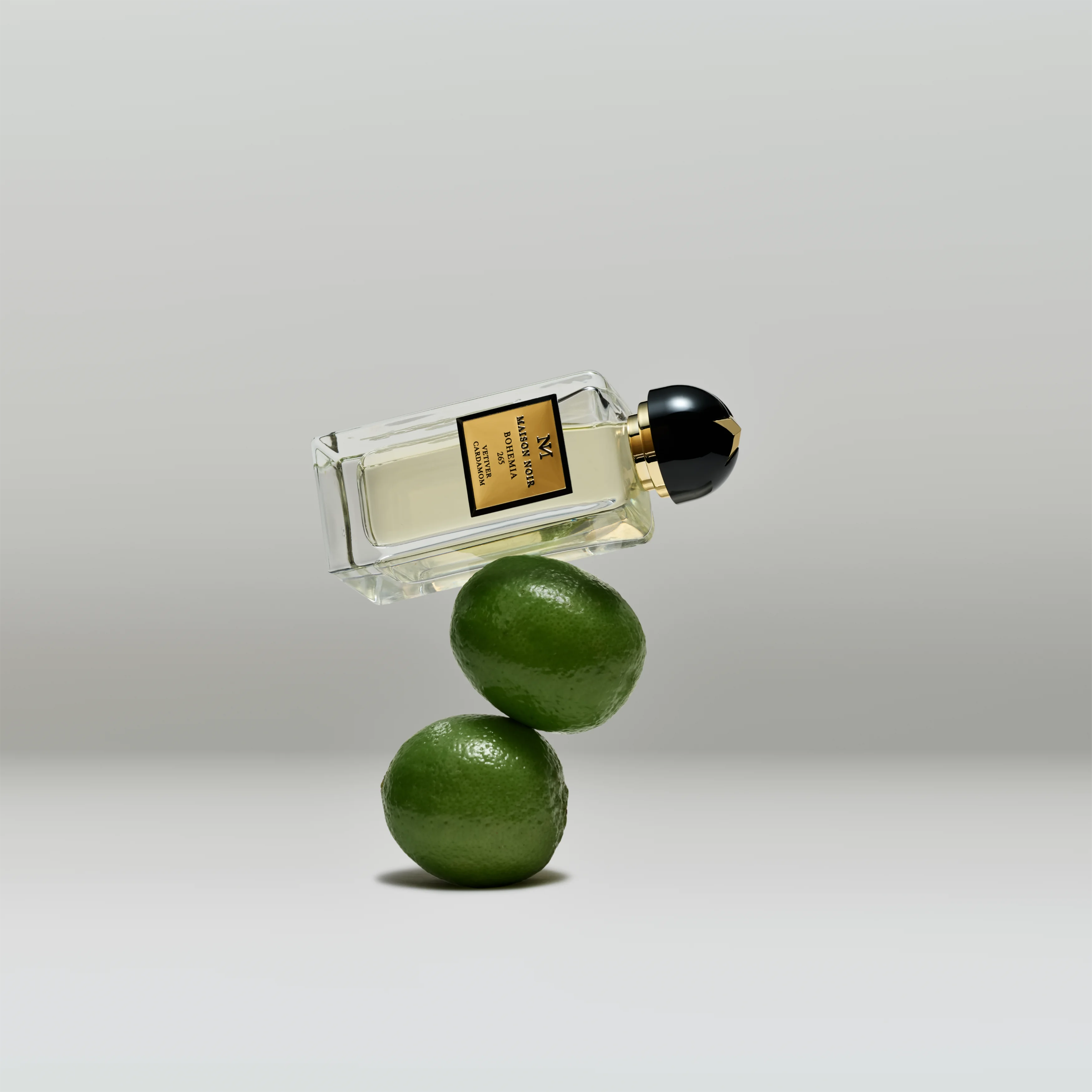
Spring and summer reward fragrances built around freshness, transparency, and restraint. Citrus-forward constructions open brightly and cleanly, making them well-suited to mornings and outdoor settings. They do not outstay their welcome. Aquatic and marine accords bring a mineral coolness that suits high humidity, sitting lightly on the skin without amplifying in heat. Light florals, especially those with a transparent, dewy character, carry a season-appropriate ease without demanding attention.
What you generally want to avoid in warmer months are heavy resins, dense musks, and thick ouds. Applied in summer heat, these turn from richly warm to uncomfortably close. Temperature often decides whether a fragrance envelops or suffocates.
Sillage management matters here. In warm weather, applying to pulse points, the wrists, the base of the throat, delivers enough diffusion without overstatement. A fragrance you wear four sprays of in winter performs better at two in July.
Spring is its own transition. Early spring still carries cold-weather logic: you can extend richer, greener constructions, chypres with an earthy character, or gentle spiced florals through April. As temperatures settle, the wardrobe naturally shifts toward the cleaner end of the palette. By late May, the sensibility has changed entirely.
The gateway you open in June need not be the same one you opened in March, even if both feel like the right door at the time.
---
Autumn and Winter: Depth, Warmth, and Intimacy
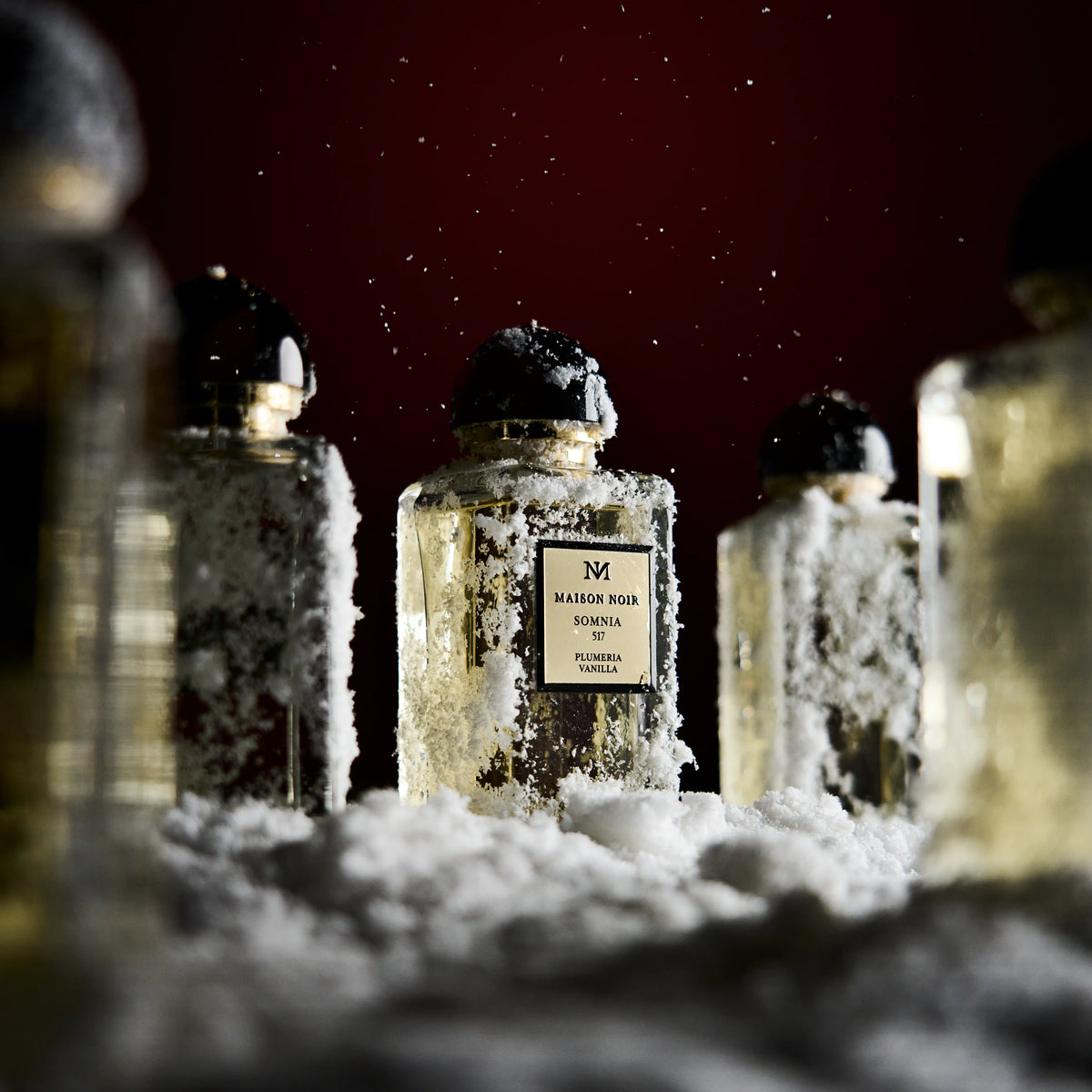
Autumn and winter are the seasons for depth, complexity, and warmth. Cold air slows diffusion and holds a scent close, which means this is the time to explore olfactive families that might feel too heavy in summer: amber, oud, vetiver, leather, resinous woods, and rich spice accords.
These constructions are built for proximity. In cold weather, they do not project aggressively. They settle around you like a well-weighted fabric, revealing their layers slowly. A base of sandalwood and benzoin that barely registers in a warm room becomes deeply present in cold air.
The occasion-season relationship tightens in winter. Formal evenings in heated interiors allow a more generous application, since the warmth of the room will support moderate projection. Outdoor settings in cold temperatures work differently: here, richer fragrances stay close to the skin, which can work in your favour when the goal is personal rather than public presence.
Sillage becomes more active in heated winter spaces. A fragrance applied at four sprays for an outdoor walk may feel excessive in a warm restaurant. Apply with the indoor environment in mind, then adjust if you know you will be outside for extended periods.
Autumn deserves attention on its own. The weeks between September and November sit in productive middle ground, neither summer nor winter in olfactive terms. Fragrances built around earthy notes, fig, patchouli, dark florals, and lightly smoky woods come into their own here. They carry the warmth of what is coming without abandoning the green, living quality of what has just passed.
---
How Do You Match Fragrance to Occasion?
Matching fragrance to occasion is a question of social register and context. The right question is not "do I like this scent?" but "does this scent suit where I am going?" A fragrance that suits you perfectly at home may carry too much presence in a quiet office, or too little presence at a formal dinner. The table below offers a working framework.
| Occasion | Register | Fragrance Qualities to Seek | Qualities to Avoid | Season Fit |
|---|---|---|---|---|
| Daytime work or office | Restrained, professional | Clean, transparent, moderate sillage; fresh woods, light musks, subtle florals | Heavy resins, dense ouds, thick spice, excessive sillage | All year; lighter constructions in summer |
| Outdoor casual (picnic, market, walk) | Relaxed, approachable | Citruses, aquatics, green accords, light florals; good performance in fresh air | Anything that amplifies aggressively in heat; heavy ambers | Spring and summer primarily |
| Formal evening (dinner, gallery, event) | Elevated, intentional | Complexity, dry-down depth, elegant sillage; amber, woods, iris, leather | Anything too casual or thin; light citruses that fade quickly | Autumn and winter; spiced constructions in warm months |
| Intimate settings (close company, a quiet dinner) | Personal, considered | Skin-close sillage, warmth, softness; musks, woods, vetiver, light resins | Loud or aggressive projection; polarising top notes | Autumn and winter; softer florals in spring |
| Outdoor formal (wedding, garden party) | Polished but not heavy | Transparent florals, light woods, structured citruses with dry-down longevity | Very heavy bases that amplify in heat; resinous constructions | Spring and summer |
| Travel and transit | Adaptable, low-maintenance | Clean, moderate longevity, non-offensive in shared spaces | Anything highly polarising or with aggressive projection | All year; adjust concentration by season |
The "Qualities to Avoid" column rewards as much attention as the qualities to seek. Knowing what not to wear in a given context is often more useful than a positive recommendation.
---
How Do Temperature and Humidity Affect Fragrance Performance?
Temperature and humidity are not neutral backdrops. They are active variables that govern how much of a fragrance reaches the air around you, and how quickly.
Heat opens the pores and increases skin temperature, which accelerates the evaporation of aromatic molecules. Top notes disappear faster in warm weather. This is why a summer fragrance built on an interesting base can feel almost scentless within an hour; the top has gone, and the base alone is doing the work.
Humidity plays a separate role. Moisture in the air can carry and amplify certain accords, particularly florals and musks, making them project further and longer than they would in dry conditions. A lightly applied floral on a humid July afternoon can develop more presence than you expected. In dry winter conditions, the same fragrance may feel muted and require a more generous application.
Skin chemistry also interacts with climate. Well-moisturised skin, from an unscented lotion or body oil applied before fragrance, holds aromatic molecules longer. Dry skin in winter absorbs quickly and releases less. This is worth noting before assuming a fragrance has simply underperformed.
The practical upshot: apply less in warm or humid conditions, and a little more in cold or dry ones. Let the season inform your hand.
---
Building a Considered Fragrance Wardrobe
A considered fragrance wardrobe is a small, intentional collection where each piece has a clear role across season and occasion, rather than a single signature fragrance worn by default in every context.
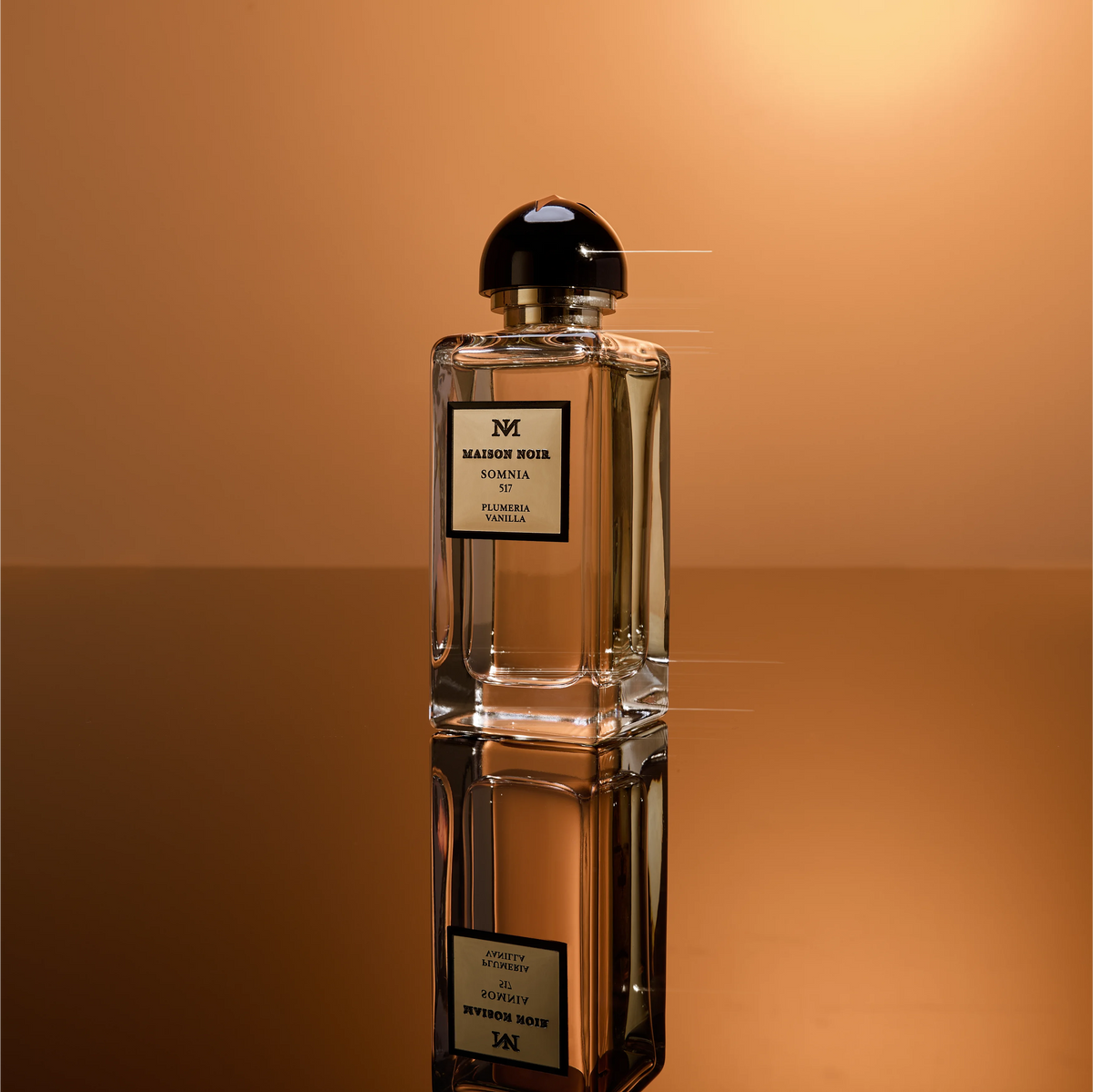
The townhouse at the heart of Maison Noir's philosophy offers a useful model. Think of each fragrance as a numbered, coloured door in that imagined house, each one opening onto its own olfactive world. A considered wardrobe holds perhaps three to five of those doors open at any one time, each one suited to a different light or hour or season. The goal is not volume. It is range.
A practical wardrobe might include one scent for warm-weather daytime wear, built on freshness and lightness. Add one for cooler months and evenings, deeper and more complex in its dry-down. Add one for formal occasions, with the kind of quiet authority that holds its shape through a long evening. Beyond that, you might add a transitional scent for the in-between weeks of March or October, when neither the summer nor the winter register quite fits.
Building this way requires some patience. Wearing a fragrance through different seasons before acquiring the next one tells you more than sampling ever can. You learn how it behaves in heat, how it changes on cold skin, and whether it suits the occasions you actually have rather than the ones you imagine.
Explore the full collection of Maison Noir fragrances to understand how each numbered door opens onto a distinct olfactive world suited to its own season and hour.A wardrobe built with intention does not need to be large. It needs to be honest.
---
Fragrance Performance Across Climates
The way a fragrance performs in a humid subtropical climate differs entirely from how it behaves in a cold, dry alpine environment. Neither setting is better or worse; they simply require different applications and different choices.
Humid climates tend to amplify projection and longevity, especially in florals and musky compositions. A fragrance that might feel soft-spoken in northern Europe can read as assertive in Singapore or Miami. In these conditions, lighter concentrations and more restrained application work better. You may find that a fragrance you admire needs to be worn with more intention to avoid overwhelming a room.
Dry climates, especially at altitude or in winter, work against projection and longevity. Fragrances fade faster; musks evaporate quickly; the dry-down can feel thin. Here, richer constructions, higher concentrations, and more generous application become justified. A fragrance that feels like too much in humid summer heat feels just right in a dry winter afternoon.
If you travel frequently between different climates, building flexibility into your choices matters more than having a single signature scent. Fragrances built around moderate sillage and balanced top-to-base construction tend to adapt more gracefully across conditions than those with very light or very heavy characteristics.
---
Occasion, Season, and the Formal-to-Casual Spectrum
Formality and season intersect in useful ways. A formal evening fragrance in summer requires different qualities than a formal evening fragrance in winter. The summer version needs to maintain presence and complexity without becoming overwhelming in heat; the winter version can lean into depth and warmth without the risk of overprojection.
The same logic applies to casual wear. A casual summer fragrance can be very light and playful, even fleeting, because the occasion does not demand longevity. A casual winter fragrance can be richer and more substantial because the cold environment will not amplify it.
Outdoor formal occasions, like garden parties or weddings in warm weather, sit in their own category. These demand fragrances that project enough to be noticed but not so much that they carry aggressively in open air. Transparent florals and structured citruses with real dry-down depth work better here than heavy resins or thick ambers.
The principle throughout is alignment. Match the weight and complexity of the fragrance to what the occasion and season can accommodate without creating an effect you did not intend.
---
Frequently Asked Questions
Can you wear the same fragrance year-round?You can, and many people do, particularly with fragrances built around versatile, moderate constructions. The trade-off is that a fragrance which performs optimally in one season may underperform or overperform in another, since temperature and humidity alter projection significantly. Wearing the same scent year-round is valid; simply adjust the amount you apply based on the season.
How do you know if a fragrance is appropriate for a formal occasion?A formal fragrance tends to carry complexity, an evolving dry-down, and a sillage that is present without being distracting. If a scent fades quickly, reads as too casual or sporty, or projects very loudly in the first thirty minutes, it may not hold its shape through a long formal evening. Sampling in the relevant temperature conditions before the occasion is the most reliable test.
Does applying more fragrance compensate for cold weather projection?Partly. Cold air reduces diffusion, so increasing the number of application points or the quantity applied does extend projection in low temperatures. The relationship is not linear, though. In a warm indoor environment after being outside, a generous cold-weather application can suddenly become overwhelming. Apply with the destination environment in mind, not the outdoor conditions you pass through.
What fragrance family works best for outdoor events?For outdoor events in warm weather, citrus, green, and light aromatic families tend to perform most comfortably. They project naturally in open air without amplifying in heat the way heavier ambers or resins can. For outdoor events in cooler conditions, a woody or lightly spiced construction holds better and remains detectable in fresh air.
How long should a fragrance last through the day, and does season affect longevity?Longevity varies significantly by fragrance concentration, skin type, and environmental conditions. Warmer and more humid conditions accelerate evaporation, shortening the perceived longevity of lighter constructions. Richer, resinous fragrances often last longer in all conditions because their base notes cling more readily to skin and fabric. Moisturised skin tends to hold fragrance longer than dry skin, regardless of season.
Are there fragrances that work equally well in spring and fall?Yes. Fragrances built around balanced green accords, slightly spiced florals, earthy woods, and moderate dry-downs often bridge the gap between spring and autumn. These transitional scents work in the lighter warmth of late spring and the cooler days of early autumn without feeling out of place in either season. They serve a practical role in a wardrobe.
Should you test a fragrance before buying it for a specific season?Yes, where possible. Sampling or testing in the relevant temperature conditions, humidity level, and social context tells you far more than a single counter experience. If you cannot test in the actual season, at least try it in a temperature-controlled setting that mimics the conditions where you plan to wear it.
---
The Right Door for Every Day
The single most useful takeaway from these season and occasion guides is this: fragrance performs best when chosen in relation to its context, not worn by habit. Context means temperature, occasion, social register, and the interaction of all three.
The townhouse at the centre of Maison Noir's philosophy is not a metaphor to admire from a distance. It is a working model for how you might think about fragrance across a year. Each door opens onto a distinct world, and different days call for different worlds. Some mornings call for lightness and transparency, a door facing east. Some evenings call for depth and warmth, a door at the back of the house, facing a garden going dark.
Building that kind of awareness takes time. Once you have it, choosing a fragrance becomes less a question of preference and more a question of what the day and season actually require. That is where the real pleasure of the practice begins.
Weiterlesen
Scent shapes identity, memory, and ritual across every civilisation. Understand the culture of scent and how to wear fragrance with genuine intention.
Learn [fragrance](/de/collections/home-fragrance) education essentials: concentration levels, scent families, notes, skin chemistry, and how to build a curated fragrance wardrobe with intention.