
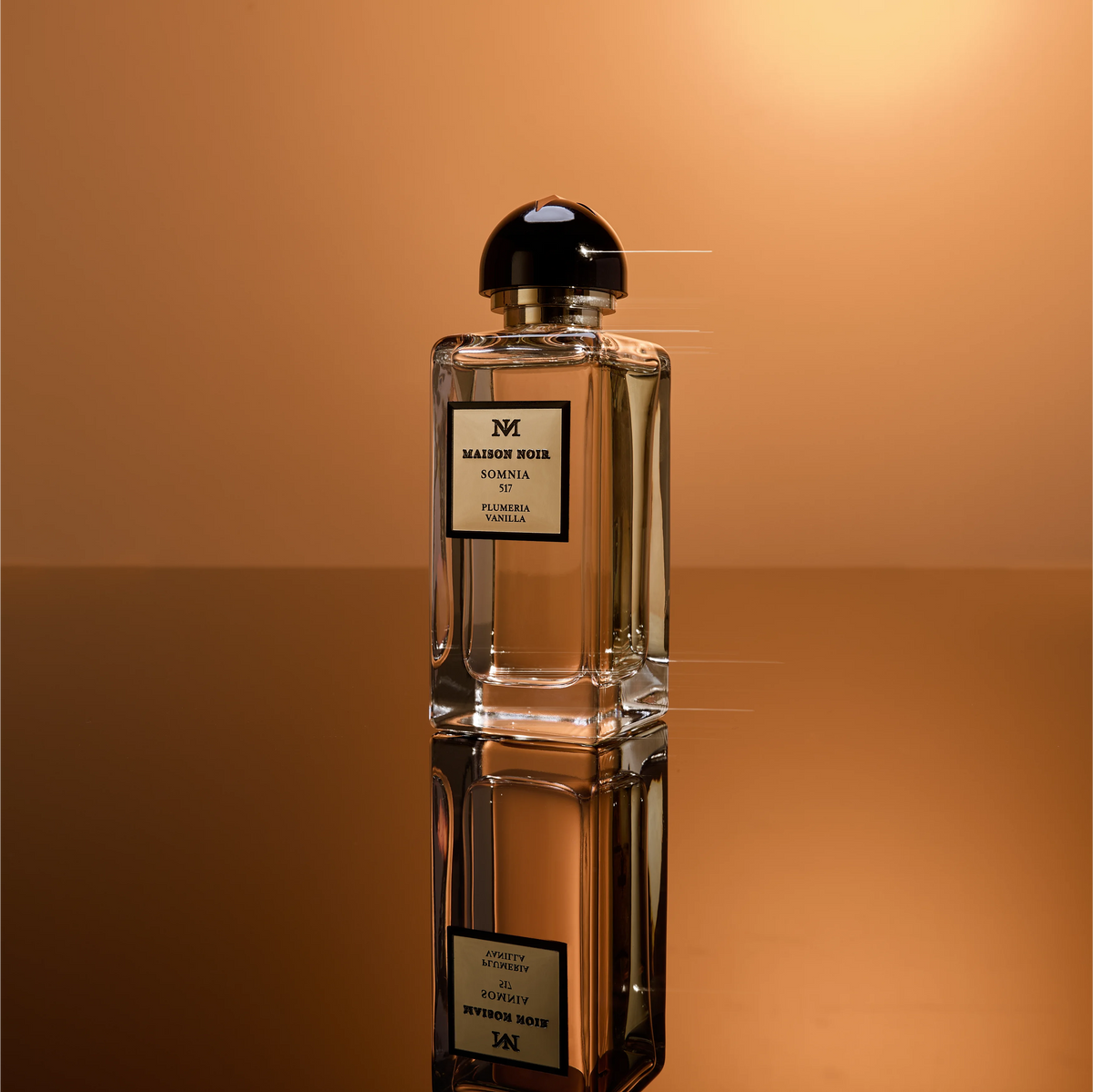
Fragrance Education: A Complete Guide to Understanding Perfume
Fragrance Education: A Complete Guide to Understanding Perfume
Fragrance education is the structured study of how perfumes are composed, categorized, and experienced, giving you the vocabulary and judgment to choose, wear, and collect scent with genuine intention rather than guesswork.
Most people buy fragrance by instinct: they smell something appealing in a store and decide quickly. That approach works occasionally. But without a working knowledge of concentration tiers, note structure, scent families, and your own skin chemistry, you are likely repeating the same olfactory territory without realizing it, overspending on the wrong format, or dismissing a fragrance that simply needed thirty more minutes on your skin to reveal itself.
This guide covers every concept that separates a confident fragrance buyer from a confused one. You will understand what the labels actually tell you, why the same bottle smells different on different people, how to articulate your preferences to a perfumer or sales associate, and how to build a wardrobe of scents that works as a coherent whole rather than an accidental accumulation.
---
Fragrance Concentration Levels: What the Labels Actually Mean
The tier printed on a fragrance bottle tells you how much aromatic compound is dissolved in alcohol and water, which directly determines how long it lasts and how much you need to apply. Choosing the wrong tier for a context is one of the most common and easily avoided fragrance mistakes.
| Concentration Tier | Aromatic Compound % | Typical Longevity | Best Use Context |
|---|---|---|---|
| Parfum (Extrait) | 20-40% | 8-12+ hours | Evenings, formal occasions, cold weather |
| Eau de Parfum (EDP) | 15-20% | 4-8 hours | Everyday wear, transitional seasons |
| Eau de Toilette (EDT) | 8-15% | 2-4 hours | Daytime, warm weather, office environments |
| Eau de Cologne (EDC) | 3-8% | 1-2 hours | Refreshing spritz, athletic or casual settings |
| Eau Fraîche | 1-3% | Under 1 hour | Immediate freshness, post-activity rinse |
A few points worth absorbing beyond the numbers.
Parfum is not simply a "stronger" version of the same formula. Houses often reformulate when moving between tiers, adjusting ratios and sometimes swapping materials to suit the altered aromatic density. A fragrance you have tried only as an EDT may smell meaningfully different as an EDP.
The longevity ranges above reflect typical experience, not a guarantee. Your skin type, application method, and even the specific materials in a formula all influence projection and staying power. Drier skin tends to absorb fragrance faster, which is why hydration matters in wear testing.
For warm-weather contexts, a lighter concentration is usually the more considered choice. High aromatic compound percentages can feel oppressive in heat, and an EDT that reads as fresh and balanced in summer may perform better socially than a Parfum applied at the same volume.
---
Scent Families and the Fragrance Wheel
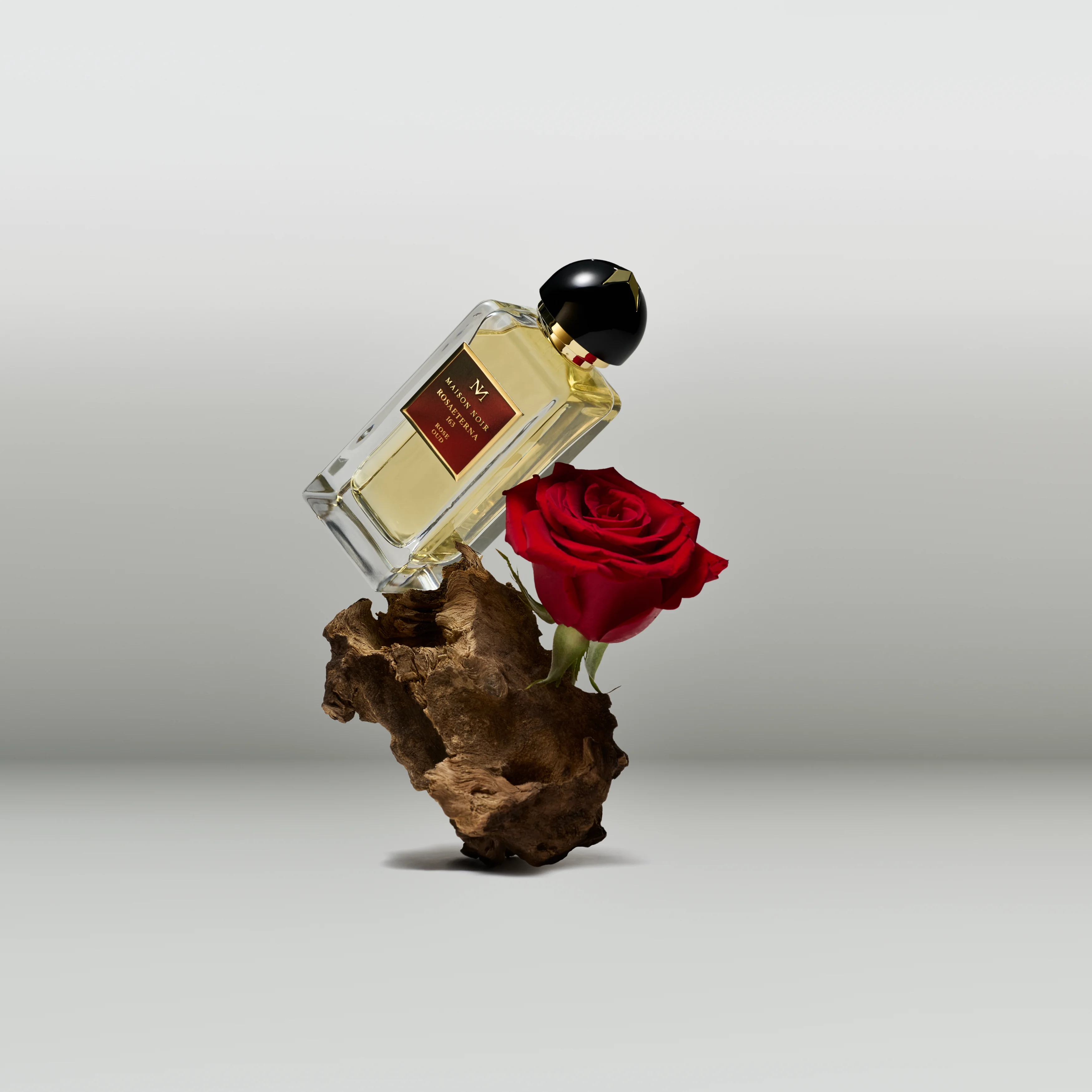
The fragrance wheel organizes all scents into four primary families, which then branch into sub-families. Understanding this map lets you identify patterns in what you already enjoy and predict with reasonable accuracy whether something new will appeal to you.
The four primary families are:
- Floral: Rose, jasmine, peony, tuberose. The most historically produced family, ranging from single-note soliflores to complex bouquets. Tends toward the feminine in heritage classification, though contemporary perfumery has made that distinction increasingly irrelevant.
- Oriental: Amber, vanilla, benzoin, musk, spices. Rich, warm, often resinous. These are the timeless evening scents built for depth and staying power.
- Woody: Sandalwood, cedarwood, vetiver, oud, patchouli. Grounding and refined, these materials form the backbone of countless formulas across all other families.
- Fresh: Citrus, aquatic, green, aromatic herbs. The lightest and most immediately accessible family, typically found in EDTs and summer-oriented formulas.
Sub-families expand this map considerably. Within Floral, you have soft floral (powdery, gentle), floral oriental (flower plus amber), and soliflore (one dominant bloom). Within Fresh, green and aquatic sub-families occupy notably different emotional registers: green scents evoke crushed leaves and rain-damp grass, while aquatics lean toward oceanic, ozonic openness.
Practical application: when you know you respond to vetiver and cedarwood, you can communicate that to any sales associate or perfumer without needing to name a specific reference fragrance. You speak the language of the essence itself. That is the real value of understanding scent families. The wheel is not an academic exercise; it is a navigation tool for finding scents that are authentically yours.
---
Top, Heart, and Base Notes: How a Fragrance Unfolds Over Time
A fragrance is not a single smell. It is a time-released sequence of aromatic layers, each composed of materials that evaporate at different rates, revealing new facets as the preceding ones fade. The three phases are top, heart, and base.
Top notes are what you smell in the first few minutes after application, typically ranging from the opening moment to around fifteen or twenty minutes of wear. They are almost always light, volatile materials: citrus, light herbs, aldehydes. They are designed to create an immediate impression, but they are not representative of the fragrance as a whole. Heart notes (also called middle notes) emerge as the top notes dissipate, typically appearing somewhere between twenty minutes and an hour into wear. This is where the true character of the fragrance lives. Rose, jasmine, iris, ylang-ylang, spices, and many other mid-weight materials occupy this layer. Base notes appear last and persist longest, often from one to several hours into wear. Woods, musks, resins, vanilla, and ambers are classic base materials. They act as fixatives, slowing the evaporation of the other layers and providing the foundation that shapes the fragrance's lasting impression.The drydown is the term for the full base-note phase, and it is the most important stage for purchasing decisions. Smelling a fragrance for three minutes in a store tells you what it opens with. Wearing it for two hours tells you what you will actually live with. If you can, apply a fragrance at the beginning of a shopping trip and evaluate it at the end. What you smell then is what you are really buying.
---
Skin Chemistry and Why the Same Fragrance Smells Different on You
The same fragrance smells genuinely different from person to person because your skin is not a neutral carrier. It is an active participant in how a formula develops, influenced by your pH, hydration levels, diet, and even body temperature.
Skin pH varies between individuals and affects the balance of aromatic molecules as they interact with your surface. A slightly more acidic skin environment tends to amplify certain musks and florals while softening others. There is no single "correct" pH for fragrance wear; the point is that your skin is a variable, not a constant.
Hydration matters significantly. Moisturized skin holds fragrance better and longer because the aromatic molecules have a richer surface to bond with. Applying an unscented moisturizer to your pulse points before spraying is a widely observed practice that genuinely extends longevity and can smooth out harsh opening notes.
Pulse points are areas where blood vessels run close to the skin surface: inner wrists, neck, behind the knees, inner elbows. The gentle warmth these areas generate helps diffuse aromatic molecules into the surrounding air, which is why they are the preferred application sites.
One persistent myth deserves direct correction: rubbing your wrists together after applying fragrance damages the top notes by crushing the aromatic compounds and accelerating their evaporation. Spray, then leave it alone. Let the fragrance develop at its own pace on your skin, which is where it was designed to perform.
---
Natural and Synthetic Ingredients: What the Distinction Really Means
Natural fragrance ingredients are derived from botanical, animal, or mineral sources through processes like steam distillation, cold pressing, or solvent extraction. Synthetics are aromatic molecules produced in a laboratory, either to replicate natural materials, to stabilize or extend them, or to create entirely new scent profiles that have no natural counterpart.
Common naturals you will encounter in ingredient lists include rose absolute, bergamot essential oil, vetiver, sandalwood, and benzoin resin. These materials are often heritage ingredients in the perfumer's palette, crafted through long-established extraction traditions.
Common synthetics include Iso E Super (a woody, slightly metallic cedar-like molecule), Ambroxan (an ambergris substitute with clean, skin-close warmth), Hedione (a radiant jasmine-enhancing molecule), and various white musks. Many of these synthetics were created specifically because the naturals they replace were either endangered, prohibitively expensive, or inconsistent in quality across harvest seasons.
The authentic position here is this: neither category is superior by origin alone. The quality of a formula depends on the skill and intention with which materials are combined, not on whether those materials grew in a field or were assembled in a laboratory. Some of the most refined and enduring fragrances in modern perfumery rely heavily on synthetic molecules. Some naturals-focused compositions are poorly balanced and short-lived.
What you should evaluate is composition quality: how coherently the materials work together, how the fragrance evolves over time, and whether the result is intentional and considered rather than cheap or cut to a price point.
---
Building a Sensory Vocabulary to Describe What You Smell
If you can name what you are smelling, you can find more of it. Sensory vocabulary is the practical tool that lets you communicate fragrance preferences to a sales associate, narrow a search online, or simply understand your own pattern of attraction across different bottles.
A working glossary of descriptive terms:
- Green: Fresh-cut grass, crushed leaves, stems, dewy vegetation
- Ozonic: Clean, airy, reminiscent of open air before rain
- Animalic: Musky, skin-like, sometimes leathery or barnyard-adjacent
- Powdery: Soft, talc-like, often from iris, musks, or heliotrope
- Smoky: Charred wood, incense, campfire, tobacco
- Gourmand: Edible-smelling: vanilla, caramel, coffee, chocolate
- Resinous: Sticky, balsamic, warm: think frankincense, labdanum, myrrh
- Aquatic: Marine, sea-salt, the smell of water and coastal air
- Earthy: Soil, moss, damp stone, forest floor
- Spicy: Pepper, cardamom, clove, cinnamon, ginger
Scent anchoring is the practice of connecting a new smell to a known reference. When something reads as resinous but you cannot name why, recall what incense smells like in a specific place, or the cedar of an old wardrobe. Those personal references are not distractions; they are how your olfactory memory indexes new information.
Use these terms actively when testing. Saying "this opens green and dries down resinous with something animalic in the base" is more useful than "I like it but I don't know why." That precision is how fragrance education translates into better buying decisions.
---
Building a Curated Fragrance Wardrobe Rather Than a Random Collection
A curated fragrance wardrobe is a deliberately chosen set of scents that covers different contexts, seasons, and moods without unnecessary redundancy. The alternative, accumulating bottles without a framework, tends to produce a shelf full of variations on the same theme with gaps elsewhere.
A practical three-tier framework:
- Warm-weather and daytime: Fresh, green, or light floral scents in EDT concentration. These handle office environments, casual social settings, and warmer months. Aim for one or two anchors here.
- Transitional or all-season: An EDP-concentration floral oriental or soft woody that moves across spring and autumn without feeling out of place. This is often the most versatile and well-used tier.
- Cool-weather and evening: A richer oriental, a deep wood, or an ambery Parfum. Reserved for evenings, formal contexts, or colder months when projection and depth read as appropriate rather than overwhelming.
The anti-redundancy principle is simple: before adding a new bottle, identify which tier it fills and whether you already have adequate coverage there. If you own four fresh citruses and no evening scent, you do not have a wardrobe. You have a preference loop.
Intentional curation also means resisting the collector's impulse to acquire everything that appeals in the moment. A refined collection of five or six bottles, each occupying a distinct role, serves you better than thirty that overlap. The goal is not abundance. It is coherence.
---
Frequently Asked Questions About Fragrance Education
These are the questions that most often arise once you move past the basics of fragrance education. Concise, direct answers follow each one.
What is the difference between Eau de Parfum and Parfum?
Eau de Parfum typically contains 15 to 20 percent aromatic compounds, while Parfum (Extrait de Parfum) contains 20 to 40 percent. The higher concentration in Parfum generally produces longer wear and a more intimate, skin-close projection, though the two are sometimes different formula versions rather than the same composition at different strengths.
How do you test a fragrance properly before buying?
Apply the fragrance to clean, unscented skin on a pulse point, then wait. Evaluate it at the opening, again after thirty minutes, and ideally after two hours to experience the drydown. Avoid testing more than two or three fragrances simultaneously, as olfactory fatigue will blur your perception of each one.
How many fragrances should you smell in one session?
Most experienced buyers recommend stopping at four to six fragrances per session before olfactory fatigue sets in. Smelling coffee beans between samples is a widely circulated tip, though many perfumers suggest fresh air or the skin of your inner arm as equally effective resets.
Does fragrance expire?
Fragrance does not have a strict expiration date, but it does degrade over time. Oxidation, heat, and light break down aromatic molecules and alter the composition. Most fragrances remain stable for three to five years under good conditions, though many last longer. A noticeable shift in color or a sharp, sour top note are signs of meaningful degradation.
How should you store fragrance to preserve it?
Store fragrance away from heat, humidity, and direct light. A cool, dark drawer or cabinet is better than a bathroom shelf or a sunlit vanity. Avoid large temperature fluctuations. The original box provides a reasonable layer of protection against light exposure.
What does sillage mean in fragrance?
Sillage (pronounced "see-yazh") is the trail a fragrance leaves in the air as you move through a space. High sillage means the scent is perceptible to others at a distance; low sillage means the fragrance stays close to the skin and is more intimate in character. Neither is objectively better; the right sillage depends on the context and the effect you want to create.
---
What You Now Know and Where to Take It Next
Fragrance education gives you a functional framework for every decision you will make as a fragrance buyer: which concentration suits your context, which scent family aligns with your preferences, how to read a fragrance as it unfolds on your skin, and how to build a wardrobe rather than accumulate a collection.
The concepts covered here, concentration tiers, note structure, scent families, skin chemistry, ingredient composition, sensory vocabulary, and curation philosophy, are not endpoints. They are starting points. The more fragrances you test with these frameworks in mind, the more quickly your nose develops the pattern recognition that turns abstract knowledge into genuine fluency.
Your concrete next step: apply a fragrance you already own and narrate what you smell at three intervals, the opening, thirty minutes in, and two hours in. Use the vocabulary from this guide. Note which scent family it belongs to and which tier it would occupy in a three-part wardrobe. That single practice, repeated across ten or fifteen fragrances, will develop your sensory judgment faster than any amount of reading.
A timeless relationship with fragrance is not about owning the most bottles. It is about knowing exactly why each one is there, and choosing every piece of it with authentic, crafted intention.
Weiterlesen
Scent shapes identity, memory, and ritual across every civilisation. Understand the culture of scent and how to wear fragrance with genuine intention.
Learn how to wear fragrance properly: where to apply it, how much to use, and how to make it last. Practical guidance for every concentration and skin type.