
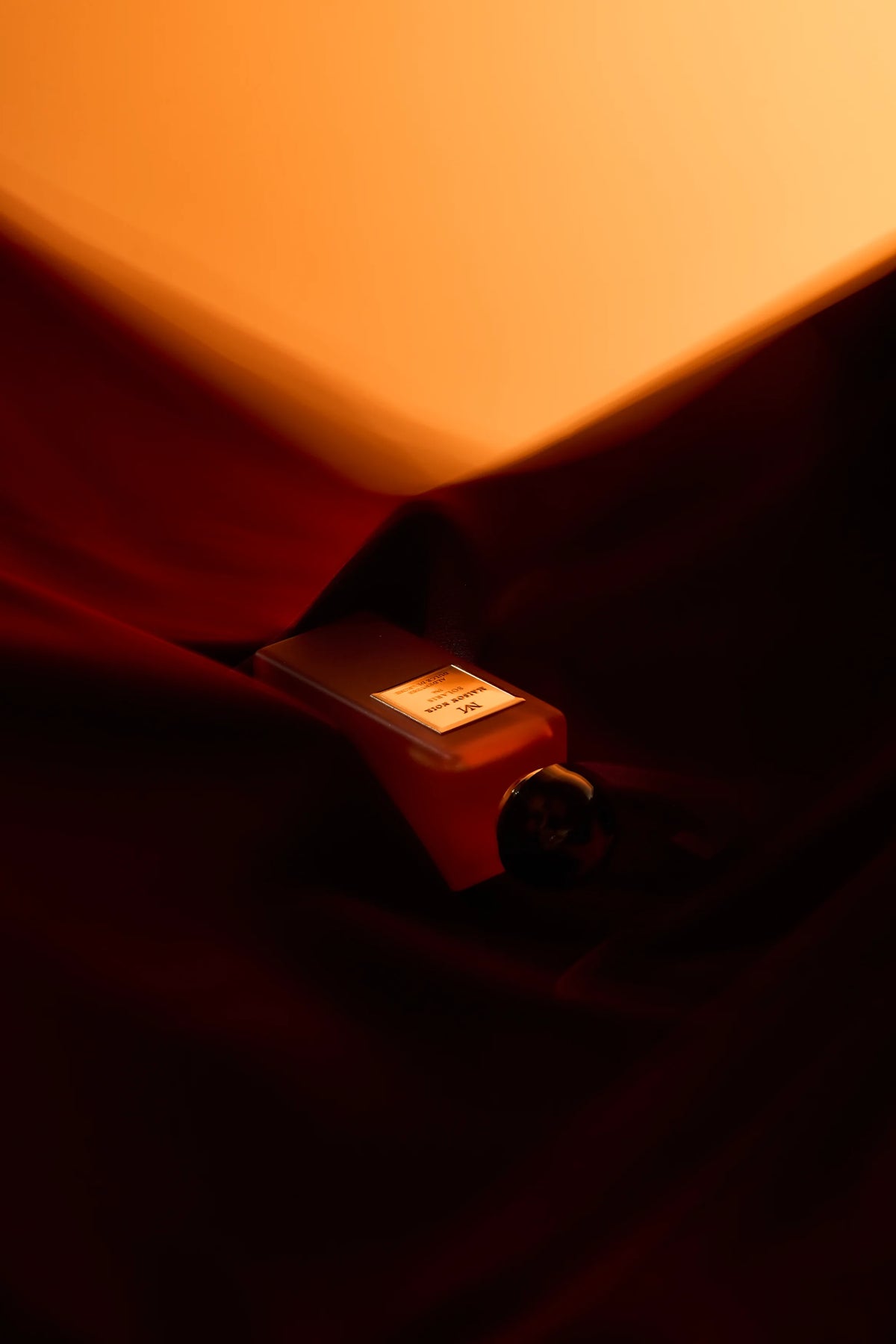
How to Wear Fragrance
How to Wear Fragrance
Wearing fragrance properly comes down to three simple decisions: where you apply it, how much you use, and whether your skin is ready to receive it. The right approach depends on the concentration you are wearing, your skin type, and how long you want the scent to last.
The basics are straightforward. Apply two to four sprays to warm pulse points-wrists, neck, inner elbow-immediately after showering, when your skin is still slightly warm and damp from the shower. Do not rub. Let the scent settle and dry naturally so the top, heart, and base notes can emerge in their proper sequence. That is the foundation. Everything else is adjustment based on what you are wearing and what the moment calls for.
The reason concentration matters is simple chemistry. An Eau de Parfum contains far more fragrance oil than an Eau de Toilette, which means you need fewer sprays and the scent will cling to your skin longer. Skin type, hydration, and your own body heat all shift how long a fragrance remains noticeable. The sections below walk through each of these variables so you can make choices based on understanding rather than guesswork.
---
Understanding Fragrance Concentration
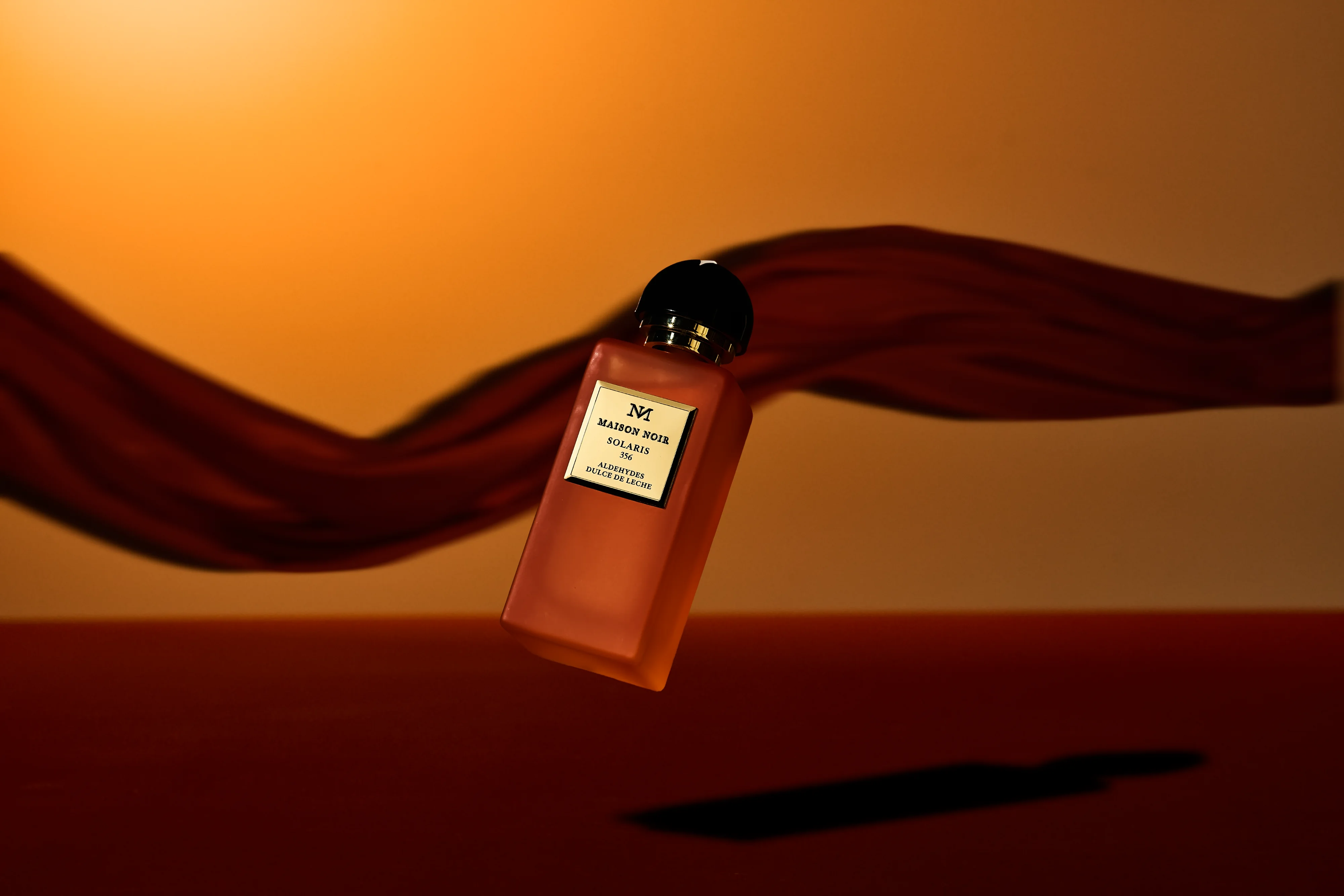
The concentration of aromatic compounds is the single most important factor in how you wear a fragrance. It determines how many sprays you need, which pulse points matter most, and whether you will smell it all afternoon or just through lunch.
Fragrance houses do not follow a universal standard for concentration, so think of these categories as a practical guide rather than a fixed rule. Parfum (sometimes called Extrait de Parfum) sits at the top, carrying the highest concentration of fragrance oil. Below that comes Eau de Parfum (EDP), then Eau de Toilette (EDT), and finally Eau de Cologne (EDC). Each step down means lighter projection and shorter longevity.
A Parfum is potent. One or two targeted sprays on key pulse points is usually enough. The oil concentration means the scent clings closely to your skin and evolves slowly over many hours, sometimes eight to twelve or more. An EDP is slightly lighter. Two to three sprays on pulse points is a reasonable starting point. An EDT, being more dilute, can be applied to a broader set of points or refreshed mid-day if needed. An EDC, the most diluted format, is designed for freshness and immediate impact. It fades relatively quickly, sometimes within three to four hours.
Understanding your concentration also shapes how you layer. The same EDP sprayed over an unscented body lotion will perform completely differently than the same EDP applied to dry skin. Concentration is the foundation, but everything around it-moisture, warmth, the surfaces you apply it to-shapes what actually happens.
---
Where to Apply Fragrance
The pulse points are the areas where blood vessels run close to the skin's surface, generating gentle, consistent warmth. Where there is warmth, fragrance diffuses outward. That is why the same scent applied to your wrist reads differently than when applied to a sheltered area like the inner elbow or behind the knee.
The classic pulse points are the inner wrists, the sides of the neck, the base of the throat, the inner elbows, and the backs of the knees. Each one works, but they serve different purposes. The wrists and neck are visible, social areas. The inner elbow and the backs of the knees are more sheltered, which means they lose fragrance more slowly throughout the day.
How many pulse points should you actually use?
You do not need to cover every pulse point at once. For most situations, the neck and wrists are enough. This gives you presence without projection that extends further than you intend. Adding the inner elbow gives more surface area and warmth, which helps in colder months when fragrance naturally projects less.
The backs of the knees are an underrated choice. Because they are sheltered from air and friction-you are not washing them repeatedly throughout the day like you do your wrists-fragrance lingers there remarkably well. For all-day wear, concentrating on one wrist and both knees often outlasts the traditional two-wrist approach.
Hair and clothing: benefits and cautions
Hair holds scent because it traps fragrance molecules and releases them slowly over hours. If you spray lightly into the air and walk through the mist, or apply fragrance to a hairbrush before running it through your hair, you can extend the olfactive presence of a scent noticeably. The trade-off is real. The alcohol in most spray fragrances, if applied directly and repeatedly, can dry hair over time. Reserve this method for occasional wear or spray into the air rather than directly onto your scalp.
Fabric holds scent even longer than skin, sometimes for days. Some people apply fragrance to the inner lining of a coat collar or the hem of a scarf for this reason. Before you do this, test the fabric first. Concentrated fragrance can leave permanent staining on silk, linen, and pale-coloured materials. For anything delicate or valuable, apply only to the lining, and apply only after testing on an inconspicuous area. It is not worth the risk of staining a piece you love.
---
How Much Fragrance to Apply
Two to four sprays is the practical starting point for most Eau de Parfum concentrations. Adjust upward or downward based on the occasion, the specific concentration you are wearing, and how much your body naturally heats fragrance.
Here is the catch: your nose stops noticing your own fragrance after just a few minutes. This is olfactory adaptation, and it is completely normal. It is how your brain focuses on what is new or changing rather than what is constant. After you have been wearing a scent for ten minutes, you can barely detect it, even though someone standing next to you perceives it clearly. This is not the fragrance fading. It is your nervous system doing its job.
Because of olfactory adaptation, the temptation to re-apply is nearly irresistible. You think it has worn off, so you spray again. Before reaching for the bottle a second time, step outside or into a different room. A change of environment often resets your perception immediately. If you are genuinely uncertain whether the fragrance is still present, one additional spray on the wrist is enough. Do not chase the scent by constantly re-applying.
For a Parfum, start with one or two applications. For an EDT, you may find three to five sprays comfortable. For an EDC, four to six is common. These are starting points only. Your skin chemistry, the temperature of the room, and the specific composition of the fragrance all matter. There is no universal correct number, and part of learning to wear fragrance well is testing what works for your body.
---
How to Make Fragrance Last Longer
Fragrance lasts longer when the skin underneath is moisturised, the application sites are warm, and the scent is applied to areas that are not constantly rubbed or exposed to friction.
The chemistry is straightforward. Fragrance molecules need something to bind to. Bare, dry skin provides very little surface for the aromatic compounds to hold onto, so they evaporate quickly and you lose the composition before it has a chance to develop. Moisturised skin gives the fragrance a richer, slightly oilier base that slows evaporation and allows the notes to emerge in sequence rather than all at once and then disappearing.
Practical steps that actually extend longevity
Moisturise before applying. Use an unscented body lotion or body oil on the pulse points where you plan to spray and let it absorb for a minute or two before applying fragrance. This does not need to be elaborate. A plain, fragrance-free lotion from any brand works perfectly. Avoid scented lotions, which will compete with or muddy your chosen fragrance. Apply immediately after showering. Your pores are open and your skin is warm from the shower. The fragrance settles in more deeply rather than sitting purely on the surface where it will evaporate quickly. Choose sheltered pulse points over exposed ones. Your wrists are beautiful but they are washed multiple times a day, and they are exposed to air constantly. The backs of the knees and the inner elbows are less exposed. If longevity is your goal, concentrate your application on these sheltered areas. Do not rub the application site. Rubbing breaks the molecular structure of the fragrance and accelerates evaporation of the top notes. It collapses the carefully composed progression of the scent. Spray and let it dry naturally. Layer with a complementary unscented product. If the fragrance house offers an unscented or lightly scented body oil, using it underneath creates a primed canvas that helps the fragrance develop fully. If you are wearing Somnia 517, which carries softer, more contemplative notes, a neutral-scented body oil underneath allows those quieter qualities to reach their full expression without competition.---
Application Methods at a Glance
Different application methods work better for different concentrations, occasions, and longevity goals. The table below summarises the most common approaches so you can match the method to your situation.
| Method | Best For | Longevity | Key Caution |
|---|---|---|---|
| Spray to pulse points | EDP, EDT; everyday and formal wear | Moderate to long, varies by concentration | Do not rub after applying |
| Spray to hair | Lighter EDTs; adding olfactive presence | Often outlasts skin application | Repeated alcohol contact can dry hair |
| Spray to fabric lining | Scarves, coat collars; cooler months | Very long, fabric holds molecules well | Risk of staining; test on hidden area first |
| Walk-through mist | Very light EDCs; casual settings | Short | Wastes significant product; poor skin adhesion |
| Wrist-to-neck transfer (dabbing) | Parfum; oil-based formats | Long, concentrated | Only works without rubbing |
---
Matching a Fragrance to the Occasion and Season
The right fragrance for a given moment considers the setting, the time of day, the season, and how close you will be to other people.
Context shapes everything about how a fragrance is perceived. A composition that reads as refined and composed in an open office may feel overwhelming in a small, closed meeting room. One that suits a cool autumn evening may feel wrong in summer heat, not because the fragrance has changed, but because warmth amplifies projection and makes intensity feel different.
As a general orientation: fresher, lighter compositions tend to suit daytime, warm months, and professional or public settings where proximity to others demands restraint. Deeper, richer compositions with prominent base notes suit evenings, cooler seasons, and occasions where you are in close company with people you know well.
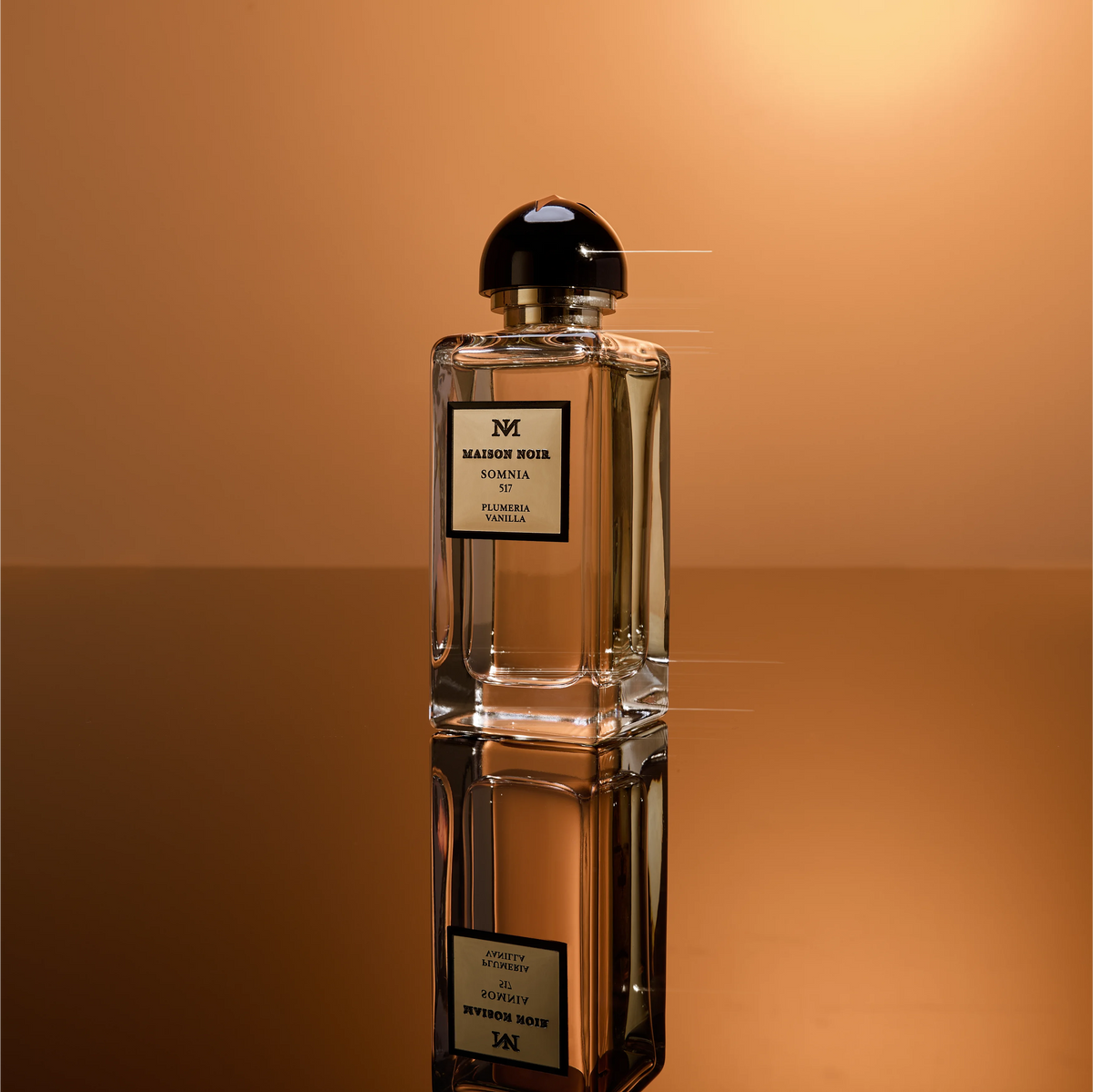
Maison Noir fragrances are composed as numbered gateways, each opening onto its own world. Icarus 347 carries an interplay of bold and luminous qualities suited to moments where you want presence without ostentation. Vertigo 236 has a more searching, introverted character suited to quieter occasions. Bohemia 265 moves with ease from daytime to evening; its warmth remains consistent across contexts. Somnia 517 is a considered choice for evening, contemplative and unhurried, well-suited to small gatherings or a solitary evening at home.
None of these are rules. The townhouse metaphor at the heart of Maison Noir suggests that each door opens onto its own world. The right door is simply the one you feel drawn to on a given day.
---
Common Mistakes and How to Avoid Them
The most common errors are over-application, rubbing the wrists together, applying to dry skin, and storing the bottle in the wrong place. Once you understand the reasoning behind each, correcting them is simple.
Rubbing the wrists together. This crushes the top notes and accelerates evaporation. You lose the opening of the fragrance, and the scent's progression becomes distorted. Spray and leave the skin to dry naturally. Applying too much. Because your nose adapts to your own scent within minutes, the temptation is persistent. Start with fewer sprays than you think you need and assess after a few minutes. You can always add more. You cannot remove it once it is on. Applying to dry, unmoistured skin. Fragrance molecules evaporate fast from dry skin. Applying a plain moisturiser underneath makes a measurable difference in longevity, sometimes extending wear by hours. Spraying directly onto light-coloured or delicate fabric. Fragrance can leave permanent staining on silk, linen, and pale materials. Apply to skin instead, or test fabric in a hidden area first. It is better to be cautious than to stain something you value. Storing fragrance near heat or light. Fragrance degrades when exposed to sunlight and temperature fluctuation. Keep bottles away from bathroom windowsills, radiators, and anywhere with direct sun. A drawer or a closed wardrobe shelf in a cool room is ideal. Applying to all pulse points at once. More application points do not mean better results. Two or three well-chosen points are enough for most situations and most occasions.---
How to Store Fragrance Properly
Store fragrance in a cool, dark, stable environment, away from direct sunlight, heat sources, and significant temperature changes.
Light and heat are the two main agents of fragrance degradation. Ultraviolet light breaks down aromatic compounds over time, which is why many fine fragrances come in opaque or dark glass bottles. Heat accelerates evaporation and can alter the composition of the scent, sometimes making it feel thinner or slightly off compared to how it smelled when fresh.
A drawer, a closed wardrobe shelf, or a dedicated fragrance cabinet away from exterior walls is far better than a bathroom windowsill or the top of a radiator. Bathrooms, despite being the traditional home of perfume bottles, introduce humidity and daily temperature swings from showers, which are not ideal for storage.
There is no single shelf-life that applies across all fragrances. Composition, concentration, and storage conditions all matter. What you can control is the storage environment itself: keep it stable, dark, and cool, and the fragrance will retain its character for years rather than deteriorating in months.
---
Frequently Asked Questions
Should you rub fragrance in after spraying?No. Rubbing the skin after applying fragrance breaks the molecular structure of the top notes and accelerates their evaporation. Spray and allow the skin to dry naturally so the scent unfolds as composed.
Where is the best place to apply fragrance?The inner wrists, sides of the neck, and inner elbows are the most reliable pulse points. These areas are warm from blood flow close to the surface, which diffuses the scent outward. The backs of the knees are equally effective but more sheltered, so fragrance lasts longer there.
Why does my fragrance not last very long?Dry skin, low concentration (EDT rather than EDP or Parfum), and application to high-friction areas like the wrists are the most common reasons. Moisturising beforehand and choosing sheltered pulse points can extend longevity noticeably.
How many sprays of perfume should I use?Two to four sprays is a practical starting point for an Eau de Parfum. A Parfum may need only one or two; an Eau de Toilette may need three to five. Adjust based on the occasion and how your skin wears the specific fragrance.
Can you wear fragrance on clothing?Yes, though with care. Fabric holds scent longer than skin, but fragrance can permanently stain delicate or pale materials. Apply to fabric linings rather than outer surfaces, and test on an inconspicuous area if you are uncertain.
How should fragrance be stored?In a cool, dark location with stable temperature, away from sunlight and heat. A drawer or closed wardrobe shelf is better than a bathroom windowsill. Avoid areas with frequent temperature changes or humidity.
Does fragrance expire?Fine fragrance does not expire in the traditional sense, but it does degrade over time, especially if exposed to light and heat. Properly stored fragrance remains at its best for several years.
Should I apply fragrance before or after getting dressed?Apply fragrance to skin after showering but before dressing, so the scent settles in before fabric covers the application areas. This allows the fragrance to develop fully on your skin.
---
Wearing Fragrance with Intention
Knowing how to wear fragrance well means knowing how to let a scent do its work without forcing it.
Apply to warm skin. Moisturise beforehand. Choose pulse points that suit the occasion and the concentration you are wearing. Resist the urge to rub or to over-apply. Store the bottle properly so the composition remains intact.
Fragrance is not decoration. It is a presence, a trace, a moment that extends beyond the room itself. The Maison Noir approach is captured in the image of numbered doors in a townhouse: each one opens onto its own world, and the experience only begins when you step through. Wearing fragrance with care and intention is how you ensure the door opens onto something worth entering.
The rest is practice, and paying attention to what actually works for your skin.
Weiterlesen
Scent shapes identity, memory, and ritual across every civilisation. Understand the culture of scent and how to wear fragrance with genuine intention.
Learn [fragrance](/de/collections/home-fragrance) education essentials: concentration levels, scent families, notes, skin chemistry, and how to build a curated fragrance wardrobe with intention.