

Why Unisex Fragrance Is the Future of Fine Perfumery
Why Unisex Fragrance Is the Future of Fine Perfumery
What Is Unisex Fragrance, and Why Does It Matter?
A unisex fragrance is a scent composed without reference to a gendered wearer. It is built instead around a mood, an accord, or an olfactive idea that can resonate with anyone who encounters it.
That definition matters because it exposes something most fragrance marketing prefers you not to notice: the division of perfume into "for him" and "for her" is a commercial convention, not a law of chemistry. Scent molecules carry no gender. What they carry is character, and character resonates differently depending on who wears it, when, and on which skin.
Choosing fragrance deliberately means setting aside the shortcut of a gendered category. It means asking what a scent actually smells like, how it wears over time, and whether it suits you rather than whether it was designed for someone of your demographic. Unisex fragrance makes that question unavoidable, which is precisely why it is where the most considered work in fine perfumery is happening today.
The gendered categories you encounter in a department store were largely constructed in the twentieth century. Before that, perfumery operated differently. A return to composition-first thinking is less a trend than a correction.
---
How Fragrance Became Gendered (and Why That Was Always Artificial)
Fragrance was not always divided by gender. The historical record makes this clear: florals worn by European courts of both sexes in the seventeenth century, fougères marketed to men because of one commercial decision in the 1880s, great oriental compositions of the early twentieth century worn freely across every category. Gendered perfumery is largely a post-war phenomenon, a product of mass-market segmentation rather than anything intrinsic to the compositions themselves.
The mechanism was straightforward. As fragrance moved from artisan houses into mass production, marketing departments needed clear shelf categories and simple consumer messaging. Florals and soft musks were assigned to women's fragrance. Woody, leathery, and fresh aromatic accords were assigned to men. These conventions hardened into rules through decades of advertising repetition, not through any perfumer's creative intent.
The result is that countless compositions were shaped by a marketing brief rather than by olfactive vision alone. Perfumers working within those constraints often described feeling limited by the categories. The finest fine-fragrance houses quietly pushed back, releasing compositions they described simply as "a fragrance" rather than "a men's" or "a women's." That instinct has only grown stronger.
Understanding perfume's structure and history clarifies how recent and contingent the gendered categories really are, and how little they tell you about what a scent will actually do on your skin.
---
Why Unisex Fragrance Is Defining the Future of Fine Perfumery
Unisex fragrance is defining where fine perfumery is heading because it returns creative authority to the composition itself rather than to a demographic brief. A growing number of fragrance wearers now actively resist being told what they are allowed to smell like.
Three specific forces are driving this shift.
Craft has always pointed here. The most celebrated compositions in perfumery history did not begin with a gender brief. They began with an accord, a memory, a material. When perfumers are given genuine freedom, the result tends to be richer, stranger, and more lasting than anything shaped by a marketing category. The finest unisex compositions are not compromises between "masculine" and "feminine" poles. They are whole olfactive worlds. Fragrance literacy is rising. Wearers who understand notes, accords, and concentration are less likely to accept a gendered label as a reason to avoid a composition they would otherwise love. As knowledge grows, so does confidence in making personal rather than prescribed choices. If you are searching for a fragrance that resonates, dropping the gender filter is often the single most useful step. Niche houses are setting the direction. Fine fragrance houses that operate outside mass-market retail increasingly launch without gendered designation as the default. This does not mean all niche fragrance is unisex, but it does mean the most deliberate creative decisions in the field are being made without the constraint.---
The Fragrance Families That Define Unisex Perfumery
The fragrance families best suited to unisex composition are those built around materials rather than social convention: woods, resins, ambers, musks, and certain florals that carry enough depth to resist easy categorisation.
Woody and resinous accords are the most naturally unisex territory in perfumery. Sandalwood, cedarwood, vetiver, and oud carry warmth and structure without tipping into the powdery softness historically coded as feminine or the sharp herbaceous dryness coded as masculine. These are materials with presence, and presence reads differently on every skin. Ambers and orientals share that quality. An accord built on labdanum, benzoin, and a quiet vanilla base sits in no gendered category; it sits in a register of warmth and slowness that belongs to whoever wears it. These compositions suit cooler months and close encounters, as you will find when choosing fragrance by occasion and season. Aquatic and green accords occupy the opposite end of the mood spectrum, offering transparency and freshness with no inherent gender association. Notes of petrichor, green tea, iris, and marine elements can be worn as a second skin or as a pronounced statement, depending on concentration. Florals deserve reclaiming here. Rose, jasmine, and tuberose are historically associated with women's fragrance, but that association is cultural, not chemical. In fine perfumery, a rose accord anchored in rose oxide, geranium, and black pepper reads as austere and geometric as anything in a woody composition. The material is not gendered. The marketing history is.---
Unisex, Women's, and Men's Fragrance: What Actually Differs
In practical terms, the differences between unisex, women's, and men's fragrance are largely differences in accord convention and marketing framing, not in the underlying chemistry or the range of people who might wear them well.
| Category | Typical Accord Tendencies | Marketing Convention | Who It Suits |
|---|---|---|---|
| Unisex | Woods, resins, ambers, musks, abstract florals, aquatics | Positioned without gendered designation; often found in niche and fine fragrance | Anyone drawn to the composition regardless of gender |
| Women's fragrance | Soft florals, powdery musks, fruity top notes, light orientals | Packaged and advertised toward a female-identifying consumer | Anyone who enjoys the accord style; the label is convention, not restriction |
| Men's (cologne/EDT) | Aromatic fougères, fresh citrus, woody ambers, leathery bases | Packaged and advertised toward a male-identifying consumer | Anyone who enjoys the accord style; again, the label is convention |
The patterns reflected above were shaped by marketing history over roughly a century, not by olfactory law. A woody amber launched as a "men's fragrance" in 2005 and the same accord launched as "unisex" in 2026 may be chemically indistinguishable. The label changed; the molecules did not.
One variable that does make a genuine, measurable difference is concentration. An Eau de Toilette, an Eau de Parfum, and a Parfum version of the same formula will wear, project, and last differently on skin regardless of any gendered designation. How concentration affects the way fragrance wears is a separate question from gender, and often a more practically useful one to understand.
---
Why Skin Chemistry Makes Every Fragrance Personal

Skin chemistry matters in fragrance because no two people share the same skin pH, moisture level, or natural scent signature. Those factors actively shape how a fragrance develops from the first spray through the dry-down.
The mechanism is not mysterious, though it is genuinely variable. The top notes you smell on a strip or on first application are relatively stable. But as a fragrance settles into the skin and begins to interact with your body's warmth and chemistry, the heart and base notes emerge differently on every person.
A sandalwood base that reads as dry and austere on one skin can become softer and more resinous on another. A musk that projects quietly on one person can linger close and almost invisible on another. This is where the townhouse metaphor becomes apt. Each numbered door in an imagined Maison Noir opens onto the same world, but who walks through it shapes the experience. The same fragrance is not quite the same fragrance twice, because you are part of the composition.
That variability means the only reliable test is wearing a fragrance on your own skin and giving it time. It also means that finding a scent which works with your skin is not a trivial question. Strips give you the composition in the abstract. Skin gives you the composition as it will actually live with you.
---
How to Choose a Unisex Fragrance: A Practical Guide
Choosing a unisex fragrance well means starting with the composition itself rather than with a category label. Test methodically on your own skin over time.
Start with the fragrance family, not the brand or the bottle. Decide whether you are drawn to warmth and depth, woods, resins, ambers or freshness and lightness, aquatics, greens, citrus. Or something more abstract: musks, earthy materials, smoky accords. That preference is a reliable compass regardless of gendered marketing. Read the notes list as a map, not a guarantee. Top notes tell you about the first impression, which fades. Heart and base notes tell you what will stay with you. A fragrance dominated by bergamot at the top and vetiver at the base will evolve significantly over the course of a day. Test on skin, not only on strips. Apply a small amount and revisit after one hour and again after four hours. The dry-down is often where the most interesting character emerges, and also where skin chemistry does its most significant work. Consider occasion before committing. A composition with strong projection suits different contexts than one that stays close to the skin. Thinking about matching fragrance to occasion and season before you commit helps avoid owning a fragrance you wear only once.Removing the gendered filter simplifies the shelf but does not simplify the underlying choice. Taste, skin chemistry, and context still determine whether a composition truly works for you. Understanding how to wear fragrance for lasting effect will help you get the most from whatever you choose.
---
Frequently Asked Questions About Unisex Fragrance
What is a unisex fragrance?
A unisex fragrance is a scent composed and marketed without a gendered target wearer, built instead around an accord or olfactive idea intended to resonate with anyone. The term does not describe a particular smell profile; it describes the absence of a gendered brief. Any fragrance family can be presented as unisex.
Is unisex fragrance the same as gender-neutral fragrance?
The terms are used interchangeably in most contexts, and the distinction is largely cosmetic. Both describe a fragrance positioned without reference to the wearer's gender. Some houses prefer "gender-neutral" as the more explicit framing; others use "unisex" as the established industry shorthand. The underlying intent is identical.
Can women wear men's cologne?
Yes, without caveat. There is no chemical property in a fragrance that restricts it to one sex. A composition marketed as men's cologne may carry accord tendencies shaped by convention, but those tendencies are not barriers. If a fragrance works on your skin and suits the occasion, the label is irrelevant.
What makes a fragrance smell masculine or feminine?
The perception of a fragrance as masculine or feminine is almost entirely culturally conditioned rather than chemically determined. Florals were associated with femininity through a century of advertising; fougères and leathery accords with masculinity through the same process. The molecules themselves carry no gender signal.
Are niche fragrances usually unisex?
Many are, but not all. Niche and fine fragrance houses are more likely than mass-market brands to release without gendered designation, because their audiences tend to be more fragrance-literate and less reliant on category cues to make decisions. That said, some niche houses deliberately work within gendered frameworks. The absence of a mass-market label does not automatically mean a composition is positioned as unisex.
How do I know if a unisex fragrance will work for me?
The only way to know is to wear it on your skin. Test it at the point of sale or request a sample, apply it to your wrist or neck, and revisit after several hours. Your skin chemistry, not the fragrance's name or positioning, determines how it will develop on you.
Why is unisex fragrance more expensive than mainstream perfume?
It often is, but not because of the unisex positioning itself. Niche and fine fragrance houses that release unisex compositions typically use higher quality materials, higher fragrance concentration, and smaller production runs than mass-market brands. Those factors drive the price, not the absence of a gendered label.
---
Choosing Fragrance Without Limits
The central argument here is straightforward: unisex fragrance is not a trend but a return to how the best perfumery has always worked. The gendered categories that organise most fragrance retail are a twentieth-century commercial invention. They simplified purchasing, and in doing so, they narrowed both what perfumers composed and what wearers felt permitted to choose.
Removing that filter does not resolve every question. Taste is still personal. Skin chemistry still varies. Occasion still matters. What changes is that you can make those decisions based on what a composition actually smells like and how it wears, rather than on whether it was shelved in the right section.
The practical steps are not complicated. Identify the fragrance family that genuinely appeals to you. Test on your own skin, not a strip. Give the dry-down enough time to tell you something honest. Let finding the fragrance that is genuinely yours be the question you are answering, rather than finding what you are supposed to wear.
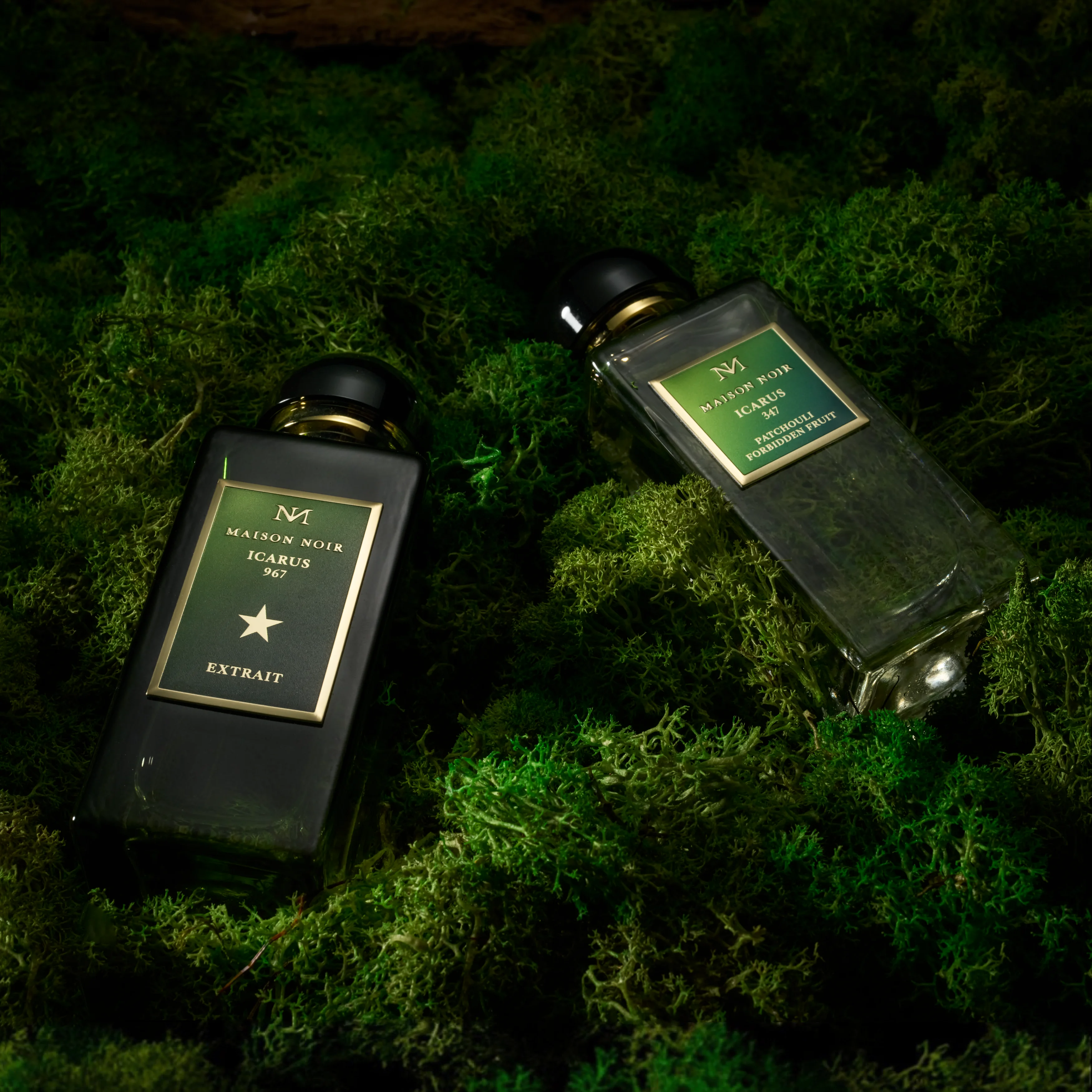
Maison Noir's collection is built on exactly this premise. Each fragrance, from Icarus 347 to Somnia 517, is a numbered door opening onto its own world: defined by its notes and mood, not by who is expected to walk through it. If you would like to discover which door opens something for you, explore the Discovery Set to begin.
Read more
How to Use Fragrance Samples to Find Your Perfect Scent A fragrance sample is a small, trial-sized quantity of a perfume, typically between 1 ml and 2 ml, that lets you wear and evaluate a scent...

How to judge a fine fragrance: raw materials, structure, concentration, and the quality markers you can test on skin before you commit to a bottle.