
The Culture of Scent
The Culture of Scent
The culture of scent is the accumulated human practice of using fragrance to mark identity, ritual, emotion, and belonging across every civilisation and era.
It is not a trend. It is one of the oldest forms of human expression, predating written language in some traditions. Every culture that has left a record has also left evidence of scent: burned resins, pressed botanicals, traded aromatics carried across continents at great cost.
Understanding the culture of scent means understanding that fragrance is never merely cosmetic. You wear a scent the way you choose a language to speak in: it carries information about who you are, what you value, and where you come from. It communicates before you say a word.
This article traces that history, explains how scent works on the mind, maps the major fragrance families, and offers a practical framework for wearing fragrance with intention. Whether you are new to fine fragrance or returning to it with fresh curiosity, the culture of scent has something to offer you at every point of the journey.
---
Ancient Origins: Why Humans Have Always Used Scent
Humans have used scent for as long as they have used fire. The evidence spans continents and millennia: burned resins in ancient Egyptian temples, aromatic oils pressed into clay vessels in Mesopotamia, and the use of frankincense and myrrh as trade goods of exceptional value across the ancient Mediterranean world.
The word "perfume" is itself a clue. It derives from the Latin per fumum, meaning "through smoke." Before liquid fragrance existed, scent was released by burning. Incense was not decorative; it was functional. It marked sacred space, honoured the dead, and signalled the presence of the divine.
Ancient records suggest that Egyptians used kyphi, a compound of resins, herbs, and wine, in both religious ceremony and personal adornment. The Persians and Arabs cultivated rose gardens on a significant scale, and early distillation methods, refined over centuries across the Islamic world, eventually gave Europe the techniques that would produce modern perfumery.
What this history makes clear is that scent has never been about vanity alone. It has always carried weight: social, spiritual, medicinal, and political. Rulers wore particular aromatics to signal power. Priests used incense to mediate between the human and the sacred. Merchants traded perfume ingredients alongside gold.
You inherit this history every time you apply a fragrance. The gesture is far older than you might expect, and far more loaded with meaning.
---
Scent, Memory, and Identity: The Olfactive Mind
Smell is the sense most directly connected to memory and emotion, and this is not a poetic claim. It reflects how the olfactive system is wired. Unlike sight or sound, smell bypasses the thalamus and travels directly to the limbic system, the part of the brain associated with memory, emotion, and instinct.
The result is what writers have long called the Proustian phenomenon, named for Marcel Proust's account of a madeleine dipped in tea unlocking an entire childhood. You will likely know this from your own life: a particular scent can return you to a specific room, a specific person, a specific moment, with an immediacy that no photograph can match.
This is why fragrance is so deeply personal. The scent you associate with safety, with grief, with joy, with home, is not determined by the bottle. It is determined by what your memory has attached to those molecules over years of experience.
It also explains why choosing a fragrance is not a purely aesthetic decision. You are not simply selecting a pleasing smell. You are potentially creating a new memory anchor, a scent that will one day carry the weight of a period in your life. Worn consistently, a fragrance becomes a signature. Others will associate it with you. You will associate it with who you were and what you lived through while wearing it.
This is one reason that fine fragrance deserves more thoughtfulness than a quick spritz in a department store. The scent you choose has a long life. It will outlast the occasion you wore it for.
---
Fragrance Across Cultures: Scent Is Not Universal
What smells beautiful in one culture may be unfamiliar or even unwelcome in another. Scent preferences are not biological universals. They are shaped by geography, climate, tradition, and the materials that each culture has historically had access to.
In the Gulf states, oud, a dense, resinous wood derived from the Aquilaria tree, is a cornerstone of scent culture. Rich, complex, and long-lasting, it is worn generously and layered with other materials. In that context, sillage, the trail a scent leaves in the air, is understood as presence and generosity, not excess.
In Japan, the tradition of kōdō, the art of listening to incense, treats scent as a meditative practice. Hinoki cypress, with its clean, forested quality, is a cultural touchstone. Restraint and subtlety are the aesthetic ideals: a scent should be discovered, not announced.
In France, particularly in the region of Grasse in Provence, the cultivation of jasmine, rose, and tuberose became the foundation of modern fine perfumery. The French tradition prizes balance and craftsmanship; a well-made French perfume is considered, above all, a composition, something arranged with as much care as a piece of music.
These differences matter if you are building a relationship with fragrance. A scent designed within one tradition will carry its cultural assumptions with it. Understanding that context deepens your appreciation and helps you read what a fragrance is actually trying to do.
---
Reading a Fragrance: Notes, Families, and the Architecture of Scent
A fragrance is built in layers, and understanding those layers allows you to make more considered choices rather than relying on first impressions alone.
The classical structure is called the fragrance pyramid. At the top are top notes: the first impression, usually light and volatile, lasting perhaps ten to thirty minutes. Think of citrus, green herbs, or a clean ozonic opening. Below them are heart notes, the true character of the fragrance, emerging as the top notes fade. This is where florals, spices, and woods tend to live. At the base are base notes: the slowest to develop and the longest to last, often rich materials like musks, resins, sandalwood, or vetiver. These can remain on skin or fabric for hours.
Consider a fragrance that opens with bergamot and pink pepper. Bright and slightly sharp, it catches your attention. Within twenty minutes, a rose heart begins to emerge, softer and warmer. An hour later, what remains is a quiet vetiver and amber, grounded and intimate.
That progression is an olfactive journey. The fragrance you smell in the first thirty seconds is not the fragrance you will wear through the afternoon.
The major fragrance families give you a useful map: floral, woody, oriental (sometimes called amber), fresh, fougère, chypre, and gourmand. Each family has its own character and cultural associations. Knowing which families appeal to you narrows your search considerably, and it gives you a vocabulary to describe what you are looking for.
---
Gender and Scent: A Convention, Not a Rule
Gendered fragrance is a relatively recent commercial convention, not a biological truth. For most of human history, scent was not divided along gender lines. Oud, rose, frankincense, and musk were worn without restriction by men and women alike across the cultures that prized them most.
The pink and blue segmentation of perfume shelves is largely a twentieth-century marketing development. It served retail logic, not human nature. Many of the most celebrated fragrances in the French classical tradition were worn by both men and women long before "unisex" became a category label.
The cultural shift back toward unisex fragrance reflects a broader recognition that scent preference has little to do with gender. It has to do with personality, mood, and memory. A warm, resinous amber can suit anyone. A sharp, herbaceous fougère is not inherently masculine.
If you have been choosing fragrance within the section of a counter assigned to your perceived gender, you have been working with a narrower palette than the one available to you. The better question to ask is not "Is this for men or women?" but "Does this scent suit who I am and how I want to move through the world?"
---
Matching Scent to Moment: A Practical Reference
Fragrance is contextual. The same scent that suits a quiet evening at home may read as overwhelming in a small meeting room, and a delicate skin scent may disappear entirely at an outdoor event. Matching fragrance to occasion is a practical skill, and the table below gives you a working framework.
| Occasion | Fragrance Family | Character | Notes to Look For |
|---|---|---|---|
| Morning and daily wear | Fresh / Citrus | Light, clean, approachable | Bergamot, lemon, green tea, vetiver |
| Professional settings | Woody / Fougère | Measured, polished, quiet | Cedar, iris, soft musk, light herbs |
| Formal evening | Oriental / Amber | Warm, complex, lingering | Amber, oud, sandalwood, vanilla, rose |
| Outdoor and active | Aquatic / Fresh | Open, energetic, unobtrusive | Sea salt, cucumber, white musk, mint |
| Intimate occasions | Soft Floral / Musky | Close to skin, warm, sensual | Jasmine, skin musk, peach, white woods |
| Cooler months | Woody / Resinous | Grounding, rich, enveloping | Frankincense, vetiver, leather, dark amber |
| Warm months | Citrus / Green | Airy, fresh, low-intensity | Neroli, grapefruit, basil, light florals |
These pairings are not rigid rules. They are orientations. A confident wearer of amber in the morning is making a statement, and that can be entirely intentional.
For more detailed guidance organised by season and specific occasion, the occasion and season fragrance guides offer a structured starting point.
---
The Craft Behind Fine Fragrance: What Sets a Composed Scent Apart
Fine fragrance is distinguished from mass-market scent primarily by the quality of composition, not just the quality of ingredients.
A composed fragrance begins with a brief, a concept, a mood, a doorway the perfumer is trying to open. The master perfumer then works to find materials that, in combination, create that emotional effect. This is not a formulaic process. It involves iteration, trained sensory memory, and a deep knowledge of how materials interact over time and on skin.
The French town of Grasse has been central to this craft for centuries. Its climate suited the cultivation of aromatic flowers, and the artisanal techniques developed there formed the foundation of the modern fine fragrance industry. Today, French perfumery remains a reference point for compositional rigour, even as the craft has become genuinely global.
What you notice in a well-composed fragrance is coherence. The top, heart, and base notes feel like chapters of the same story rather than disconnected events. The drydown reveals something worth arriving at. There is intention behind every stage of the development.
This coherence is what separates a crafted fragrance from a pleasant one. Pleasantness is easy to manufacture. Intention takes time, skill, and a willingness to treat fragrance as an art form rather than a product category.
---
Wearing Scent with Intention: From Habit to Practice
Wearing fragrance with intention means making a deliberate choice, rather than reaching for the bottle closest to hand.
Start by identifying what you want a fragrance to do. Is it for your own comfort and grounding, a scent you wear for yourself, close to skin, noticed only when someone comes near? Or is it a social gesture, a presence you want to carry into a room? Those two purposes call for different concentrations and fragrance families.
Apply fragrance to pulse points: the inner wrists, the base of the throat, behind the ears, and the inner elbow. These areas generate warmth, which helps diffuse the scent. Avoid rubbing your wrists together; it disrupts the molecular structure and flattens the top notes before they can develop.
Give a fragrance time before you judge it. The first five minutes are not the whole picture. If possible, wear a sample for a full day before committing. Notice how it develops on your skin specifically, because skin chemistry changes how a fragrance smells, sometimes significantly.
Build slowly. Two or three fragrances worn with genuine attention will teach you more about your preferences than a large collection worn interchangeably. Rotate with intention: a lighter scent for mornings, a richer one for evenings, perhaps a third for occasions that call for something distinct.
Over time, the practice of choosing and wearing scent becomes a form of self-knowledge. You learn what suits you, what you have outgrown, and what you want to grow into.
---
Frequently Asked Questions
What is the culture of scent?The culture of scent is the accumulated human practice of using fragrance to mark identity, ritual, emotion, and social belonging. It spans every civilisation and predates many other forms of cultural expression, from ancient burned resins to modern fine perfumery.
Why does smell trigger memories so strongly?Smell travels directly to the limbic system, the brain's centre for memory and emotion, without passing through the thalamus as other senses do. This direct pathway explains why a familiar scent can return you to a specific moment in the past with unusual immediacy, a phenomenon often called the Proustian effect.
What does unisex fragrance mean?Unisex fragrance is scent designed without gender-specific marketing or composition assumptions. Historically, most fragrance was unisex; the gendered division of perfume counters is a largely twentieth-century commercial development. A unisex scent is simply one that suits any person who finds it meaningful.
How do I choose my first fine fragrance?Begin by identifying a fragrance family that appeals to you, such as fresh, floral, woody, or oriental, and test samples on your own skin rather than paper strips. Wear each sample for a full day to understand how it develops, because the drydown, not the opening, is the truest expression of a fragrance.
What are top, heart, and base notes in perfume?Top notes are the first impression of a fragrance, light and volatile, lasting around ten to thirty minutes. Heart notes emerge next and form the core character of the scent. Base notes are the slowest to develop and the longest to last, providing depth and the lasting impression a fragrance leaves on skin and cloth.
---
The Gateway Is Always Open
The culture of scent asks very little of you to enter. A willingness to slow down, to pay attention, and to let fragrance be something more than a finishing touch.
Each scent is a door. Open it, and you step into a distinct world: a mood, a season, a memory you did not know you were carrying. Some doors will not be yours. Others will feel immediately like home. The discovery is the practice.
You do not need a large collection or expert knowledge to begin. You need curiosity and a little patience. The occasion and season guides offer a practical next step if you want structure. But the most important move is simply to pay attention to what you are wearing and why.
The gateway has always been open.
Read more
Occasion & Season Guides: How to Choose the Right Fragrance All Year Choosing the right fragrance for a given season or occasion is not about personal preference alone. It is about understand...
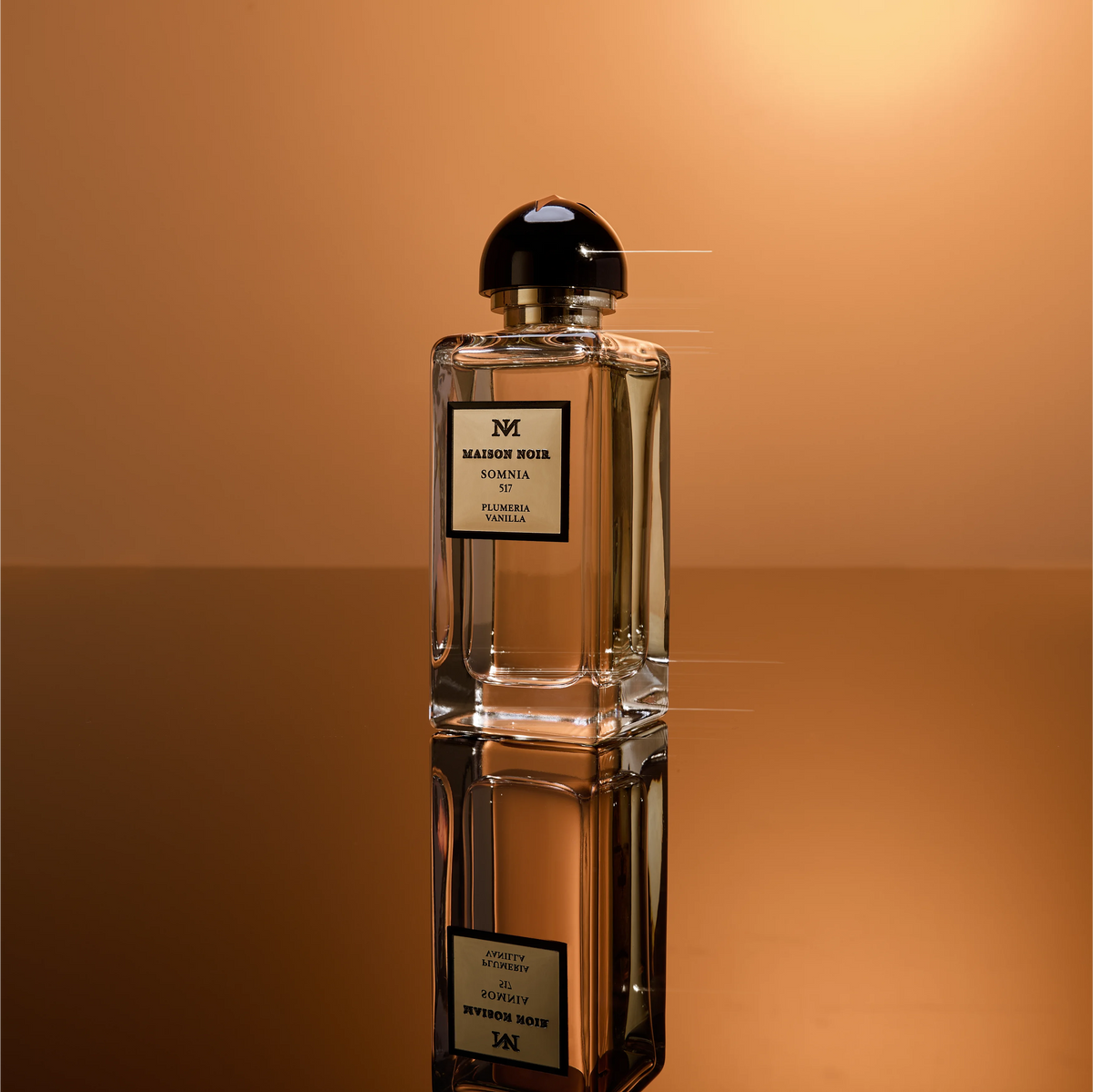
Learn [fragrance](/de/collections/home-fragrance) education essentials: concentration levels, scent families, notes, skin chemistry, and how to build a curated fragrance wardrobe with intention.