
How to Know What Fragrance to Wear: A Practical Guide to Choosing Your Scent
How to Know What Fragrance to Wear: A Practical Guide to Choosing Your Scent
Knowing what fragrance to wear comes down to four practical variables: occasion, season, fragrance family, and concentration. Get those right and the choice becomes straightforward, even standing in front of a wall of bottles that all smell vaguely appealing and entirely different.
The counter is overwhelming by design. Dozens of scents, spritzed on paper, layered over each other until nothing registers cleanly. That experience fools many people into thinking fragrance selection is pure taste, random and unteachable. It is not.
Finding the right fragrance for you starts with narrowing the field before you smell a single thing. Ask yourself: where am I wearing this? What season is it? Do I want something quiet and close to the skin, or something that announces itself? Those answers eliminate seventy percent of a counter before you uncap a bottle.
This guide works through each variable in turn, covers concentration levels (EDP, EDT, EDC, and Extrait), addresses skin chemistry, and explains why the sample-first approach is the most reliable route to a scent that actually suits you. You will also find a quick-reference table and a closing process you can repeat for any fragrance decision.
---
Start with Occasion: The Fastest Way to Narrow Your Options
Occasion is the single most efficient filter for how to pick a scent. Before personality, before season, before family: where you are wearing the fragrance shapes everything else.
Three categories cover most situations.
Everyday and casual. These occasions carry the fewest restrictions and the most room for personal preference. Fresh citrus, clean aromatic, and light woody scents work reliably here because they sit close to the skin and do not compete with other people's space. Think open air, movement, ease. Professional and office. Enclosed spaces with shared air require restraint in projection, not necessarily in character. Light musks, understated florals, and dry wood compositions tend to read as considered rather than intrusive. The goal is presence without dominance. Formal and evening. Here, richness is appropriate. Amber, oud, dark floral, and spiced oriental compositions earn their place at night when warmth and depth suit the mood and the setting.A common misconception is that heavy or warm fragrances belong only after dark. That is only partly true. Concentration and the number of sprays you apply are the real controls. A rich oud composition worn as a single light application on moisturised skin reads very differently from four sprays of the same bottle in a warm room. Fragrance enthusiasts often report maintaining separate bottles for work and for evenings, not because they prefer one or the other, but because the same person needs different registers at different times. Occasion defines the register. Your preferences fill in the rest.
---
Fragrance Families: The Map That Makes Choosing Easier
Fragrance families are the clearest framework for how to choose a perfume, because they describe the character of a scent before you smell it. Learn the six main families and you can decode a shelf by reading notes rather than relying on names.
Citrus. Bright, clean, immediate. Bergamot, lemon, grapefruit. Short projection life, energising on the nose. Suits active daytime wear. Floral. The largest family. Ranges from powdery rose to green-cut peony. Versatile across seasons; heavier florals work into evening. Tends toward elegance. Woody. Cedarwood, sandalwood, vetiver, oud. Warm and grounding. Suits cooler weather and formal settings, though dry cedar can read as daytime-clean. Oriental and amber. Warm resins, vanilla, spice. Rich projection. Best in cool or cold weather, evenings, and occasions where you want the scent to carry. Fresh and aquatic. Clean, ozonic, sometimes marine. Sit close to the skin. Reliable for warm weather and professional settings where subtlety matters. Gourmand. Sweet, edible notes: vanilla, caramel, praline. Intimate projection. Tends to suit cool evenings and personal rather than professional settings.Personality connects to family in a loose, observational way. People drawn to quiet, textured environments often gravitate toward woody or fresh-clean compositions. Those who prefer warmth and sensory richness tend to reach for oriental or floral accords. These are tendencies, not rules, and they shift depending on mood.
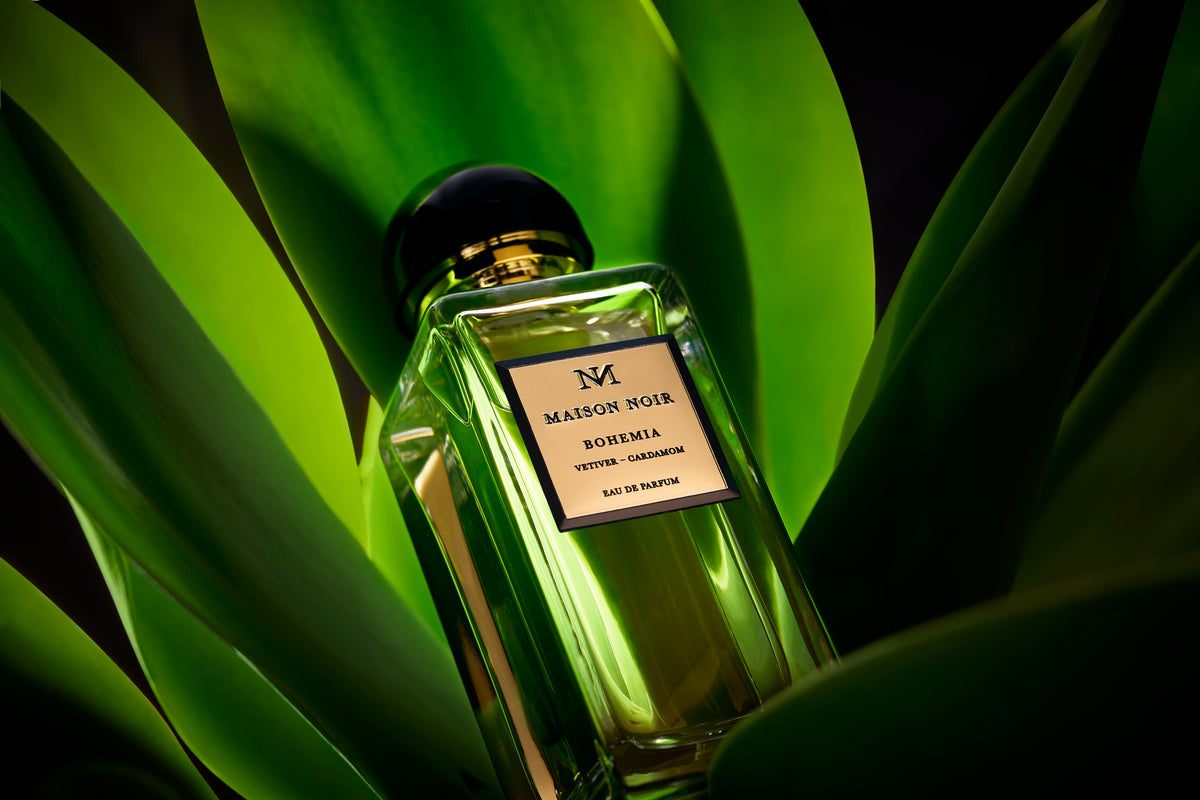
Maison Noir encodes this map directly into each fragrance number. The digits translate into the main note families on the house fragrance wheel, so you can read a scent's character before testing it. Vertigo 236, for instance, combines citrus freshness with woody depth; Bohemia 265 opens with bergamot and cardamom over amber vetiver; Icarus 347 balances forbidden fruit and patchouli above tonka and ambroxan.
---

Discovery Set & Gift Card Bundle (CHF)
Explore multiple fragrance families to discover your perfect scent match.
$150.00 - $230.00
Shop Now →Season and Skin: Why the Same Scent Smells Different on Different Days
Temperature and skin chemistry change a fragrance noticeably, and understanding that is part of finding the right fragrance for you rather than finding a fragrance that worked once.
Heat amplifies. In summer, even a light citrus can project further than expected because warmth accelerates evaporation of the top notes. Rich orientals in high summer can tip from inviting to overwhelming quickly. Cold suppresses volatility in the opposite direction, so you often need a stronger composition or an extra spray to get the same effect you achieved in September.
Skin pH and hydration alter the dry-down. Two people wearing the same fragrance will smell noticeably different by the base notes, because your skin's moisture level, diet, and natural chemistry react with the fragrance's ingredients. This is not a flaw. It is what makes a scent yours rather than a replica of someone else's bottle.
Testing on skin rather than paper is non-negotiable. Spray on a pulse point, then wait a minimum of twenty to thirty minutes before deciding. The immediate top-note impression is the least representative part of how a fragrance will actually wear. Base notes, which determine long-term character, can take an hour or more to settle.
This is precisely why the sample-first principle exists. Wearing a fragrance on your skin, across different temperatures and through a day's activities, is the only reliable test. A scent that commands attention in a cool room may disappear outdoors on a warm afternoon, or conversely, may project too strongly. Real skin testing over days reveals which fragrances truly suit your life rather than just the counter.
---
Concentration Levels: What EDP, EDT, and EDC Actually Change
The difference between EDP, EDT, and EDC is not a quality ranking. Each concentration is a design choice that changes how a fragrance wears, projects, and fades, and the right one depends on where and when you are wearing it.
Here are typical concentration ranges, which vary by house and formulation:
- Eau de Cologne (EDC): Approximately 2 to 4 percent aromatic compounds. Light, short-wearing, often under two hours. Good for hot weather or when you want scent as a fresh gesture rather than a statement.
- Eau de Toilette (EDT): Approximately 5 to 15 percent. Moderate projection, typically three to five hours. Suits daytime and casual wear.
- Eau de Parfum (EDP): Approximately 15 to 20 percent. Fuller body, longer wear, typically six to eight hours. Versatile across occasions.
- Extrait de Parfum: Approximately 20 to 30 percent or above. The most concentrated form. Projects intensely at first, then settles into a rich, intimate dry-down.
Higher concentration does not mean higher quality. It means more of the raw material and a different character. An EDT can be a more appropriate and sophisticated choice for an office than an Extrait, simply because the projection is calibrated to the setting.
The Maison Noir Icarus line illustrates this. Icarus 347 in EDP and Icarus 967 Extrait share a core composition built around tonka bean, ambroxan, and patchouli, but the Extrait does not simply amplify Icarus 347. It reveals different facets: deeper resonance, a longer dry-down, a different relationship with the wearer's skin. Choosing between them is a matter of character, not strength.
---
Choosing by Occasion, Season, and Concentration: A Quick Reference
The table below distils the guidance above into a format you can consult quickly. Use it as a starting point, not a rule; skin chemistry and personal preference always have the final say.
| Occasion | Season | Recommended Family | Recommended Concentration | Projection Level |
|---|---|---|---|---|
| Office / Professional | All seasons | Fresh, Woody, Light Floral | EDT or light EDP | Low to moderate |
| Formal / Evening | Autumn, Winter | Oriental, Amber, Dark Floral | EDP or Extrait | Moderate to high |
| Everyday Casual | All seasons | Citrus, Fresh, Floral, Woody | EDT or EDP | Light to moderate |
| Warm Weather (outdoor) | Spring, Summer | Citrus, Aquatic, Light Floral | EDC or EDT | Light |
| Cool Weather (indoor / evening) | Autumn, Winter | Woody, Oriental, Gourmand | EDP or Extrait | Moderate to high |
No table can account for everything. Skin chemistry, personal preference, and the specific composition of a fragrance all affect the result in ways a category cannot predict. Use the table to shortlist, then test on skin before deciding.
---
How to Find Your Signature Scent by Reading Your Own Preferences
Your signature scent is not a single lifelong commitment. It is the fragrance you return to most naturally, and discovering it is a preference-led process rather than a quiz with a correct answer.
Start with what you already know you like. Think about environments rather than abstract adjectives: do you feel most at ease in spaces that are spare, cool, and natural, or in rooms that are warm, layered, and richly textured? People who seek the former often find themselves drawn to woody or fresh-clean compositions. Those who lean toward warmth and depth tend toward oriental, amber, or floral accords. These are loose correlations, not formulas.
How you want to wear scent matters just as much. For many people, a signature scent is close and personal, something others notice only when they are near. For others, it is a more deliberate presence. Both are valid. The family and concentration you choose will shape that character.
Many fragrance enthusiasts rotate two or three scents seasonally rather than settling on a single bottle year-round. A warm-weather signature and a cooler-weather signature are a perfectly reasonable approach. Scent changes with the season. Your wardrobe should too.
Unisex fragrance removes the assumption that certain families belong to certain people, which meaningfully expands what suits you. Maison Noir composes every fragrance without gender assignment, on the principle that scent speaks to mood, occasion, and preference rather than identity categories. Alter Ego 786 with its smoky oud and raspberry works equally for anyone drawn to depth and complexity. Somnia 517, edgy vanilla under plumeria and bergamot, appeals to anyone who gravitates toward gourmand warmth. The scent suits the person, not the other way around.
---

Vertigo 236
Vertigo 236 combines citrus freshness with woody depth for versatile wear.
$125.00 - $195.00
Shop Now →How to Apply Fragrance and Whether to Layer Two Scents
Application is where most fragrance decisions succeed or fail at the last step. Apply well and a good fragrance performs as intended. Apply carelessly and even a well-chosen scent can read as excessive or disappear within an hour.
Pulse points are the right targets. These are areas where the skin is warm and blood vessels sit close to the surface: inside the wrists, the base of the throat, behind the ears, the inside of the elbow. Warmth from the body activates the fragrance continuously throughout the day.
Two to four sprays is the practical range for most occasions and most formulations. For an Extrait or rich EDP in a warm room, two sprays is often enough. For a light EDT outdoors in cool weather, three or four may be appropriate. Adjust to setting and concentration, not habit.
Do not rub your wrists together after spraying. Rubbing breaks the top notes and alters the dry-down you would otherwise experience. Spray and let the fragrance settle on its own.
Moisturised skin holds scent significantly longer than dry skin. An unscented lotion or body oil applied before fragrance gives the aromatic compounds something to anchor to, extending longevity by hours.
Layering two fragrances can work, and Maison Noir is designed with that possibility in mind. The principle is simple: start with a base-heavy composition and apply a lighter, fresher fragrance on top. Shared note families between the two create coherence. Where people go wrong is combining two similarly dominant compositions, which produces muddle rather than depth. Try pairing a woody base like Bohemia 265 with a fresh top like Vertigo 236, or layer Somnia 517's gourmand warmth with something crisp and citrus-forward.
---
Frequently Asked Questions
How does personality match with fragrance selection?Personality connects to fragrance family in a loose, observational way. People drawn to understated, natural aesthetics often gravitate toward woody or fresh-clean scents, while those who prefer warmth and expressiveness tend toward oriental or floral compositions. These are tendencies, not prescriptions, and mood changes them.
What are the differences between EDP, EDT, and EDC formulations?The primary difference is concentration of aromatic compounds. EDC typically contains 2 to 4 percent, EDT around 5 to 15 percent, and EDP around 15 to 20 percent, with Extrait higher still. Each concentration affects projection, longevity, and how the scent evolves on skin. Higher concentration is a different character, not a superior one.
How many applications of perfume should be used per wearing?Two to four sprays covers most situations. Use fewer for concentrated formulations in enclosed or warm spaces, and slightly more for lighter formulations in outdoor or cool settings. When in doubt, start with two sprays and assess after thirty minutes.
What fragrance choices work best for men versus women?Fragrance has no gender. The more useful question is which family and character suits the occasion and preference. Clean woods, fresh citrus, and florals are worn by anyone; oriental and amber compositions suit anyone drawn to warmth. Framing choices around family rather than gender opens a wider and more honest range.
How do you identify your signature scent?Test widely using samples before committing to a full bottle. Wear each fragrance on skin for a full day, across different settings. The one you return to without deliberating, the one that feels like an extension rather than an addition, is likely your signature. Many people find it within a family they already instinctively prefer.
What fragrance is appropriate for formal events versus everyday use?Formal occasions suit richer families: oriental, amber, dark floral, and EDP or Extrait concentrations. Everyday wear benefits from lighter families and lighter concentrations that adapt to varied settings without demanding attention. The key variable is projection: formal settings tolerate more; shared, public spaces generally require less.
Which fragrance families suit professional and office settings?Fresh, woody, and light floral families work reliably in professional environments because they project moderately and do not overwhelm shared air. EDT concentration is generally preferable to Extrait in these settings. The goal is presence that reads as considered rather than intrusive.
What makes a good unisex fragrance for year-round wear?A good year-round unisex fragrance tends to sit in a moderate family, woody-fresh or clean floral, at an EDP concentration that holds across temperature changes. It should neither amplify excessively in heat nor disappear in cold. Balanced compositions with a woody or musky base note often adapt best to seasonal variation.
---
Putting It Together: A Repeatable Process for Any Fragrance Decision
The process for knowing what fragrance to wear is the same every time, regardless of occasion or season. Four steps cover the decision reliably.
- Identify the occasion and its projection requirements (office, casual, formal, outdoor).
- Match to a fragrance family appropriate to that setting and the season.
- Choose a concentration that suits the context, lighter for daytime and shared spaces, richer for evening and cool weather.
- Test on skin, wait at least thirty minutes, and decide on what you smell at the base note stage, not the top.
The sample-first approach is the most honest shortcut to finding your scent. No amount of reading replaces wearing a fragrance through an actual day.
Ready to test? The Maison Noir Discovery Set is designed for exactly this process: a curated selection of fragrances, sized for proper skin testing across occasions and seasons. Each fragrance opens onto its own world. You can explore the collection at maison-noir.com/pages/discovery-set and find which door is yours to open.
---
Read more
How Many Sprays of Perfume Should You Actually Wear? The right number of perfume sprays is two to four for most people, in most situations, most of the time. Start with two sprays. Smell yourse...
A unisex niche fragrance is a scent composed by an independent or artisan perfume house with no gendered marketing intent, created with a wider ingredient...