

The Aromatic Fougère: A Deep Dive into Fragrance's Most Enduring Family
Aromatic Fougère: The Fragrance Family Guide
An aromatic fougère is a fragrance built on the classical accord of lavender, oakmoss, and coumarin, with a pronounced herbal layer added above that base, producing a scent that is simultaneously fresh, green, and warmly abstract. It is the most widely recognised sub-type of the fougère family and the construction behind a significant portion of what is marketed as aromatic fougere fragrance for men and women alike.
Understanding what you are actually smelling in a fougère changes how you shop, how you wear the fragrance, and how you articulate what you want next. This article covers the accord's anatomy from first principles, maps the four major sub-types in a structured comparison, explains how a fougère moves on skin over time, and addresses what has changed as niche perfumery has reopened the family well beyond its original gendered framing. For context on how this family sits within the broader taxonomy, see fragrance families and how they are classified.
Where Fougère Began: The Accord That Changed Perfumery
The fougère family was established in 1882 with Fougère Royale, a composition by Houbigant that introduced coumarin as a primary building material, marking the first deliberate use of a synthetic molecule at the centre of a fine fragrance. The name translates as "royal fern," which presents an immediate paradox: ferns have no appreciable scent. The family was never named for a smell you could find in nature. It was named for an ideal, a constructed impression of what a fern-covered forest floor might smell like if it could speak.
Coumarin itself is derived from the tonka bean and smells of warm hay, sweet almonds, and faintly of vanilla. Its role in the accord was structural. It provided the warm, abstract foundation that gave lavender and oakmoss something to resolve into. Before coumarin, perfumers were largely limited to natural materials; its introduction proved that synthetic molecules could extend, deepen, and transform a composition in ways nature alone could not provide.
Oakmoss, the third classical pillar, contributes an earthy, slightly marine, mossy character that anchors the entire structure. It pulls the sweetness of coumarin toward something greener and more textural. The combination of these three materials produced a family that smelled of neither flowers nor woods in any obvious sense, but of something more atmospheric and composed.
The family remained closely associated with a particular commercial archetype for much of the twentieth century, but the past decade has seen niche perfumers revisit its architecture with fresher materials and no inherited gender assumptions. Understanding what separates a fine fragrance from its mass-market counterpart helps clarify why these contemporary interpretations often smell so different from their predecessors.
---
The Fougère Accord: What Is Actually in the Formula

The classical fougère accord is a three-note structure: lavender sits at the top, oakmoss anchors the base, and coumarin acts as the connective tissue between them, binding the herbal brightness above to the earthy darkness below. These three elements, in various proportions, define every fragrance that can legitimately be called a fougère.
Lavender in a fougère context is typically clean and slightly medicinal, not floral in the way lavender appears in soliflore compositions. Its role is to open the accord with something recognisable and airy. It provides lift. Oakmoss is the structural foundation. Its earthy, slightly marine quality lends the accord its depth and its characteristic slightly dark, organic finish. This is where the "forest floor" association originates. Coumarin is the binder. Warm, sweet without being sugary, abstractly hay-like, it transforms what would otherwise be a simple lavender-and-moss combination into something coherent and long-lasting. It is the reason fougères feel composed rather than assembled.The aromatic fougère sub-type adds a fourth aromatic layer, typically geranium, clary sage, rosemary, or a combination of these, above the lavender. This herbal, slightly resinous addition is what gives the sub-type its name and its character: sharper, more savoury, and more structured than the classical form.
One important note for readers comparing older and newer formulations: the International Fragrance Association (IFRA) has restricted the use of oakmoss due to sensitisation concerns. Reformulated fougères typically use synthetic moss analogues in its place. The effect is not identical. Contemporary fougères tend to be somewhat cleaner and lighter at the base than their pre-restriction counterparts, which is worth knowing if you encounter a vintage bottle alongside a current edition. For a broader understanding of how fragrance notes are layered into accords, the structure of the fougère is a useful case study.
---
Fougère Sub-Types at a Glance: From Classic to Fresh
Not all fougères smell alike. The family contains four recognised sub-types, each built on the same classical accord but distinguished by the materials added above and around it. The table below maps the key differences in a form that is easy to consult when comparing bottles.
| Sub-Type | Dominant Character | Typical Notes Added | Best Season | Who It Suits |
|---|---|---|---|---|
| Classic Fougère | Earthy, mossy, warm | Geranium, coumarin-heavy base | Autumn, Winter | Anyone drawn to heritage compositions |
| Aromatic Fougère | Herbal, crisp, structured | Clary sage, rosemary, geranium | Spring, Autumn | Anyone preferring green, savoury freshness |
| Fresh / Aquatic Fougère | Clean, ozonic, light | Marine notes, citrus, hedione | Spring, Summer | Anyone wanting lightness and easy wearability |
| Soft / Powdery Fougère | Warm, enveloping, abstract | Iris, musk, sandalwood, heliotrope | Autumn, Winter | Anyone drawn to skin-close, intimate wear |
The aromatic sub-type is the most commonly associated with the search term because it occupies the middle ground most naturally. It retains the structural interest of the classical form while offering enough crispness and herbal clarity to feel contemporary. That balance, green and savoury at the top, warm and abstract at the base, is also why the aromatic fougère sits comfortably outside gendered framing. Its components do not carry the cultural coding that heavy florals or sweet gourmands often do.
For guidance on matching fragrance families to season and occasion, the sub-type distinctions above are a practical starting point.
---
How an Aromatic Fougère Actually Wears on Skin
An aromatic fougère typically opens with lavender and herbal notes that are immediately legible and clean, then settles within the first twenty to thirty minutes into something more nuanced and personal as the coumarin base begins to warm. The opening is the most linear phase of the composition. The heart is where it becomes interesting.
In the heart, the aromatic herbs begin to soften. The geranium or sage, bright and slightly sharp at first, mellows into something more abstract. The oakmoss (or its contemporary equivalent) becomes more present, lending the composition its textured, atmospheric quality. This is typically the phase that lasts longest on most skin types.
The dry-down is warm and relatively quiet. Coumarin moves forward, the herbal elements recede, and what remains is a skin-close warmth with a faintly sweet, mossy undertone. On many skin types, this base phase is the most intimate and the most distinct from the opening impression.
Projection varies considerably by concentration and formula. In Eau de Toilette strength, aromatic fougères tend to project moderately and stay closer to the skin after the first few hours. Eau de Parfum formulations typically deepen the coumarin base and extend the heart phase, making the composition feel more rounded and longer-lasting. If longevity is your priority, concentration matters more than volume applied.
Skin chemistry affects the coumarin-to-lavender balance noticeably. On drier skin, sweet and warm notes tend to amplify; on oilier skin, the herbal top notes often persist longer. For practical guidance on maximising what you have, see how to apply fragrance for the best longevity and projection. If you are still in the exploration phase, sampling before you commit to a full bottle is consistently the most practical approach.
---
Fougère vs. Chypre vs. Aromatic: Clearing Up the Confusion
These three families are frequently conflated, but their structural differences are specific and knowable. A fougère is bound by coumarin; a chypre is bound by labdanum. That single distinction changes the character of the entire composition.
Labdanum is darker, more resinous, and more animalic than coumarin. It gives chypres their characteristic depth and slightly complex, ambiguous quality. Coumarin is warmer and sweeter, pulling toward hay and tonka rather than toward resin and leather. Both families use oakmoss (or its modern substitutes) and both are structured rather than linear, but they resolve into entirely different emotional registers.
The term "aromatic" on its own refers to a family that uses herbal, green, and medicinal notes as its primary character. The distinction from a fougère is the absence of the coumarin-oakmoss base. A pure aromatic fragrance might feature lavender, sage, and rosemary without any of the warm, sweet bottom structure that gives a fougère its particular shape. Without that base, the composition stays crisper and more functional in character, closer to cologne territory.
Where the confusion most legitimately arises is at the powdery, warm end of the fougère family. When a soft or powdery fougère uses generous coumarin alongside sandalwood and iris, it begins to approach the territory of warm orientals. The distinction is still structural: orientals typically use resins, musks, and vanilla as binding agents, rather than the coumarin-oakmoss framework. But the sensory overlap is real, and some contemporary compositions sit deliberately in that liminal space. You can read more about how the oriental fragrance family overlaps with warm fougères, and the full map of fragrance families covers the boundaries of each.
---
When and Where to Wear an Aromatic Fougère
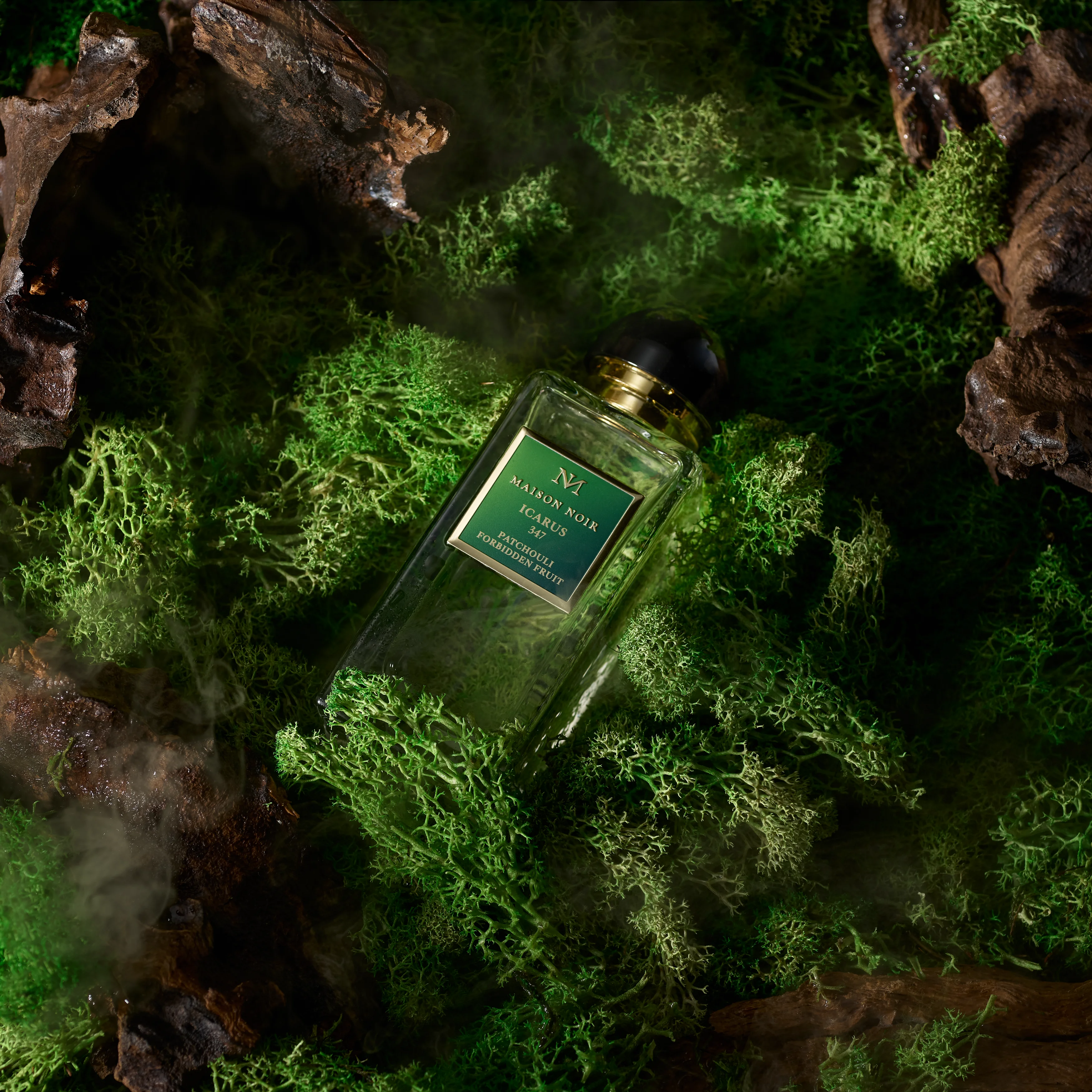
An aromatic fougère is most at home in cool-to-moderate temperatures, which is where the herbal brightness and warm base achieve their best balance, and it transitions naturally between formal and informal occasions in a way that few other families manage. This structural versatility is one reason the family has lasted as long as it has.
By season, the classic and aromatic sub-types perform best in spring and autumn. The herbal top notes need ambient cool to stay crisp; in high heat, they can turn slightly sharp or medicinal. Fresh and aquatic fougères, built with lighter materials and more citrus, are better suited to summer wear. Soft and powdery fougères are winter compositions: they need warmth to develop, and they reward the closer, skin-to-skin proximity that cold weather creates.
By occasion, aromatic fougères are well suited to professional and semi-formal contexts. The structure of the accord reads as composed and considered. It is present without being confrontational, interesting without being distracting. For casual daytime wear, a lighter formulation in the fresh or aquatic sub-type suits. For evening, the classic or soft fougère, with its deeper coumarin base, carries more weight and intention.
The unisex character of the aromatic fougère is structural, not incidental. Herbal and mossy notes do not carry inherent gender coding in the way heavy florals or sweet gourmands often do. The accord is built from materials that were always neutral. For season-by-season fragrance guidance and why unisex fragrances suit the aromatic fougère structure naturally, both are worth reading alongside this section.
---
Layering Aromatic Fougères with Other Fragrance Families
Aromatic fougères layer well when the added fragrance either reinforces the base accord or extends the top notes without creating harmonic conflict, and three pairing scenarios cover most of what you are likely to encounter. Knowing which combinations work and why saves you from expensive mistakes.
Fougère plus woody or amber base: This pairing works well because the coumarin in the fougère and the resins in an amber composition share structural affinity. Both are warm, slightly sweet, and abstract at the base. A wood or amber fragrance applied to pulse points while the fougère is worn on the chest or wrists deepens the dry-down without changing the herbal opening. The result is more substantial and longer-wearing. Fougère plus light musk or white floral: This extends the fresh phase rather than deepening it. A clean musk or a transparent white floral lifts the lavender top notes and keeps the composition feeling airy for longer. Useful in warmer weather when a fougère's base might feel heavier than intended. Fougère plus heavy oud or sweet gourmand: Treat this with caution. Heavy oud is resinous and slightly medicinal in a different direction from the herbal notes in a fougère. The two can clash, creating a composition that reads as muddled rather than complex. Sweet gourmands, loaded with sugar and vanilla in excess, risk overwhelming the coumarin-oakmoss structure, turning the base cloying rather than warm. These are not rules, but the conflict is structural, not a matter of personal taste. For a structured approach to how to layer fragrances without creating conflict between notes, the principles map across most families.---
What Niche Perfumery Has Done to the Fougère
Niche perfumery has returned to the fougère's structural logic rather than its commercial template, and the results smell noticeably different from the mainstream interpretations that defined the family for most of the twentieth century. The difference is not simply one of quality: it is one of intent and framing.
Commercial fougères were built for mass legibility and heavy projection. The formula was reliable, broadly appealing, and almost always gendered by marketing. The accord structure was left largely intact, but the materials used were selected for economy and consistency rather than character.
Niche houses approach the same three-note framework with different priorities. The oakmoss analogues they choose tend to be more complex and textured. The lavender selected is often a specific varietal rather than a generic material. The coumarin proportion is calibrated to create warmth without sweetness, depth without heaviness. Small differences in sourcing and proportion produce large differences in the final character of the composition.
The removal of gender framing in niche fougères is not simply a marketing decision. It reflects something structural: when you build a fragrance for its own accord rather than for a demographic archetype, the result tends to sit naturally outside gendered categories. The materials themselves are neutral. The accord has always been neutral. This is why the aromatic fougère, composed with genuine attention to craft, often feels like it belongs to the wearer rather than to a category. Houses that operate with the discipline of "Born in Switzerland. Crafted in France." are making a claim about process, not prestige, and that process is audible in the composition.
Explore how niche houses have reshaped fragrance beyond gender and the broader cultural shift in how fragrance is understood for more on this transition.
---
Frequently Asked Questions About Aromatic Fougère Fragrances
The questions below address the most common points of confusion about the fougère family. Each answer is grounded in accord structure rather than marketing language.
What is the difference between a fougère and a chypre?A fougère uses coumarin as its primary binding agent, producing a warm, sweet, hay-like base. A chypre uses labdanum, which is darker, more resinous, and more ambiguous. Both families use oakmoss (or modern substitutes), but they resolve into different emotional registers: fougères are warmer and more herbal, chypres are more complex and earthy.
Is aromatic fougère a unisex fragrance family?Structurally, yes. The core materials of the fougère accord, lavender, oakmoss, coumarin, and herbal aromatics, do not carry inherent gender associations. The family was historically marketed toward men, but that framing was a commercial convention, not a property of the accord itself. Contemporary niche interpretations typically present fougères without gender framing.
How long does an aromatic fougère last on skin?Longevity varies by concentration and skin chemistry. Eau de Toilette formulations typically last three to five hours with moderate projection; Eau de Parfum formulations often extend to six hours or more. Drier skin tends to absorb top notes faster, so the herbal opening may feel shorter, with the coumarin base lasting proportionally longer.
Can you wear a fougère in summer?The classic and aromatic sub-types are better suited to cool weather. In summer, a fresh or aquatic fougère, built with lighter materials and a more pronounced citrus top, is the more comfortable choice. High temperatures can amplify the herbal notes in a way that reads as sharp rather than crisp.
What notes should I look for to identify a fougère?The identifiers are lavender in the top, oakmoss or a mossy accord in the base, and coumarin providing warmth and structure throughout. The aromatic sub-type will also list herbal materials such as geranium, clary sage, or rosemary. If all three classical components are present, the fragrance is almost certainly a fougère regardless of how it is marketed.
For further reading on how this family sits within the full taxonomy, see the complete guide to fragrance families and classification.
---
Choosing Your Fougère: A Foundation, Not a Formula
The fougère endures because the tension at its centre, herbal clarity above, warm abstraction below, is genuinely interesting, and that tension holds across seasons, occasions, and the full range of people who wear it. No other family is built on quite this structural contradiction, and no other accord produces the same combination of composure and warmth.
Choosing a fougère is less about finding the "best" version and more about locating the right sub-type for your context. A classic fougère rewards cooler months and considered occasions. A fresh fougère gives you the family's clarity without its weight. A soft fougère delivers warmth and intimacy. The aromatic fougère, the most structurally balanced of the four, suits the widest range of both people and moments.
The most reliable way to understand which sub-type suits you is to wear them, not simply to read about them. For practical guidance on how to discover the fragrance family that suits you, sampling is always the recommended starting point. There is no substitute for the accord developing on your own skin.
If you want to understand how fougère constructions sit alongside other families in a curated context, the Maison Noir Discovery Set offers a structured way into a collection built on this kind of intentional composition, with no gender assumptions and no marketing noise. Fragrance understood this way, as a deliberate choice shaped by accord and occasion, is more satisfying to wear. That satisfaction is what the fougère, at its best, consistently delivers. For pairing your fougère with the right moment, the season and sub-type framework in this article is your most practical tool.
Read more

How to Apply Perfume so It Actually Lasts All Day Applying perfume correctly means placing the right concentration of fragrance on warm, moisturised skin at pulse points, in a quantity suited to ...

The Five Fragrance Concentrations: From Parfum to Eau Fraîche, Explained Fragrance concentration is the proportion of aromatic oil dissolved in a carrier solution, and it is the single most relia...